

Countries with birthright citizenship continue to attract attention from families, immigrants, and people researching nationality laws around the world. Birthright citizenship, often called jus soli, generally means that a person can acquire citizenship simply by being born within a country’s territory. However, the rules are not the same everywhere. Some countries grant citizenship automatically to nearly everyone born on their soil, while others impose conditions involving the parents’ nationality, immigration status, or length of residence.
In 2026, understanding these differences is especially important because citizenship laws can change through legislation, court decisions, or constitutional reforms. A country may appear to offer birthright citizenship but actually limit it to children whose parents are citizens, permanent residents, or legally established in the country. In other places, citizenship at birth is broad and does not normally depend on the parents’ immigration status. This makes it essential to distinguish unconditional birthright citizenship from citizenship that is available only under specific circumstances.
The Americas remain particularly notable for their broad application of jus soli. Several countries in North, Central, and South America generally recognize citizenship for children born within their territory, subject to limited exceptions. The United States and Canada are among the best-known examples, although their immigration and nationality systems differ considerably. A number of Caribbean nations also provide citizenship based on birth, sometimes alongside additional legal requirements.
Outside the Americas, unconditional birthright citizenship is much less common. Many European, Asian, African, and Middle Eastern countries primarily follow jus sanguinis, meaning citizenship is inherited through one or both parents. Some of these countries nevertheless provide pathways for children born there to obtain citizenship later, particularly when their parents have long-term legal residence.
This guide explores the countries with birthright citizenship in 2026, explains how jus soli works, and highlights important exceptions and parental-status requirements. Whether you are comparing citizenship systems or simply trying to understand where birthplace can influence nationality, knowing the precise rules is crucial before drawing conclusions.
You can also read :What is the cheapest country to live in Europe in 2026?
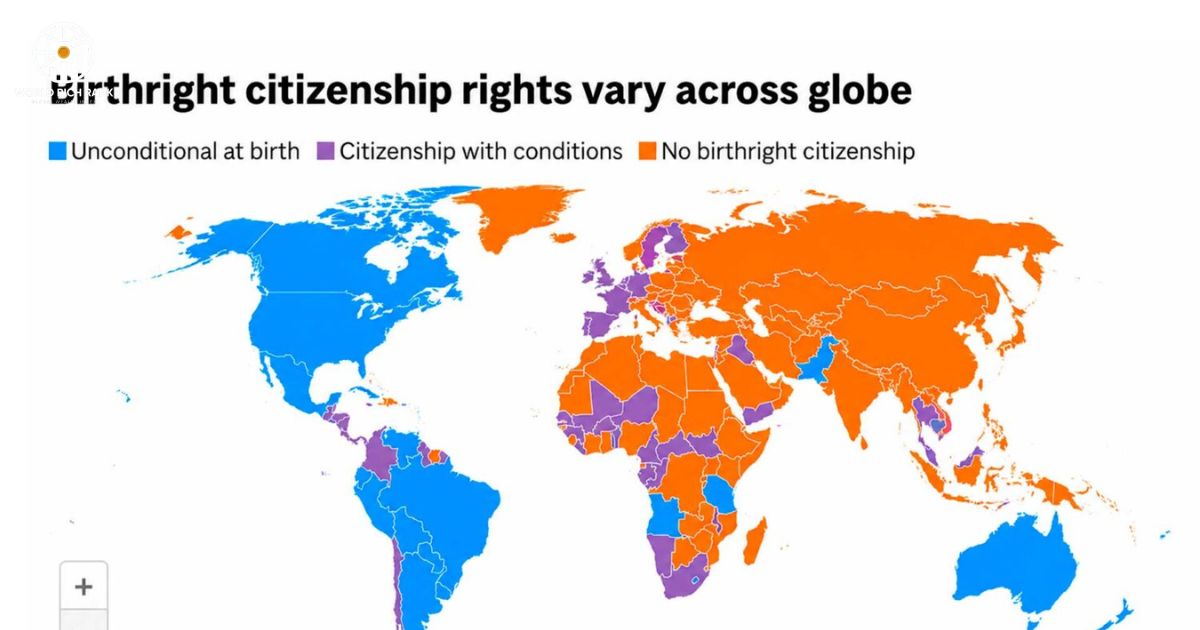
Types of Birthright Citizenship
Birthright citizenship generally falls into territorial (jus soli), parent-based (jus sanguinis), and conditional or mixed systems.
What the main legal models mean
The legal concept of birthright citizenship can look simple, but countries use several different models to determine whether a child becomes a citizen at birth. The most widely discussed model is jus soli, a Latin term meaning “right of the soil.” Under a broad form of jus soli, a child born within a country’s territory automatically receives citizenship, regardless of the nationality or immigration status of the parents, subject to specific exceptions. This model is traditionally associated with several countries in the Americas and places significant importance on the location of birth.
A second major model is jus sanguinis, meaning “right of blood.” Instead of focusing primarily on where a child is born, this system bases citizenship on the nationality of one or both parents. A child born abroad may therefore receive citizenship from a parent even if the child has never lived in that country. Many countries use jus sanguinis as their principal nationality rule.
The third approach is a conditional or mixed model. Countries following this approach may recognize birthplace as one factor but require additional conditions before granting citizenship. For example, a child born in the country might qualify only when at least one parent is a citizen, permanent resident, or legally established there. Some countries also allow children born to foreign parents to apply for citizenship after reaching a certain age or completing a residence requirement.
There are also systems combining jus soli and jus sanguinis. In these countries, a child may qualify through birthplace, parental nationality, or both, depending on the circumstances. This can create different outcomes for children born to citizens, permanent residents, temporary migrants, or parents without lawful status.
Understanding these models is important because the phrase “birthright citizenship” does not always mean automatic citizenship for every child born within a country’s borders. The exact legal framework, parental status, exceptions, and registration requirements determine whether citizenship is acquired immediately or through a later process.
Legal requirements and recurring exceptions
Even where birthright citizenship is recognized, several recurring exceptions can affect eligibility. Diplomatic families are commonly excluded because children born to foreign diplomats may not automatically receive citizenship under territorial rules. Some countries also distinguish between citizens, permanent residents, temporary visitors, and people without lawful immigration status.
Registration requirements may apply even when citizenship itself is automatic. Parents might need to register the birth with local authorities or obtain official documentation proving the child’s nationality. In conditional systems, the child may need to meet additional requirements involving parental residence, legal status, or a minimum period of residence.
Another important issue is the treatment of children born on ships, aircraft, or in disputed territories. Nationality laws may contain specific provisions determining which country’s citizenship rules apply. Because these exceptions vary significantly, birth in a particular country should not automatically be assumed to guarantee citizenship without checking that country’s current nationality legislation.
Dual citizenship implications
Birthright citizenship can sometimes result in a child holding two or more nationalities from birth. For example, a child born in a country that applies broad jus soli may acquire citizenship there while simultaneously inheriting the nationality of one or both parents under jus sanguinis. Whether both nationalities can legally be retained depends on the laws of the countries involved.
Dual citizenship can provide practical benefits, including the ability to live, study, or work in multiple countries and potentially hold more than one passport. However, it can also create obligations. Some countries require citizens to use a particular passport when entering or leaving the country, comply with military-service rules, or follow tax and reporting requirements. Others restrict or prohibit dual nationality. Therefore, parents should examine the citizenship laws of both the birth country and the parents’ countries of nationality before assuming that multiple citizenships can be retained permanently.
Countries With Birthright Citizenship
Birthright citizenship exists in different forms across the world, with some countries granting citizenship automatically at birth and others requiring parental residence, birthplace, or an application.
The clearest distinction is between unconditional jus soli and conditional jus soli. In 2026, 33 countries are classified as having generally applicable, automatic birthright citizenship, while other countries impose additional requirements.
Countries with unconditional jus soli
These 33 countries generally grant citizenship automatically to children born within their territory, without requiring the parents to be citizens or legal residents.
- Antigua and Barbuda
- Argentina
- Barbados
- Belize
- Benin
- Bolivia
- Brazil
- Canada
- Chad
- Cuba
- Dominica
- Ecuador
- El Salvador
- Grenada
- Guatemala
- Guyana
- Honduras
- Jamaica
- Mexico
- Mozambique
- Nicaragua
- Pakistan
- Panama
- Peru
- Saint Kitts and Nevis
- Saint Lucia
- Saint Vincent and the Grenadines
- Trinidad and Tobago
- Tuvalu
- United States
- Uruguay
- Venezuela
- Lesotho
Countries with conditional jus soli
| Rule type | Countries |
| Parents must also have been born in the country | Belgium, Brunei, Burkina Faso, Cambodia, Cameroon, France, Gabon, Greece, Guinea, Iran, Luxembourg, Mali, Malta, Morocco, Netherlands, Niger, Portugal, Republic of the Congo, Senegal, Sierra Leone, Spain, Timor-Leste, Togo, Tunisia, Yemen |
| At least one parent must be a legal resident | Australia, Cape Verde, Chile, Colombia, Dominican Republic, Germany, Ireland, Kosovo, Malaysia, Namibia, New Zealand, Sao Tome and Principe, Thailand, United Kingdom |
| Limited to particular groups | Guinea-Bissau, Haiti, Israel, Liberia, Uganda |
| Generally applicable, but citizenship must be claimed by application or declaration | Costa Rica, Moldova, Paraguay |
These categories follow the 2026 Pew Research Center analysis of the GLOBALCIT Citizenship Law Dataset. The exact statutory requirements can vary within each category, so the table should be treated as a broad classification rather than a substitute for a country’s nationality law.
Notable mixed systems
Several countries illustrate how modern birthright citizenship can combine birthplace with parental nationality, residence, or later registration requirements.
| Country | Why it matters | Core rule |
| Belgium | Strong example of “double jus soli” and family integration | Birth in Belgium can lead to Belgian nationality under specific rules involving a parent who was also born there, as well as other declaration and residence-based routes. |
| France | Classic European mixed model | A child born in France to foreign parents can acquire French nationality through specific parental-birth or residence conditions, including routes operating later in childhood or at adulthood. |
| Germany | Parent-residence jus soli | A child born in Germany to foreign parents can acquire German citizenship at birth when the required parental legal-residence and residence-right conditions are satisfied. |
| Ireland | Post-2005 conditional model | For births from January 1, 2005 onward, parental citizenship or qualifying residence history determines whether a child born in Ireland is Irish at birth. |
| United Kingdom | Settled-status model | A child born in the UK is generally British automatically when a parent is British or has the required settled status; other children may have registration routes later. |
| Australia | Permanent-residence model and safeguards | Birth in Australia does not by itself guarantee citizenship; parental status is important, while additional provisions can protect children who would otherwise be stateless. |
| Chile | Strong jus soli tradition with exceptions | Chile recognizes citizenship by birth but has exceptions involving certain temporary foreign residents and diplomats, alongside routes for children who do not receive citizenship automatically. |
| Colombia | Residence-based jus soli | Birth in Colombia can qualify a child for nationality when the applicable parental domicile requirements are satisfied, with additional rules addressing particular circumstances. |
These examples demonstrate why the term “birthright citizenship” should be examined carefully. A country can recognize jus soli without making citizenship automatic for every child born there.
Major legal changes since 2015
Since 2015, birthright citizenship rules have continued to evolve as countries have revised nationality laws, clarified court interpretations, and introduced new requirements for children born to foreign parents. These changes have generally moved some countries toward conditional jus soli rather than completely automatic citizenship, while others have expanded protections against statelessness or simplified citizenship registration. The following developments are particularly important when comparing birthright citizenship rules in 2026.
- United States: Birthright citizenship under the Fourteenth Amendment has remained a major legal and political issue, with repeated proposals and litigation seeking to change or reinterpret the rules.
- Australia: Citizenship by birth continues to depend heavily on the immigration or residence status of at least one parent, rather than birthplace alone.
- Germany: Reforms have expanded and adjusted pathways involving children born in Germany to foreign parents, particularly through changes to residence and naturalization rules.
- Ireland: The post-2005 framework continues to make parental citizenship and qualifying residence history important factors in determining citizenship at birth.
- United Kingdom: Rules remain focused on whether a parent is British or has an appropriate form of settled or permanent status when the child is born.
- Statelessness protections: A number of countries have strengthened or clarified safeguards designed to prevent children born in their territory from being left without any nationality.
Overall, the major trend since 2015 has been a greater emphasis on parental nationality, lawful residence, and protection against statelessness. This means that simply being born inside a country’s borders is increasingly not enough to determine citizenship in many countries.
What the practical process looks like
The practical process for obtaining or confirming birthright citizenship depends heavily on the country’s nationality laws. In countries with unconditional jus soli, the process is usually straightforward because citizenship is generally acquired automatically when a child is born within the territory. Parents normally begin by registering the birth with the relevant local authority and obtaining an official birth certificate. The birth certificate can then serve as important evidence when applying for a passport or other proof of citizenship.
In countries with conditional jus soli, the process can involve additional checks. Authorities may need evidence of a parent’s citizenship, permanent residence, lawful immigration status, or required period of residence. In some systems, citizenship is not granted immediately and the child or parents must complete a declaration, registration, or application after the birth.
The practical steps commonly include:
- Register the birth: Report the child’s birth to the appropriate civil-registration authority and obtain an official birth certificate.
- Check eligibility: Determine whether citizenship is automatic or whether parental nationality, residence, or immigration status creates additional requirements.
- Provide supporting documents: Depending on the country, authorities may request documents relating to the child and parents, such as proof of nationality or lawful residence.
- Complete registration or declaration: Where citizenship is conditional, submit the required application, declaration, or registration within the applicable timeframe.
- Obtain proof of citizenship: Once eligibility is established, parents can generally seek a citizenship certificate, passport, or other official nationality document.
The most important point is that birth registration and citizenship are not always the same thing. A birth certificate confirms where and when a child was born, but it does not necessarily prove that the child automatically became a citizen. Families should therefore check the current nationality rules and official procedures of the relevant country before making travel, immigration, or citizenship decisions.
Processing time
Processing times for birthright citizenship vary significantly depending on the country’s legal system and whether citizenship is automatic or requires an application. Where citizenship is acquired automatically at birth, there may be little or no separate citizenship-processing period. Parents typically register the child’s birth first and then apply for documents such as a passport or citizenship certificate, with processing times depending on the relevant government authority.
For conditional birthright citizenship, the process can take longer because authorities may need to verify parental nationality, immigration status, residence history, or other eligibility requirements. Applications, declarations, and supporting documents may require additional review, and processing times can range from several weeks to several months. Applicants should always check the current official processing estimates because procedures and timelines can change.
Costs and fees
The cost of obtaining proof of birthright citizenship varies by country and by the type of document or procedure involved. In countries where citizenship is automatic at birth, parents may only need to pay standard fees for birth registration, a birth certificate, citizenship certificate, or passport. The citizenship itself may not have a separate fee because it is acquired automatically under the law.
Additional costs can arise when citizenship requires an application, declaration, or registration. These may include government application fees, document certification, translation, notarization, passport fees, and, in some cases, legal or administrative expenses. Families should also consider fees for replacing documents or obtaining additional certified copies.
Because fees and procedures can change, applicants should check the current rates published by the relevant government authority before submitting an application. A child being eligible for citizenship does not necessarily mean that every related document or service will be free.
Renewal, extension and pathways if a child is not a citizen at birth
When a child does not automatically receive citizenship at birth, the family may still have several routes to establish the child’s nationality later. The available pathway depends on the country’s nationality law, the parents’ citizenship or immigration status, and how long the child has lived in the country. Some countries allow parents to register or apply for citizenship during childhood, while others provide a simplified route after the child reaches a particular age or completes a required period of residence.
It is also important to distinguish citizenship from immigration status. A child may hold a residence permit or another legal status that must be renewed while the family waits to meet citizenship requirements. Losing valid residence status can sometimes affect eligibility for a later citizenship application.
Common pathways can include:
- Registration during childhood: Parents may register an eligible child as a citizen when specific nationality or residence conditions are satisfied.
- Declaration of citizenship: Some countries permit parents or the child to make a formal declaration within a specified period.
- Residence-based naturalization: A child who has lived in the country for the required period may qualify for a simplified naturalization process.
- Citizenship through a parent: If a parent becomes a citizen or establishes a qualifying connection to the country, the child may become eligible under family-based nationality rules.
- Protection against statelessness: Special procedures may exist for children who would otherwise have no nationality.
- Later application by the child: In certain systems, a child can apply or register independently after reaching a specified age.
Renewal generally applies to residence permits and passports rather than citizenship itself. Once citizenship is legally acquired, it normally does not need to be renewed, although passports and citizenship documents may expire and require replacement. Since nationality laws differ considerably, families should verify the specific requirements, deadlines, and documentation with the relevant national authority.
Why birthright citizenship claims are denied
A birthright citizenship claim can be denied when the child does not meet the legal conditions established by the country’s nationality law. Being born within a country’s territory does not always guarantee citizenship, particularly in countries that apply conditional jus soli. Authorities may examine the parents’ citizenship, immigration status, residence history, and the circumstances surrounding the child’s birth before determining eligibility.
Common reasons for denial include:
- Parents do not meet residence requirements: Some countries require at least one parent to have permanent, lawful, or long-term residence at the time of the child’s birth.
- Temporary immigration status: A child may not qualify where the parents are in the country only as temporary visitors, students, seasonal workers, or other short-term residents.
- Diplomatic status: Children of foreign diplomats are excluded from birthright citizenship under the laws of many countries because diplomatic immunity creates a special legal situation.
- Incomplete documentation: Missing birth records, parental nationality documents, residence evidence, or other required paperwork can prevent authorities from approving a claim.
- Application submitted too late: Some citizenship-by-registration systems have specific deadlines or age limits. Missing these deadlines may require the applicant to use a different pathway.
- Incorrect interpretation of the law: Families sometimes assume that birthplace alone creates citizenship when the country actually requires parental nationality, residence, or another qualifying connection.
- Birth occurred outside the relevant territory: Special rules can apply to children born on ships, aircraft, or in territories where sovereignty or nationality rules are different.
- Another nationality already applies: In some cases, authorities may require additional procedures when the child already holds or is entitled to another citizenship.
A denial does not necessarily mean the child can never become a citizen. Depending on the country’s law, registration, declaration, naturalization, parental citizenship, or residence-based pathways may remain available. Families should carefully review the written reason for refusal and determine whether an appeal, correction of documents, or alternative citizenship route is possible.
Common misconceptions
Birthright citizenship is often misunderstood because countries use different nationality systems and legal definitions. One common misconception is that every child born in a country automatically becomes a citizen. In reality, many countries have conditional rules that consider the parents’ nationality, residence, or immigration status.
Another misconception is that a birth certificate automatically proves citizenship. A birth certificate generally confirms where and when a child was born, but it does not necessarily establish nationality. In some countries, additional registration or documentation is required.
People also sometimes assume that birthright citizenship guarantees citizenship for the parents. It usually does not. A child’s citizenship normally does not automatically give the parents citizenship, permanent residence, or an immediate right to remain in the country.
Other common misunderstandings include:
- Birthright citizenship is the same everywhere: Countries apply different jus soli and jus sanguinis rules.
- Parents’ immigration status never matters: In conditional systems, it can be decisive.
- Citizenship can never be challenged: Authorities may review eligibility where legal requirements are not satisfied.
- A child can always keep multiple citizenships: Some countries restrict or regulate dual nationality.
- Citizenship and a passport are the same thing: Citizenship is a legal status, while a passport is a travel document proving or facilitating that status.
- The rules never change: Nationality laws can be amended through legislation, court decisions, or constitutional changes.
Understanding these distinctions helps families avoid relying on assumptions when determining a child’s nationality.
Expert tips for getting the law right
Understanding birthright citizenship requires more than checking whether a country appears on a list of jus soli nations. Nationality laws can contain important exceptions involving parental status, residence, diplomatic privileges, registration deadlines, and dual citizenship. The following practical tips can help families avoid common mistakes when researching citizenship eligibility.
1. Check the law in force on the date of birth
Citizenship rules can change over time, so always verify the legislation that applied when the child was born. Do not rely solely on an older article, social-media post, or general citizenship guide. Later amendments may not apply retroactively, while transitional provisions can create different rules for different birth dates.
2. Verify both the child’s and parents’ status
Determine whether the country uses unconditional jus soli, conditional jus soli, or a mixed system. Check the parents’ citizenship, immigration status, residence history, and any diplomatic status. These details can determine whether citizenship was automatic or whether an application or registration is necessary.
3. Keep complete official documentation
Maintain the child’s birth certificate along with relevant documents showing the parents’ nationality and legal residence. Where an application is required, check whether documents need certified copies, official translations, notarization, or legalization. Keeping accurate records can make later citizenship and passport applications much easier.
4. Use official authorities for final confirmation
Online summaries are useful for understanding the general rules, but nationality decisions should ultimately be confirmed through the country’s official immigration, citizenship, civil-registration, embassy, or consular authority. If the situation involves multiple nationalities, disputed eligibility, or potential statelessness, qualified immigration or nationality-law advice can also be valuable. This is especially important because citizenship rules and administrative procedures may change without much notice.
Real-case examples that matter
Real-world citizenship cases show why birthright citizenship cannot always be determined simply by looking at a child’s place of birth. Courts and government authorities have repeatedly had to consider parental status, residence, constitutional protections, and the interaction between different nationality laws. These examples also demonstrate why similar-looking cases can produce different outcomes depending on the country involved.
1. United States — United States v. Wong Kim Ark
One of the most important examples comes from the United States. In United States v. Wong Kim Ark (1898), the U.S. Supreme Court considered whether a person born in the United States to Chinese parents who were not U.S. citizens was an American citizen. The Court concluded that the Fourteenth Amendment generally protects citizenship for people born in the United States, subject to narrow exceptions such as children of foreign diplomats.
The case remains a foundational example of broad jus soli in the United States. It also demonstrates that the citizenship of the parents does not automatically determine the citizenship of a child born under a country’s constitutional birthright rules.
2. Canada — Citizenship based on place of birth
Canada provides another well-known example of territorial citizenship. Under Canadian nationality rules, a child born in Canada is generally a Canadian citizen regardless of the parents’ citizenship or immigration status, although children of certain foreign diplomatic representatives are subject to exceptions.
This example matters because it shows the practical difference between automatic citizenship and immigration status. Parents may have temporary or other immigration status while their Canadian-born child can nevertheless have Canadian citizenship. However, the child’s citizenship does not automatically give the parents Canadian citizenship or permanent residence.
3. Germany — Conditional birthright citizenship
Germany demonstrates the opposite approach. A child born in Germany to foreign parents may acquire German citizenship at birth when statutory requirements concerning a parent’s lawful residence and right of residence are satisfied.
This type of case illustrates why the phrase “born in the country” is not enough to establish citizenship everywhere. Two children born in the same country can potentially have different nationality outcomes because their parents have different residence statuses or legal connections to the country.
4. Ireland — Citizenship changed after constitutional reform
Ireland provides an important example of how birthright citizenship can change over time. Following the Twenty-Seventh Amendment to the Irish Constitution in 2004, which was approved by referendum, automatic citizenship based solely on birth in Ireland was restricted for children born from January 1, 2005. Parental citizenship and qualifying residence became important factors in determining whether a child born in Ireland would automatically be Irish.
This example matters because it demonstrates that citizenship rules are not permanent. A person born in the same country can face different nationality rules depending on the date of birth and the law that applied at that time.
FAQ’s
Can a child work later if they have birthright citizenship?
Yes. If the child legally holds citizenship, they generally have the same right to work as other citizens once they reach the applicable working age. Citizenship usually removes the need for a separate work permit, although employment laws, minimum-age rules, and other requirements still apply.
Is birthright citizenship easy to get?
It depends on the country. In countries with unconditional jus soli, citizenship is generally acquired automatically at birth, although the birth may still need to be officially registered. In countries with conditional systems, parents may need to meet residence, nationality, or immigration requirements before the child qualifies.
Can birthright citizenship create dual nationality automatically?
Yes, it can. A child may receive citizenship from the country of birth while also inheriting citizenship from a parent under that parent’s nationality law. However, not every country permits dual citizenship, so the child may eventually have to choose, renounce one nationality, or follow specific retention rules.
Can parents “bring family” through a child’s birthright citizenship?
Not automatically. A child’s citizenship generally does not give parents immediate citizenship or permanent residence. Some countries may offer family-based immigration options when the child reaches a certain age or meets particular requirements, but these rules vary considerably.
Can a child born without birthright citizenship later become a citizen?
Yes. Depending on the country, a child may later qualify through registration, parental citizenship, residence, declaration, or naturalization. Some countries provide simplified procedures for children who were born there but did not qualify for citizenship at birth.
Can birthright citizenship be revoked?
In most cases, citizenship acquired at birth receives strong legal protection, but the rules vary by country. Revocation may be possible in limited circumstances, such as fraud or situations specifically permitted by nationality law. A government generally cannot simply cancel citizenship because a person later lives abroad or because their parents were foreign nationals.

Stoke is a passionate writer and researcher focused on the world’s richest countries, global wealth, economies, and country rankings. He creates clear, easy-to-understand content to help readers explore global economic trends.