


Retiring abroad in 2026 can offer a comfortable lifestyle at a lower cost, but the right destination depends on more than affordability alone. Countries such as Greece, Panama, Costa Rica, Portugal, Spain, Thailand, and Malaysia stand out for their combination of reasonable living costs, quality healthcare, climate, safety, and retirement visa options. Current 2026 rankings place Greece among the top overall choices, while Portugal remains especially attractive for retirees seeking European residency and strong healthcare.
You can also read: Countries With Birthright Citizenship in 2026
How We Ranked the Best Countries to Retire in 2026
We ranked the best countries to retire in 2026 by looking at the factors that matter most for a comfortable, affordable, and secure retirement abroad.
Cost of Living: We considered everyday expenses such as housing, food, transportation, utilities, and other basic needs to identify destinations that offer good value for retirees.
Healthcare Quality: We assessed the availability, quality, affordability, and accessibility of healthcare services, including options for private and public care.
Retirement Visas & Residency: We looked at retirement-friendly visa programs, income requirements, residency pathways, application processes, and the overall ease of staying long term.
Safety & Stability: Personal safety, political stability, infrastructure, and general security were important factors when comparing each country.
Lifestyle & Culture: We also considered climate, local culture, food, entertainment, natural beauty, communities, and the overall quality of life.
Together, these factors provide a balanced way to compare destinations rather than ranking countries based on cost alone, helping retirees find places that offer a practical combination of affordability, healthcare, residency options, safety, and enjoyable everyday living.
Top 10 Best Countries to Retire in 2026
The top 10 best countries to retire in 2026 offer a mix of affordable living, quality healthcare, retirement-friendly residency options, safety, and enjoyable lifestyles. Greece stands out for its Mediterranean climate, relaxed lifestyle, and relatively attractive living costs, while Panama is popular for its retirement benefits and established expatriate communities. Costa Rica appeals to retirees seeking nature, healthcare, and a warm climate, while Portugal and Spain offer excellent European lifestyles, strong healthcare systems, and diverse communities. Thailand and Malaysia are attractive for their lower living costs, tropical settings, and modern healthcare facilities. Mexico remains a convenient choice for retirees wanting affordable living, diverse cities, and proximity to North America. Colombia offers a low cost of living, pleasant climates, and growing expatriate communities, while Ecuador provides affordable housing, natural beauty, and a slower pace of life. These countries are ranked based on the overall balance of affordability, h
1. Greece — Best Overall Country to Retire in 2026
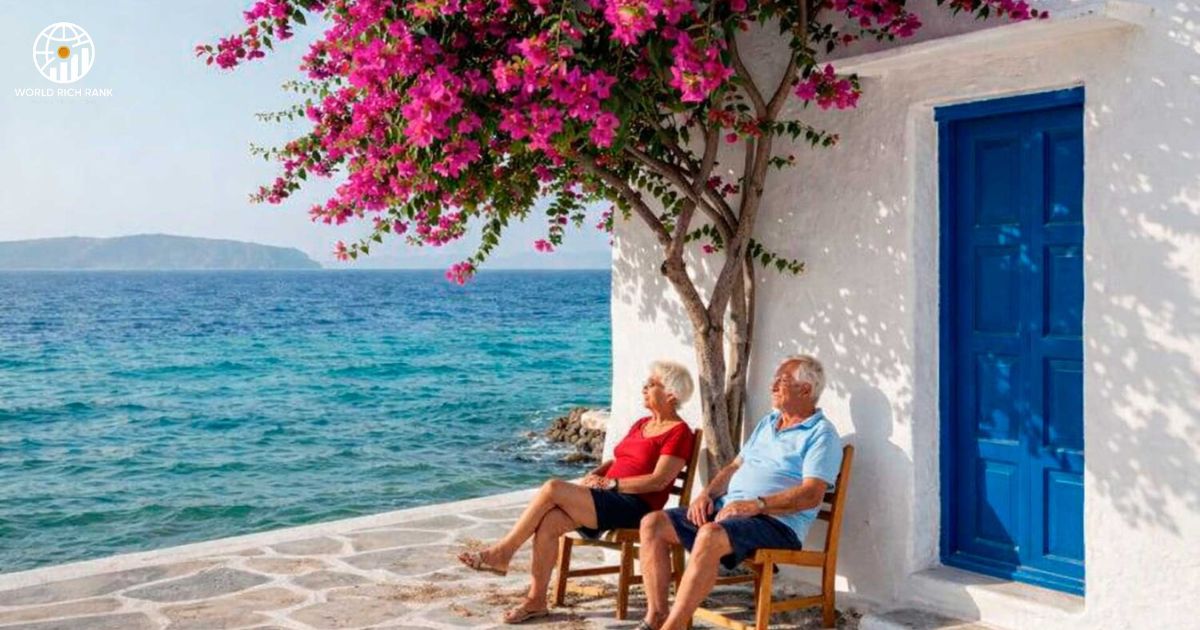
Greece continues to be one of the most attractive retirement destinations in Europe, offering a combination of Mediterranean weather, relatively affordable living, good healthcare options, beautiful scenery, and a relaxed pace of life. Retirees can choose between lively cities, quiet island communities, and smaller mainland towns, depending on their budget and lifestyle. The country also provides residency pathways that can make long-term living possible for eligible foreign retirees. While costs vary considerably between Athens, popular islands, and smaller towns, Greece can still provide good value compared with several Western European countries. Its rich history, fresh Mediterranean food, outdoor lifestyle, and welcoming communities add to its appeal for people looking for a comfortable retirement abroad.
- Average Monthly Cost: Roughly $1,500–$2,500 per person, depending heavily on housing, location, and lifestyle. Smaller mainland towns and less-touristy areas can be considerably cheaper than central Athens or popular islands. Rent is usually the largest expense, while groceries, local transportation, and dining can remain relatively manageable.
- Healthcare: Greece has a public healthcare system alongside a well-developed private healthcare sector. Major cities and larger towns generally provide access to hospitals, specialists, pharmacies, and private clinics. Retirees who want shorter waiting times or more specialized services may choose private healthcare and international health insurance.
- Residency Visas: Greece offers several residency routes for non-EU nationals. The Financially Independent Person (FIP) residence permit can be relevant to retirees who can demonstrate sufficient stable income, while the Golden Visa provides a separate investment-based residency pathway for qualifying applicants. Requirements can change, so retirees should verify current income, insurance, and investment rules before applying.
- Best Places to Live: Athens is ideal for retirees who want extensive healthcare, restaurants, transportation, and cultural attractions. Thessaloniki offers a lively city environment with a somewhat more relaxed feel. Crete is popular for its warm climate, beaches, healthcare facilities, and established international community. Corfu and Rhodes appeal to retirees seeking island living, while smaller mainland towns can provide a quieter lifestyle and potentially lower housing costs.
Overall, Greece earns the top spot because it balances affordability, healthcare access, residency possibilities, climate, culture, and quality of life better than many competing European retirement destinations. It is particularly appealing to retirees who want sunshine, outdoor living, and easy access to history, beaches, and Mediterranean culture without giving up essential modern services.
2. Panama — Best Retirement Visa & Benefits Program
Why Retirees Choose Panama? Panama is a popular retirement destination because it combines a relatively affordable cost of living with modern infrastructure, accessible healthcare, warm weather, and one of the better-known retirement residency programs in Latin America. Its Pensionado Program is especially attractive to retirees with a qualifying lifetime pension because it can provide permanent residency and access to a range of discounts and benefits. Panama also uses the U.S. dollar alongside its own currency, which can make everyday budgeting easier for many international retirees. The country offers beaches, mountains, tropical forests, modern cities, and established expatriate communities, allowing retirees to choose a lifestyle that fits their preferences. For those who want a comfortable retirement with good services without the higher costs found in many Western countries, Panama remains a strong option in 2026.
- Average Monthly Cost: Roughly $1,500–$2,500 per person, depending on location, housing choices, healthcare needs, and lifestyle. A retiree living outside Panama City can often spend less, particularly when choosing a smaller town or inland community. Housing, utilities, groceries, transportation, dining, and entertainment make up most regular expenses. Panama City generally costs more because of higher rents and greater demand for modern apartments. However, retirees who live in areas such as Boquete, David, or smaller coastal communities may find their monthly budget goes considerably further.
- Healthcare: Panama has a well-established healthcare system with both public and private facilities. Private hospitals and clinics in Panama City provide modern medical services, specialist care, diagnostic testing, and many internationally oriented healthcare options. Outside the capital, healthcare quality varies by location, although larger regional cities still have hospitals and clinics. Many foreign retirees choose private health insurance or pay directly for medical services, which can be relatively affordable compared with healthcare costs in the United States. Retirees should research coverage carefully, especially if they have ongoing medical needs or expect frequent specialist treatment.
- Residency Visas: Panama is particularly well known for its Pensionado Visa, designed for people receiving a qualifying lifetime pension. Applicants generally need to demonstrate a stable monthly pension that meets the government’s current minimum requirement and provide the required documentation. The program is attractive because approved pensioners can obtain permanent residency and may qualify for various retiree discounts. Panama also has other residency options, including investment-related programs, for applicants who do not qualify through a pension. Immigration requirements and financial thresholds can change, so prospective retirees should confirm the latest rules with Panamanian authorities or a qualified immigration professional before applying.
- Best Places to Live: Panama City is best for retirees who want modern hospitals, restaurants, shopping, entertainment, and international connections. Boquete is a popular mountain destination known for its cooler climate, scenery, and established expatriate community. David offers a more practical and generally less expensive city lifestyle with access to essential services. Coronado is attractive to retirees who prefer a beach community within reasonable reach of Panama City. For a quieter lifestyle, coastal and rural areas can provide beautiful surroundings and a slower pace, although access to specialized healthcare and other services should be considered before choosing a location.
Overall, Panama stands out because it combines retirement-friendly residency, financial benefits, healthcare access, affordability, and lifestyle variety. Its Pensionado Program is one of its biggest advantages, particularly for retirees who receive a qualifying pension. The country’s tropical climate, dollar-based economy, convenient transportation connections, and large international community further strengthen its appeal. Retirees should still compare individual cities and calculate housing, insurance, and healthcare costs carefully because expenses can differ substantially between Panama City, mountain communities, and coastal areas.

3. Costa Rica — Best Climate & Nature (“Pura Vida” Lifestyle)
Why Retirees Choose Costa Rica? Costa Rica is a favorite retirement destination for people who want warm weather, beautiful natural surroundings, and a relaxed lifestyle. The country is famous for its “Pura Vida” philosophy, a phrase associated with enjoying life, simplicity, community, and a positive outlook. Retirees can choose from Pacific and Caribbean beaches, green mountain regions, tropical forests, and cooler highland towns, giving them plenty of options when deciding where to settle. Costa Rica also has a long-established international community, making it easier for many newcomers to meet other foreign residents while becoming familiar with local life. Although it is not always the cheapest retirement destination in Latin America, the combination of nature, climate, healthcare, safety, and quality of life makes it particularly attractive. For retirees who value outdoor activities and a peaceful environment, Costa Rica offers opportunities for hiking, gardening, swimming, birdwatching, beach walks, and exploring national parks throughout the year.
- Average Monthly Cost: Roughly $1,500–$2,500 per person, although expenses vary significantly depending on where you live and the lifestyle you choose. Housing is usually the biggest factor in a retirement budget. Popular beach communities and areas close to San José can be more expensive, especially for modern or furnished properties. Smaller towns and less-touristed areas may offer lower rents and everyday expenses. Groceries, local transportation, utilities, and dining can be manageable for retirees who live like locals rather than maintaining an expensive expatriate lifestyle. Imported products, premium restaurants, private housing, and frequent travel can increase costs considerably. Couples may also benefit from sharing housing and household expenses, making Costa Rica more affordable on a combined retirement budget.
- Healthcare: Costa Rica has a respected healthcare system that includes both public and private care. The public Caja Costarricense de Seguro Social (CCSS) system provides healthcare services to eligible residents, while private hospitals and clinics offer another option for people who prefer faster appointments or additional convenience. San José has the country’s largest concentration of hospitals, specialists, laboratories, and advanced medical services. Private healthcare is often less expensive than comparable care in the United States, although retirees should still consider insurance premiums, deductibles, prescriptions, and specialist costs when planning their budget. People living in rural or remote areas may need to travel to larger towns or San José for specialized treatment, so healthcare access should be an important consideration when choosing a retirement location.
- Residency Visas: Costa Rica offers several residency categories that can be suitable for retirees. The Pensionado category is designed for applicants who receive a qualifying lifetime pension, while the Rentista category can suit people who can demonstrate sufficient stable financial resources without relying on a pension. Another pathway, the Inversionista category, is intended for qualifying investors. Residency requirements can include proof of income, documentation, background checks, registration, and other paperwork. Once approved, residents must comply with the applicable renewal and legal requirements. Because immigration rules and financial thresholds can change, retirees should check the latest requirements with Costa Rican authorities or a qualified immigration professional before making relocation plans.
- Best Places to Live: San José is a practical choice for retirees who prioritize hospitals, shopping, restaurants, transportation, and access to specialized services. Escazú and Santa Ana, located near the capital, are popular with international residents and offer modern housing, restaurants, medical facilities, and convenient services. Atenas is known for its pleasant climate and quieter atmosphere, making it appealing to retirees who want a smaller-town lifestyle while remaining within reach of San José. Guanacaste is ideal for people who dream of beach living and warm, dry weather, with communities such as Tamarindo and surrounding coastal areas attracting international residents. Central Valley towns provide another balance of cooler temperatures, greenery, services, and access to the capital. Retirees seeking a tropical lifestyle should also explore coastal communities, but they should consider humidity, seasonal weather, transportation, and access to healthcare before choosing a home.
Costa Rica’s biggest advantage is its ability to combine nature, climate, healthcare, and lifestyle in one retirement destination. Instead of focusing only on low costs, retirees often choose Costa Rica because of the overall experience: waking up near mountains or beaches, enjoying fresh produce, spending time outdoors, and becoming part of a slower-paced community. The country’s biodiversity is another major attraction, with rainforests, volcanoes, waterfalls, beaches, and protected natural areas offering countless opportunities for exploration. However, retirees should not assume every part of Costa Rica has the same costs or climate. Coastal regions can be hotter and more expensive, while higher elevations can offer cooler temperatures and different living conditions. Housing availability, transportation, healthcare access, and proximity to essential services should all be evaluated before settling down.
For retirees who value fresh air, outdoor activities, warm weather, and a relaxed approach to everyday life, Costa Rica is difficult to overlook. Its established expatriate communities can also make the transition easier for newcomers, while learning some Spanish can help retirees build stronger relationships with local residents and navigate everyday situations more comfortably. The country’s combination of natural beauty and accessible services makes it one of the strongest choices for a retirement centered on health, relaxation, and outdoor living. The ideal location ultimately depends on whether a retiree prefers mountains, beaches, cooler highlands, or the convenience of living close to San José.
4. Portugal — Best Quality of Life in Europe
Why Retirees Choose Portugal? Portugal is one of Europe’s most attractive retirement destinations because it combines a relaxed lifestyle with good healthcare, pleasant weather, beautiful scenery, and a strong sense of community. Retirees can enjoy everything from historic cities and charming villages to Atlantic beaches and peaceful countryside. Portugal is particularly appealing to people who want European living without some of the higher costs associated with countries such as Switzerland, Norway, or parts of France. English is widely spoken in many tourist and expatriate areas, although learning basic Portuguese can make everyday life easier and help retirees connect more closely with local communities. The country’s mild climate, fresh food, walkable towns, public transportation, and rich cultural heritage also contribute to its strong quality of life. Whether someone prefers a vibrant city, a quiet coastal town, or a rural setting, Portugal offers a wide range of retirement environments.
- Average Monthly Cost: Roughly $1,700–$2,700 per person, depending on housing, location, and lifestyle. Lisbon and some of the most popular coastal areas can be considerably more expensive, particularly for housing, while smaller inland towns may offer much better value. Rent is normally the largest expense, followed by groceries, utilities, transportation, dining, and entertainment. Retirees who choose local markets, public transportation, and smaller communities can often keep everyday expenses under better control. Couples may also reduce their per-person costs by sharing rent and household expenses. Anyone planning to retire in Portugal should create a realistic budget that includes housing, private health insurance if needed, utilities, taxes, travel, and unexpected expenses rather than relying only on average living-cost estimates.
- Healthcare: Portugal provides access to a public healthcare system known as the Serviço Nacional de Saúde (SNS), alongside a growing private healthcare sector. Residents who qualify for public healthcare can access doctors, hospitals, specialists, and other medical services through the national system. Private healthcare is also widely available, particularly in larger cities, and can offer additional convenience and shorter waiting times for some appointments. Lisbon, Porto, and the Algarve have strong concentrations of medical facilities and private clinics. Retirees should check exactly how their residency status affects healthcare eligibility and whether private insurance is appropriate for their circumstances. People with regular specialist or prescription needs should also consider proximity to suitable medical facilities when selecting a retirement location.
- Residency Visas: Portugal has several residence options for non-EU nationals, including the D7 visa, which is commonly associated with retirees and people who can demonstrate sufficient regular passive income or financial means. Applicants generally need to meet financial, accommodation, documentation, and other legal requirements. Portugal also has other residence pathways, including options connected to work, investment, and family circumstances. Immigration rules can change, so prospective retirees should verify the latest requirements before applying. It is also important to understand that obtaining residence and becoming a tax resident are separate issues that may have different consequences. Retirees should therefore consider professional immigration and tax advice before moving significant assets or establishing permanent residence.
- Best Places to Live: Lisbon is a strong choice for retirees who want cultural attractions, restaurants, public transportation, international connections, and extensive healthcare services, although housing can be expensive. Porto offers historic architecture, a cooler climate, excellent food, and a vibrant city atmosphere, often with somewhat lower housing costs than Lisbon. The Algarve is particularly popular among international retirees because of its beaches, sunny climate, golf courses, and established expatriate communities. Towns such as Lagos, Tavira, and Faro offer different combinations of coastal living and access to services. Cascais appeals to retirees seeking an upscale coastal lifestyle close to Lisbon, while smaller inland communities can provide a quieter environment and potentially lower costs. The best choice depends on whether the priority is beach access, healthcare, culture, affordability, or proximity to an international airport.
Portugal’s appeal extends beyond its financial and practical advantages. The country offers a lifestyle centered around outdoor activities, social gatherings, local food, and time spent with family and friends. Retirees can explore historic neighborhoods, visit castles and museums, enjoy cafés, walk along the coast, or spend weekends discovering smaller towns. The Mediterranean-influenced diet, abundant seafood, fresh produce, and relaxed dining culture are additional attractions. Portugal’s relatively compact size also makes it possible to experience different regions without extremely long journeys, while major airports provide convenient connections to other parts of Europe and beyond.
Another important advantage is the variety of climates available within the country. The Algarve generally provides warmer, sunnier weather, while northern Portugal tends to be cooler and wetter. Central regions offer another balance, with smaller towns and countryside providing a quieter lifestyle. This variety means retirees can choose an environment that matches their preferred weather and daily routine. However, popular destinations have experienced rising housing demand, so affordability should be assessed carefully rather than assuming Portugal is inexpensive everywhere. Rental prices, property availability, and local services can differ substantially between neighborhoods and regions.
For retirees seeking European culture, healthcare access, pleasant weather, safety, and a relaxed lifestyle, Portugal remains one of the strongest choices in 2026. Its combination of coastal beauty, historic cities, welcoming communities, and residency options makes it suitable for many different retirement goals. The country may not be the cheapest option in Europe, particularly in high-demand areas, but its overall quality of life can make the additional expense worthwhile for retirees who value comfort, culture, and access to modern services. Choosing the right city or region is ultimately the key to making Portugal work within a retirement budget.
5. Mexico — Best Value Close to Home
Why Retirees Choose Mexico? Mexico remains one of the most attractive retirement destinations for people looking for a combination of affordability, culture, warm weather, healthcare, and convenient international connections. Its biggest advantage is the variety of lifestyles available at different price points. Retirees can choose a quiet colonial city, a Pacific or Caribbean beach community, a mountain town, or a large metropolitan area with extensive services. Mexico also has long-established expatriate communities in many popular retirement locations, which can make the transition easier for newcomers. For retirees from the United States and Canada, Mexico is especially appealing because of its geographical proximity, frequent flights, familiar North American products, and relatively easy access for visiting family. However, Mexico is not a single retirement market: costs, climate, safety, healthcare access, and housing prices can vary significantly from one city to another.
- Average Monthly Cost: Roughly $1,300–$2,300 per person, depending on the city, housing choice, and lifestyle. Retirees who live in smaller inland cities can often maintain a comfortable lifestyle for less than those living in major beach destinations or upscale neighborhoods. Housing is usually the largest expense, and rental prices can vary dramatically between regions. Groceries, local transportation, household services, and dining at local restaurants can be relatively affordable, especially for people who adapt to local prices. Imported goods, luxury apartments, international restaurants, private schools, frequent travel, and beachfront properties can quickly increase the monthly budget. A realistic retirement budget should therefore be based on the specific city rather than a nationwide average.
- Healthcare: Mexico offers both public and private healthcare, with private hospitals and clinics being particularly attractive to many international retirees. Major cities and popular expatriate destinations have modern private facilities, specialists, pharmacies, diagnostic centers, and internationally trained doctors. Private medical care can cost considerably less than comparable services in the United States, although prices vary according to treatment and provider. Larger cities such as Mexico City, Guadalajara, and Monterrey generally provide a wider range of advanced medical services than smaller communities. Retirees should investigate health insurance carefully, including age limits, exclusions, deductibles, pre-existing conditions, and coverage for specialist treatment. People living in remote beach or mountain communities may also need to travel to a larger city for complex medical care.
- Residency Visas: Mexico provides temporary and permanent residency options for foreigners who meet the applicable requirements. The Temporary Resident Visa can be suitable for people planning to live in Mexico for an extended period without immediately seeking permanent residence. Applicants generally need to demonstrate sufficient financial resources, although the specific income or savings requirements can change and may differ according to the Mexican consulate where the application is made. Permanent residency may be available to qualifying applicants, including certain retirees and people who meet financial or other eligibility criteria. The process normally begins through a Mexican consulate outside Mexico, followed by completion of the residence card process in Mexico. Because requirements can change, prospective retirees should verify current financial thresholds and documentation with the relevant Mexican consulate before applying.
- Best Places to Live: Lake Chapala and the surrounding area are among Mexico’s best-known retirement communities, offering a mild climate, beautiful scenery, and a large international population. San Miguel de Allende attracts retirees who appreciate colonial architecture, restaurants, art, culture, and a walkable lifestyle, although housing can be relatively expensive. Puerto Vallarta is ideal for retirees who want beaches, restaurants, entertainment, and a well-established international community. Mérida offers colonial charm, cultural attractions, healthcare services, and access to the Yucatán region, although the climate is hot and humid. Oaxaca City appeals to people who value food, history, culture, and a slower urban lifestyle. Mexico City provides outstanding restaurants, museums, shopping, transportation, and specialized healthcare but has a faster pace of life. Retirees should compare climate, altitude, housing, transportation, and healthcare before selecting a location.
One of Mexico’s strongest retirement advantages is its regional diversity. Someone who dislikes extreme heat can choose a higher-elevation city with cooler temperatures, while retirees who dream of spending their days near the ocean have numerous coastal options. Colonial cities can provide historic architecture and walkable neighborhoods, whereas larger metropolitan areas offer extensive shopping, entertainment, medical care, and international transportation. This variety makes Mexico suitable for retirees with very different priorities and budgets.
Mexico can also be appealing for retirees who enjoy an active social and cultural lifestyle. Local markets, traditional festivals, historic sites, restaurants, music, and community events provide plenty of opportunities to become involved in everyday life. Many retirement communities have clubs, social groups, fitness activities, language exchanges, and volunteer opportunities. Learning Spanish is not essential in every expatriate area, but having basic Spanish skills can make shopping, communicating with neighbors, handling appointments, and building relationships with local residents much easier.
Another major benefit is the availability of affordable everyday services. Depending on the location, retirees may find domestic help, dining, transportation, repairs, and other services less expensive than in many North American cities. However, retirees should avoid assuming that everything is inexpensive. Popular expatriate destinations can have housing markets priced for international residents, and imported products may cost considerably more than locally produced alternatives. Living in a neighborhood popular with foreigners can also produce a very different budget from living in a less tourist-oriented part of the same city.
Safety is an important consideration when choosing where to retire in Mexico. Conditions can differ substantially between states, cities, and even neighborhoods, so retirees should research their specific destination rather than making assumptions about the country as a whole. Access to reliable transportation, proximity to healthcare, neighborhood conditions, and local advice should all be considered before signing a long-term lease or purchasing property. Spending several months renting before making a permanent commitment can also help retirees understand the area’s climate, costs, traffic, healthcare access, and daily lifestyle.
For retirees looking for good value, cultural richness, diverse climates, accessible healthcare, and convenient international connections, Mexico remains one of the strongest choices in 2026. It offers enough variety for retirees to find a destination that fits their budget and preferred lifestyle, from peaceful mountain communities to lively coastal cities. The key is choosing the right location rather than simply choosing Mexico as a whole. With careful research into housing, healthcare, residency requirements, safety, and everyday expenses, Mexico can provide a comfortable and rewarding retirement without requiring the budget associated with many popular destinations in the United States or Western Europe.
6. Italy — Best Culture & Lifestyle Experience
Why Retirees Choose Italy? Italy is an excellent retirement destination for people who want to combine beautiful surroundings with history, food, art, healthcare, and a relaxed Mediterranean lifestyle. From historic cities and charming hill towns to sunny coastal communities and peaceful countryside, Italy offers an impressive variety of places to settle. Retirees can spend their days exploring ancient landmarks, enjoying long meals with friends, visiting local markets, walking through historic neighborhoods, or simply enjoying the slower rhythm of everyday life. Italy is also attractive because its regions have distinctive cultures, climates, landscapes, and living costs, meaning retirees can look beyond the expensive tourist centers and find communities that better match their budgets. While major cities and famous destinations can be costly, smaller towns and parts of southern Italy may provide considerably better value. For retirees who place a high value on culture, food, community, scenery, and quality of life, Italy deserves a strong position among the best countries to retire in 2026.
- Average Monthly Cost: A realistic retirement budget in Italy can range from roughly $1,700–$2,800 per person per month, depending heavily on location, rent, lifestyle, and healthcare choices. Major cities such as Milan, Rome, and Florence can be significantly more expensive, particularly when it comes to housing. Smaller cities and towns in central or southern Italy can offer lower rents and everyday expenses. Groceries from local markets, public transportation, coffee, dining at neighborhood restaurants, and other daily services can be manageable when retirees follow local spending habits. Housing is usually the biggest factor in determining whether Italy feels affordable. A retiree renting a modest apartment in a smaller town may have a very different budget from someone living in a central neighborhood of Rome or Florence.
- Healthcare: Italy has a national healthcare system known as the Servizio Sanitario Nazionale (SSN), which provides healthcare services through public hospitals, clinics, doctors, and specialists. The country also has private healthcare facilities that retirees may use when they want additional convenience or shorter waiting times for certain services. Healthcare quality can be excellent, particularly in major cities and well-served northern and central regions. However, availability and waiting times can vary by region. Retirees should investigate how their residency status affects access to the public system and whether they need private health insurance during or after the residency process. People with ongoing medical needs should also consider proximity to hospitals, specialists, pharmacies, and emergency services when selecting a retirement town.
- Residency Visas: Non-EU retirees generally need an appropriate residence visa to live in Italy long term. The Elective Residence Visa is one of the better-known options for financially independent individuals who have sufficient stable income or financial resources and do not intend to work in Italy. Applicants must demonstrate that they can support themselves without relying on employment in the country and must meet the relevant documentation, accommodation, insurance, and financial requirements. After entering Italy, eligible applicants generally complete the appropriate residence-permit process. Requirements and financial documentation can change, so retirees should check the latest rules with the Italian consulate responsible for their place of residence before making relocation plans. Tax residency is also a separate consideration and can have important implications for pensions, investments, and other income.
- Best Places to Live: Rome is ideal for retirees who want world-famous history, museums, restaurants, healthcare facilities, public transportation, and a lively urban environment. However, it can be expensive and busy. Florence offers exceptional art, architecture, food, and walkable historic areas but also attracts large numbers of tourists and can have higher housing costs. Bologna is known for its food culture, historic center, transportation connections, and university atmosphere, making it an attractive option for people who want a lively but manageable city. Milan provides excellent healthcare, shopping, transportation, and international connections, although it is one of Italy’s more expensive cities. Tuscany appeals to retirees seeking countryside, vineyards, historic villages, and a slower lifestyle. Puglia and Sicily are particularly attractive for people looking for warmer weather, coastal scenery, local culture, and potentially lower living costs. Smaller towns in Abruzzo and other parts of southern and central Italy can also offer peaceful surroundings and more affordable housing.
- Food & Daily Lifestyle: Italian food is one of the country’s greatest attractions for retirees. Fresh vegetables, fruit, seafood, pasta, olive oil, bread, cheese, and regional specialties are central to everyday life. Many retirees appreciate the fact that meals can be social occasions rather than something rushed between work and other responsibilities. Local markets provide opportunities to buy fresh ingredients while interacting with residents and discovering regional foods. The traditional café culture also encourages people to spend time outside the home, whether enjoying an espresso, meeting friends, or watching daily life in a town square. For retirees who enjoy cooking, walking, dining, and socializing, Italy can provide a lifestyle that feels rewarding even without expensive entertainment.
- Climate & Environment: Italy’s climate varies considerably from north to south. Northern areas generally have colder winters, while central and southern regions tend to experience warmer conditions. Coastal areas can provide mild weather and access to beaches, while inland and mountainous regions offer cooler temperatures and beautiful landscapes. Tuscany provides rolling countryside and vineyards, while Puglia offers Mediterranean coastlines and sunny weather. Sicily and parts of southern Italy can be especially attractive to retirees who prefer warmer climates. This geographic variety allows retirees to choose an environment that matches their preferences rather than having to accept one national climate.
- Culture & Entertainment: Retiring in Italy can feel like living among centuries of history. The country has an enormous collection of museums, churches, archaeological sites, historic buildings, theaters, galleries, festivals, and cultural events. Retirees can visit ancient Roman sites, explore Renaissance art, attend local festivals, or simply walk through historic streets. Many communities also organize food festivals, concerts, markets, and seasonal celebrations. Because culture is integrated into everyday life, retirees do not necessarily need to spend large amounts of money to enjoy it. A walk through a historic center, visit to a local market, or afternoon in a public square can become part of a normal retirement routine.
- Transportation: Public transportation can be particularly useful for retirees who do not want to maintain a car. Larger cities generally have buses, trains, metro systems, and other local transportation options. Italy’s national rail network also makes it possible to travel between many cities without driving. High-speed trains connect major destinations such as Rome, Florence, Bologna, Milan, and Naples, making weekend trips convenient. In smaller towns and rural areas, however, a car may be more useful because public transportation can be less frequent. Retirees should consider their preferred lifestyle before choosing a location, especially if they want to live in a countryside village.
- Community & Social Life: Italy’s strong emphasis on family, food, neighborhood relationships, and community can be appealing to retirees who want a socially connected lifestyle. Many towns have public squares, cafés, markets, churches, clubs, and community events where residents regularly interact. International retirees can also find expatriate groups in popular areas, although smaller communities may require greater effort to build connections. Learning Italian can significantly improve the retirement experience because it makes everyday communication easier and helps newcomers participate more fully in local life. Even basic conversational Italian can be valuable when shopping, visiting doctors, dealing with local services, or making new friends.
- Affordability Outside Major Cities: One of Italy’s most important advantages is that retirees are not limited to expensive destinations such as central Rome, Milan, or Florence. Smaller towns and less-touristed regions can offer lower housing costs while still providing access to essential services and beautiful surroundings. Southern regions and parts of central Italy can be particularly interesting for retirees seeking value. However, lower property prices may sometimes come with trade-offs, including fewer specialist healthcare facilities, limited public transportation, or fewer international connections. Retirees should therefore balance affordability with practical needs before choosing a home.
- Overall Retirement Experience: Italy’s strongest advantage is its ability to turn everyday living into a lifestyle experience. Retirees can enjoy historic architecture, regional cuisine, beautiful landscapes, community traditions, and a slower pace without necessarily spending large amounts on entertainment. The country is particularly suitable for people who want retirement to involve exploration, social interaction, food, art, and culture rather than simply reducing living expenses. At the same time, retirees need to plan carefully for housing, healthcare access, visa requirements, taxation, and regional differences in cost.
Overall, Italy is a compelling choice for retirees who prioritize culture and lifestyle alongside practical retirement needs. It may not be the cheapest destination on this list, and popular cities can be expensive, but the country’s regional diversity provides opportunities to find better value elsewhere. With careful location planning, retirees can enjoy excellent food, historic surroundings, beautiful scenery, accessible healthcare, and a strong sense of community. For someone dreaming of a retirement filled with art, history, Mediterranean living, local traditions, and memorable experiences, Italy offers an exceptionally rich environment.
7. France — Best Healthcare & Refined Living
Why Retirees Choose France? France is an appealing retirement destination for people who want high-quality healthcare, beautiful surroundings, excellent food, strong infrastructure, and a sophisticated but relaxed lifestyle. From historic cities and picturesque villages to Mediterranean beaches and peaceful countryside, the country offers a wide range of environments for retirees. France is particularly attractive to people who place healthcare and everyday quality of life high on their list. Retirees can enjoy local markets, cafés, museums, parks, cultural events, and excellent regional cuisine while benefiting from extensive public transportation and modern services. Although Paris and some famous coastal areas can be expensive, many smaller cities and rural communities provide better value. France also offers a strong cultural experience, with each region having its own traditions, foods, architecture, landscapes, and pace of life.
- Average Monthly Cost: A reasonable estimate for a single retiree is around $1,800–$3,000 per month, depending on housing, location, lifestyle, and healthcare choices. Paris is considerably more expensive, particularly for rent, while smaller cities and rural areas can offer much lower housing costs. The French Riviera and other highly desirable coastal locations can also command premium prices. Everyday expenses such as groceries, public transportation, utilities, and local dining can be manageable when retirees follow local spending habits. Shopping at farmers’ markets, using public transportation, and choosing smaller towns can help control costs. Housing is usually the most important factor, so retirees should compare rent and property prices carefully before choosing a region.
- Healthcare: France is widely recognized for its comprehensive healthcare system, which is one of the country’s biggest attractions for retirees. The French healthcare system combines public coverage with private and supplementary insurance arrangements, giving residents access to doctors, hospitals, specialists, pharmacies, and diagnostic services. Major cities have extensive medical facilities, while many smaller communities have local doctors and clinics. Retirees should understand how their residency status affects access to the French healthcare system and whether supplementary coverage is appropriate for their circumstances. A private complementary insurance policy, often known as a mutuelle, can help cover expenses that are not fully reimbursed by the public system. People with ongoing medical needs should also consider the availability of specialists and hospitals when choosing where to live.
- Residency Visas: Non-EU retirees generally need an appropriate long-stay visa to live in France for more than a short visit. The long-stay visitor visa can be relevant for financially independent retirees who can demonstrate sufficient resources, accommodation, and health coverage and who agree not to work in France under the visitor status. Applicants typically need to provide financial documentation and other supporting paperwork as part of the application. After establishing residence, longer-term renewal and residence-permit requirements may apply. Retirees should also understand that immigration status and tax residency are separate matters. French tax rules can affect pensions, investments, property, and other income, so anyone planning a permanent move should review current immigration and tax requirements before relocating.
- Best Places to Live: Paris is ideal for retirees who want world-class museums, restaurants, public transportation, healthcare, and cultural attractions, but it comes with significantly higher housing costs and a fast-paced environment. Lyon offers excellent food, healthcare, transportation, and cultural attractions with a more manageable size than Paris. Bordeaux is attractive for retirees who enjoy wine culture, historic architecture, restaurants, and access to the Atlantic region. Nice and other areas of the French Riviera appeal to people seeking sunshine, Mediterranean weather, beaches, and an international atmosphere, although housing can be expensive. Toulouse provides a lively southern French lifestyle with relatively strong services and a pleasant climate. Smaller towns in Dordogne, Provence, Normandy, and Brittany can be ideal for retirees seeking countryside, traditional architecture, local markets, and a slower pace of life.
- Food & Dining: French cuisine is another major reason retirees choose the country. Daily life can include fresh bread from a local bakery, seasonal produce from markets, regional cheeses, seafood, pastries, and traditional dishes. Eating is often treated as a social and cultural activity rather than simply a necessity. Retirees who enjoy cooking can take advantage of excellent local ingredients, while those who prefer dining out can find everything from inexpensive neighborhood cafés to sophisticated restaurants. Each region has its own culinary traditions, giving retirees opportunities to explore different foods without leaving the country.
- Culture & Entertainment: France offers an extraordinary range of cultural experiences. Retirees can visit museums, historic monuments, art galleries, theaters, gardens, castles, churches, and archaeological sites. Cities and towns frequently host concerts, festivals, markets, exhibitions, and seasonal celebrations. Many cultural attractions offer reduced admission for certain age groups or residents, although eligibility varies. Retirees who enjoy history and art can easily build an active routine around cultural activities, while those who prefer a quieter lifestyle can spend their time walking through villages, visiting markets, gardening, or enjoying cafés.
- Transportation: France has an extensive transportation network, making it possible to live comfortably without owning a car in many urban areas. Major cities offer buses, trams, metro systems, or regional rail services, while the national railway network connects towns and cities across the country. High-speed trains make travel between major destinations particularly convenient. Paris has exceptional public transportation, while cities such as Lyon, Bordeaux, Toulouse, and Marseille also offer extensive local networks. In small rural villages, however, a car may be more practical because services and public transportation can be limited.
- Climate & Regional Variety: France provides considerable climate diversity. Southern regions generally have warmer weather, while northern and western areas tend to be cooler and wetter. The Mediterranean coast is attractive to retirees who prefer sunshine and mild winters, whereas the southwest offers a combination of pleasant weather, countryside, and coastal access. Mountain areas provide cooler temperatures and spectacular scenery. This regional diversity allows retirees to choose a climate that matches their preferences rather than treating France as having one uniform environment.
- Lifestyle & Social Life: French life can suit retirees who enjoy a slower and more social daily routine. Local markets, cafés, parks, town squares, community events, and neighborhood shops provide opportunities to interact with residents. In smaller communities, social connections can become an important part of daily life. Learning French is highly recommended because English is not equally common everywhere, particularly outside major tourist destinations. Speaking the local language can make it much easier to communicate with doctors, landlords, government offices, shopkeepers, and neighbors and can help retirees feel more integrated into their community.
- Affordability Outside Paris: One of the most important considerations is choosing the right region. Paris offers exceptional services and cultural attractions but can be difficult to fit into a modest retirement budget. Popular areas of the French Riviera can also have high property and rental prices. Smaller cities and rural communities may provide significantly better value while still offering good healthcare and transportation. Places in central and southwestern France can be especially interesting for retirees who want attractive scenery and a quieter lifestyle. However, very rural locations may have fewer specialist medical facilities, so affordability should always be balanced against healthcare and transportation needs.
- Overall Quality of Life: France’s greatest strength is the balance between practical services and lifestyle benefits. Retirees can access sophisticated healthcare, reliable infrastructure, public transportation, cultural attractions, and high-quality food while enjoying a generally slower pace of life. The country is particularly suitable for people who want their retirement to include travel, cultural experiences, good food, outdoor activities, and social interaction. While living costs can be higher than in some other retirement destinations, careful location selection can make France much more affordable than its reputation suggests.
Overall, France is a strong choice for retirees who prioritize healthcare, culture, food, infrastructure, and refined everyday living. It may not be the cheapest country on this list, but its excellent services and diverse regions provide substantial value for retirees who can afford the cost. Choosing a smaller city or countryside community instead of Paris or an expensive resort area can significantly improve affordability. For retirees who want a combination of medical security, cultural richness, beautiful landscapes, and an enjoyable daily routine, France remains one of Europe’s most compelling retirement destinations in 2026.

8. Spain — Best All-Around Lifestyle (Sunshine & Healthcare)
Why Retirees Choose Spain? Spain is one of Europe’s most appealing retirement destinations because it combines abundant sunshine, excellent food, accessible healthcare, beautiful beaches, vibrant cities, and a relaxed Mediterranean lifestyle. Retirees can choose from warm coastal communities, historic inland cities, island destinations, and quieter countryside towns, making it possible to find a location that matches both lifestyle and budget. Spain also has a large international community in many popular retirement areas, which can make settling in easier for newcomers. The country’s public transportation, walkable neighborhoods, outdoor cafés, local markets, and extensive cultural attractions add to its quality of life. While popular destinations such as Barcelona, Madrid, and parts of the Costa del Sol can be expensive, retirees can often find better value in smaller cities and less-touristed regions. For people seeking a balanced retirement that combines sunshine, healthcare, culture, affordability, and outdoor living, Spain remains one of the strongest choices in 2026.
- Average Monthly Cost: A single retiree can generally expect to spend around $1,700–$2,700 per month, depending on location, rent, lifestyle, and personal spending habits. Housing is usually the largest expense, with significant differences between major cities, coastal resort areas, and smaller inland communities. Madrid and Barcelona tend to have higher rental costs, while smaller cities can provide better value. Coastal areas such as the Costa del Sol are popular with retirees but can also become expensive in highly sought-after neighborhoods. Groceries, local transportation, cafés, and everyday services can be relatively manageable, especially when retirees shop locally and use public transportation. Couples can often reduce their per-person expenses by sharing accommodation and household costs.
- Healthcare: Spain is known for its strong healthcare system, supported by a public healthcare network and a substantial private healthcare sector. The public system provides access to doctors, hospitals, specialists, emergency services, and other medical facilities for eligible residents. Major cities and popular expatriate areas also have private hospitals and clinics, some of which have multilingual staff and experience serving international residents. Retirees should understand how their residency status affects access to public healthcare and whether private insurance is required or beneficial. Private coverage can provide additional flexibility and may offer faster access to certain specialists. People with ongoing medical conditions should research hospitals, specialists, pharmacies, and emergency services in their chosen region before moving.
- Residency Visas: Spain offers several residence options for non-EU nationals, including the Non-Lucrative Visa, which is commonly considered by financially independent retirees who can demonstrate sufficient funds to support themselves without working in Spain. Applicants generally need to provide proof of financial means, health insurance, accommodation, and other required documentation. The visa is designed for residence rather than employment, so applicants should understand its restrictions before applying. Other residence pathways may apply depending on family, employment, investment, or other circumstances. Immigration requirements and financial thresholds can change, so retirees should verify the latest rules through the appropriate Spanish authorities or consulate before making a permanent relocation decision.
- Best Places to Live: Alicante is popular among retirees because of its sunny climate, beaches, relatively manageable costs, and established international community. Valencia offers a strong combination of beaches, culture, public transportation, healthcare, restaurants, and city amenities, often with a lower cost than Madrid or Barcelona. Málaga is another popular choice, particularly for retirees who want warm weather, beaches, international connections, and a lively cultural scene. The Costa del Sol, including communities around Marbella and Fuengirola, attracts many international retirees seeking coastal living, although property prices vary considerably. Madrid provides excellent healthcare, museums, restaurants, transportation, and entertainment but has a faster pace and higher urban costs. Barcelona offers architecture, beaches, food, and culture but can also be expensive. The Canary Islands appeal to retirees who want a mild climate throughout much of the year and a more relaxed island lifestyle.
- Climate & Sunshine: Spain’s climate is one of its biggest attractions. Southern and southeastern regions generally receive abundant sunshine and relatively mild winters, making them especially appealing to retirees who want to spend more time outdoors. Coastal areas provide beaches and sea views, while inland and northern regions offer different climates and landscapes. The Canary Islands are particularly known for their mild temperatures throughout much of the year. Retirees should remember that Spain is not uniformly warm: northern regions can be cooler and wetter, while inland areas can experience very hot summers and colder winters. Choosing the right region is therefore important for anyone with specific weather preferences.
- Food & Daily Life: Spanish cuisine provides another reason retirees enjoy the country. Fresh seafood, vegetables, olive oil, fruit, rice dishes, tapas, and regional specialties are common parts of everyday life. Meals can be social occasions, and cafés, markets, and neighborhood restaurants provide opportunities to interact with local residents. Retirees can also enjoy a lifestyle that encourages spending time outdoors, whether walking along promenades, sitting in plazas, visiting markets, or meeting friends for coffee. For many people, this combination of food, social interaction, and outdoor living creates a comfortable rhythm that is particularly attractive after retirement.
- Transportation: Spain has a strong transportation network, especially in larger cities and between major destinations. Urban areas commonly have buses, trains, metro systems, or trams, allowing many retirees to live without owning a car. High-speed rail connects major cities and makes domestic travel considerably easier. Airports in Madrid, Barcelona, Málaga, Alicante, Valencia, and other cities provide connections across Europe and beyond. In smaller villages and remote rural areas, transportation can be more limited, so retirees who do not want to drive should consider proximity to public transport when choosing their home.
- Culture & Entertainment: Spain provides an enormous range of cultural and recreational activities. Retirees can explore historic neighborhoods, museums, cathedrals, castles, galleries, festivals, concerts, and local markets. Every region has its own traditions, food, architecture, and celebrations, providing plenty of opportunities to explore without leaving the country. Coastal communities also offer swimming, walking, boating, and other outdoor activities, while inland regions provide hiking and countryside excursions. Retirees who enjoy an active social calendar can find plenty of clubs, community groups, sports activities, and cultural events in larger cities and international communities.
- Community & Social Life: Spain’s large expatriate population in several regions can make the transition easier for international retirees. Areas along the Mediterranean coast and on the islands have established international communities where newcomers can meet people from different countries. At the same time, retirees who learn Spanish can become more involved with local residents and experience Spanish culture more deeply. Even basic language skills can make everyday tasks such as visiting a doctor, communicating with landlords, shopping, and handling administrative matters much easier.
- Affordability Outside Major Tourist Areas: Spain can offer considerably better value when retirees look beyond the most expensive destinations. Madrid, Barcelona, Marbella, and certain parts of the Costa del Sol can have high housing costs, particularly in desirable neighborhoods. Smaller inland cities and towns may provide lower rents while still offering healthcare, restaurants, transportation, and cultural activities. Regions such as parts of Andalusia, Murcia, Galicia, and inland Valencia can provide different combinations of affordability and lifestyle. Retirees should compare housing prices, healthcare access, climate, transportation, and proximity to airports rather than choosing a location based solely on its popularity.
- Outdoor Lifestyle: Spain is especially well suited to retirees who want to remain active. Beaches, parks, walking paths, mountains, countryside, golf courses, and coastal promenades provide many ways to spend time outdoors. A pleasant climate in many regions makes walking and outdoor socializing possible throughout much of the year. Retirees can build an active routine around morning walks, swimming, cycling, gardening, hiking, or simply spending time in local plazas and cafés. This emphasis on outdoor activity can make Spain appealing to people who want retirement to feel energetic rather than sedentary.
- Overall Quality of Life: Spain’s greatest strength is the balance between practical services and lifestyle benefits. Retirees can access modern healthcare, public transportation, supermarkets, restaurants, cultural attractions, and international travel while enjoying sunshine and a relaxed pace. The country also provides enough regional diversity to suit different budgets and preferences. Someone seeking beaches and warm weather can choose the Mediterranean coast, while someone looking for city culture can choose Madrid or Valencia. Those wanting a quieter environment can explore smaller towns and inland communities.
Spain does have some challenges that retirees should consider. Housing costs have increased in several popular destinations, and administrative processes can require patience and careful documentation. Summer heat can also be intense in parts of southern and inland Spain, while tourist-heavy areas may become crowded during peak seasons. Learning Spanish and understanding local customs can make the transition significantly smoother. Retirees should also calculate the complete cost of living, including rent, insurance, utilities, transportation, taxes, and travel, rather than relying only on general estimates.
Overall, Spain earns its place among the best countries to retire in 2026 because it offers an unusually strong combination of sunshine, healthcare, culture, food, transportation, affordability, and lifestyle. It is particularly well suited to retirees who want to spend more time outdoors, enjoy a social environment, and have access to both modern services and traditional European culture. With careful planning and the right choice of city or region, Spain can provide a comfortable and rewarding retirement for people seeking both relaxation and an active everyday life.
9. Thailand — Best Low-Cost Tropical Paradise
Why Retirees Choose Thailand?
Thailand continues to attract retirees who want a warm tropical climate, affordable daily living, excellent food, friendly communities, and access to good private healthcare without the high costs found in many Western countries. From peaceful beach towns and mountain communities to lively cities with modern conveniences, Thailand offers a wide range of retirement lifestyles. Retirees can enjoy comfortable apartments, inexpensive local transportation, restaurants, markets, and household services while still having access to modern hospitals in major cities. The country also has established retirement and long-stay visa options, making it an appealing choice for people looking for a long-term life abroad.
- Average Monthly Cost: Thailand can provide a comfortable retirement at a relatively modest monthly budget, although expenses vary significantly depending on location and lifestyle. A single retiree may often spend around $1,200–$2,000 per month for a comfortable lifestyle outside the most expensive areas. This can cover rent, groceries, transportation, dining, utilities, entertainment, and basic personal expenses.
- Housing is one of Thailand’s biggest advantages for retirees. Apartments and condominiums outside central Bangkok and the most popular tourist districts can be considerably cheaper.
- Retirees who choose smaller cities or inland communities may reduce their housing costs further.
- Local Thai food is generally inexpensive, especially when eating at markets, food stalls, and neighborhood restaurants.
- Western restaurants, imported groceries, international schools, and premium accommodation can increase monthly expenses.
- Utilities such as electricity, water, and internet are usually manageable, although air-conditioning can raise electricity bills during hot months.
- Public transportation is affordable in many cities, while taxis, ride-hailing services, buses, and motorbike transportation provide additional options.
- Chiang Mai is particularly popular with budget-conscious retirees because it combines urban conveniences with comparatively affordable housing and everyday expenses.
- Beach destinations such as Phuket and parts of Koh Samui can be more expensive because of tourism and higher demand.
- Retirees who live like locals rather than relying heavily on imported products can often maintain a comfortable lifestyle at a lower cost.
- Thailand also offers inexpensive personal services, including restaurants, laundry services, massages, salons, and household assistance.
- Healthcare: Thailand is one of the strongest choices in Southeast Asia for retirees who place a high priority on private healthcare. Major cities and popular retirement destinations have modern hospitals, specialist clinics, pharmacies, and medical centers that serve both local and international patients.
- Private hospitals in Bangkok and other major cities offer a wide range of specialist services and modern medical facilities.
- Bangkok is especially attractive for retirees who want access to advanced hospitals and a large selection of medical specialists.
- Chiang Mai also has reputable private hospitals and clinics serving both local residents and international communities.
- Phuket and other major tourist destinations have private hospitals accustomed to treating foreign residents and visitors.
- Medical treatment can be less expensive than comparable private care in many Western countries, although costs vary by procedure and provider.
- English-speaking doctors and medical staff are available at many major private hospitals, making communication easier for international retirees.
- Retirees should consider comprehensive international or local health insurance rather than relying entirely on paying medical bills out of pocket.
- Pre-existing conditions, age limits, deductibles, exclusions, and coverage limits should be carefully checked before purchasing insurance.
- Routine dental care, consultations, medications, and basic medical services can also be relatively affordable compared with many Western countries.
- For serious or complex medical conditions, retirees may prefer living close to Bangkok or another major medical center.
- Residency Visas: Thailand offers several long-stay pathways that can appeal to retirees, although eligibility requirements, financial requirements, insurance rules, and application procedures can change. Anyone planning permanent or long-term retirement should check the latest requirements with Thai immigration authorities or a qualified immigration professional.
- The Non-Immigrant O retirement visa is a well-known option for eligible retirees who meet the required age and financial conditions.
- The Non-Immigrant O-A visa, often associated with retirement stays, provides another pathway for eligible older applicants subject to specific requirements.
- Thailand also has the Long-Term Resident (LTR) visa, which can provide a longer-term option for qualifying applicants under designated categories.
- Retirement applicants may need to demonstrate sufficient financial resources through income, savings, or other accepted evidence depending on the visa category.
- Health insurance or health-related requirements may apply to certain long-stay visa categories.
- Some retirees use Thailand’s visa-extension system to maintain long-term residence while complying with immigration requirements.
- Visa rules should not be treated as permanent because Thailand periodically changes immigration policies and eligibility conditions.
- Retirees should maintain accurate financial and immigration documentation throughout their stay.
- It is important to understand reporting requirements and rules concerning leaving and re-entering Thailand.
- Before moving, retirees should compare the different visa categories rather than choosing one solely because it is commonly used by other expatriates.
- Best Places to Live: Thailand gives retirees the flexibility to choose between tropical beaches, mountain communities, modern cities, and quieter provincial areas. The best location depends on budget, climate preferences, healthcare needs, and desired lifestyle.
- Chiang Mai: One of Thailand’s most popular retirement destinations, Chiang Mai offers affordable living, good private healthcare, restaurants, shopping centers, cultural attractions, and a large international community. Its mountain setting also provides a different atmosphere from Thailand’s coastal areas.
- Bangkok: Bangkok is ideal for retirees who want maximum access to hospitals, shopping malls, restaurants, entertainment, public transportation, and modern services. Living costs can be higher than in smaller cities, particularly in central neighborhoods, but the range of amenities is difficult to match.
- Phuket: Phuket appeals to retirees who dream of living near beaches while still having access to restaurants, shopping, healthcare, and international services. Popular areas can be expensive, so retirees seeking affordability should compare neighborhoods carefully.
- Pattaya: Pattaya provides a large expatriate community, convenient services, restaurants, shopping, entertainment, and access to the coast. It can suit retirees who prefer an active social environment and want many services within easy reach.
- Hua Hin: Hua Hin is known for its relaxed coastal atmosphere and has become popular among retirees seeking a quieter alternative to Bangkok and Pattaya. It offers beaches, restaurants, markets, golf courses, healthcare facilities, and a well-established expatriate community.
- Koh Samui: Koh Samui is attractive for retirees who prioritize island living, warm weather, beaches, and a relaxed lifestyle. Housing and imported goods can be more expensive than in some mainland destinations.
- Krabi: Krabi offers beautiful scenery, beaches, islands, and a slower pace of life. It can be appealing to retirees who want a tropical environment without living in one of Thailand’s largest cities.
- Smaller Cities and Provinces: Retirees willing to move away from major tourist destinations may discover lower housing costs and a quieter lifestyle. Smaller communities can provide a more authentic local experience but may have fewer English-speaking services and specialist healthcare options.
- Climate and Tropical Lifestyle: Thailand is particularly appealing to retirees who prefer warm weather throughout much of the year. Tropical landscapes, beaches, palm trees, outdoor markets, and abundant fresh food contribute to a relaxed retirement atmosphere.
- The warm climate allows retirees to spend considerable time outdoors.
- Beach communities provide opportunities for swimming, walking, fishing, and other recreational activities.
- Northern Thailand offers a cooler alternative during parts of the year compared with coastal destinations.
- Retirees should consider Thailand’s hot and humid periods when choosing where to live.
- Seasonal air-quality issues can also matter, particularly in parts of northern Thailand during periods of agricultural burning.
- Food and Everyday Life: Thai cuisine is another major attraction for international retirees. Fresh ingredients, rice dishes, noodles, seafood, vegetables, curries, soups, and fruit are widely available at different price points.
- Local markets make it easy to buy fresh produce and prepared meals.
- Street food can provide inexpensive dining options.
- International restaurants are widely available in major cities and tourist destinations.
- Retirees can choose between traditional Thai food and familiar Western cuisine.
- Food delivery services are widely used in urban areas.
- Transportation and Convenience: Retirees in larger Thai cities can choose from buses, taxis, trains, ride-hailing services, and other transportation options. Bangkok has an extensive public transportation network, while smaller cities may require more reliance on cars, taxis, or motorbikes.
- Public transportation can help retirees reduce transportation costs.
- Ride-hailing services make getting around many urban areas convenient.
- Bangkok’s rail systems are especially useful for avoiding heavy road traffic.
- Retirees should consider accessibility and transportation when choosing a neighborhood.
- Those planning to drive should understand Thai traffic laws and local licensing requirements.
- Community and Social Life: Thailand has large expatriate communities in places such as Chiang Mai, Bangkok, Phuket, Pattaya, and Hua Hin. This can make it easier for newcomers to meet other retirees and build social connections.
- Expat groups often organize social gatherings and activities.
- Golf, fitness, dining, language learning, volunteering, and cultural activities provide ways to stay active.
- Local festivals and cultural events offer opportunities to experience Thai traditions.
- Retirees can enjoy a balance between international communities and local Thai culture.
- Learning basic Thai phrases can make everyday interactions easier and more enjoyable.
- Why Thailand Stands Out: Thailand combines affordability, tropical scenery, established expatriate communities, good private healthcare, diverse housing choices, and several long-stay immigration pathways. It is particularly attractive to retirees who want their retirement savings to stretch further without giving up access to modern conveniences.
- Things to Consider Before Moving: Thailand is not perfect for everyone. The heat and humidity can be challenging, while some regions experience seasonal air-quality problems. Popular beach destinations may also become expensive. Retirees should research healthcare access, visa requirements, insurance, housing, transportation, and the cost of living in their chosen city before making a permanent move.
- Overall Retirement Experience: For retirees seeking a warm and affordable destination, Thailand offers an impressive combination of lifestyle and value. Whether someone prefers the mountains of Chiang Mai, the convenience of Bangkok, the beaches of Phuket, or the relaxed atmosphere of Hua Hin, there is a retirement environment for different budgets and personalities. Its relatively low everyday costs and strong private healthcare sector make Thailand one of the most attractive low-cost retirement destinations in 2026.
10. Malaysia — Best English-Speaking Affordable Haven in Asia
Why Retirees Choose Malaysia?
Malaysia is an excellent retirement option for people who want an affordable Asian lifestyle without giving up modern infrastructure, comfortable housing, quality healthcare, and easy access to English. The country combines tropical weather, multicultural communities, excellent food, modern shopping centers, efficient transportation, and relatively low everyday costs. English is widely understood in cities and tourist areas, which can make daily life easier for foreign retirees who do not want to learn an entirely new language immediately. Malaysia also offers a mix of busy metropolitan areas, peaceful highland communities, and attractive coastal destinations, giving retirees plenty of choices depending on their budget and preferred lifestyle.
- Average Monthly Cost: Malaysia is considered one of the more affordable retirement destinations in Asia, especially when compared with major cities in Western Europe, North America, and Australia. A single retiree may often live comfortably on around $1,200–$2,000 per month, although the actual amount depends heavily on housing, location, healthcare, dining habits, and personal spending.
- Housing is generally more affordable outside the most expensive neighborhoods of Kuala Lumpur and popular expatriate districts.
- Modern condominiums can offer amenities such as swimming pools, gyms, security, parking, and shared recreational areas.
- Local food is inexpensive, especially at hawker centers, food courts, markets, and neighborhood restaurants.
- Western restaurants and imported groceries can cost considerably more than local alternatives.
- Utilities, mobile services, internet, and household expenses are generally manageable for retirees.
- Public transportation can keep transportation costs relatively low in major urban areas.
- Ride-hailing services are widely used and can provide convenient transportation without owning a car.
- Penang is particularly attractive for retirees seeking good value while still having access to restaurants, healthcare, shopping, and cultural attractions.
- Kuala Lumpur offers more luxury and convenience but can require a larger retirement budget.
- Retirees living in smaller cities or less tourist-oriented areas may reduce their monthly expenses further.
- Domestic help and personal services can be more affordable than in many Western countries, although retirees should follow local employment and legal requirements.
- Malaysia’s affordability becomes particularly attractive when retirees combine local dining, reasonable housing, and public transportation.
- Healthcare: Malaysia has developed a strong healthcare system with both public and private hospitals. Private healthcare is particularly attractive to international retirees because major facilities in cities such as Kuala Lumpur and Penang offer modern equipment, specialist services, and medical professionals accustomed to treating international patients.
- Private hospitals are available in many major cities and retirement destinations.
- Kuala Lumpur has a particularly broad selection of specialist hospitals and medical services.
- Penang is also well known among international residents for accessible private healthcare.
- Medical treatment at private hospitals can be considerably less expensive than comparable care in countries such as the United States, United Kingdom, Canada, or Australia.
- English is commonly used in Malaysian healthcare settings, which can make communication easier for foreign patients.
- Retirees can access specialists in areas such as cardiology, orthopedics, dentistry, ophthalmology, and other medical fields.
- Pharmacies are widely available in urban and suburban areas.
- Routine dental and medical care can be relatively affordable.
- Private health insurance can help protect retirees against larger medical expenses.
- International retirees should carefully review insurance exclusions, age limits, pre-existing-condition rules, deductibles, and annual coverage limits.
- Retirees with ongoing medical needs should choose a home location within reasonable distance of a reputable hospital.
- Healthcare availability can be more limited in smaller towns and remote areas, making larger cities preferable for retirees with complex medical needs.
- Residency Visas: Malaysia has historically attracted foreign retirees through long-stay residency programs, although eligibility conditions and program structures can change. The country’s well-known Malaysia My Second Home (MM2H) program provides a pathway for eligible foreigners seeking long-term residence, but applicants should always check the latest federal and state requirements before making financial commitments.
- Malaysia My Second Home (MM2H) is designed for eligible foreign nationals who want to stay in Malaysia for an extended period.
- The program has different requirements that can include financial qualifications, fixed deposits, medical checks, and other conditions.
- Certain MM2H categories may have different requirements and benefits.
- State-level programs can have their own conditions, so retirees should not assume that requirements are identical throughout Malaysia.
- Applicants should carefully review current rules regarding minimum financial resources, property purchases, length of stay, and other conditions.
- Malaysia’s immigration policies can change, so older information found online may no longer accurately reflect current requirements.
- Retirees should obtain current information from official Malaysian immigration or MM2H sources before applying.
- Financial planning is especially important because some long-stay programs may require significant deposits or other financial commitments.
- A retirement visa should not be viewed simply as a tourist extension; applicants need to understand the conditions attached to their chosen residency category.
- Retirees should also consider whether the visa allows the activities they intend to undertake while living in Malaysia.
- Anyone planning to purchase property should understand that foreign ownership rules can vary by state and property type.
- Best Places to Live: Malaysia offers several retirement destinations, each with a different atmosphere and cost structure. Retirees can choose between a modern capital city, historic coastal communities, tropical islands, cooler highland areas, and quieter smaller cities.
- Kuala Lumpur: Malaysia’s capital is ideal for retirees who want modern infrastructure, major hospitals, shopping malls, restaurants, entertainment, international communities, and excellent transportation. Condominiums in well-connected neighborhoods can offer comfortable living with facilities such as pools, gyms, and security.
- Penang: Penang is one of the country’s most attractive options for retirees. George Town combines historic architecture, excellent food, shopping, cultural attractions, private healthcare, and a large international community. Housing can be more affordable than comparable major international cities.
- Johor Bahru: Johor Bahru provides urban conveniences and is located close to Singapore. It can appeal to retirees who want access to Malaysian affordability while remaining near a major international business and travel hub.
- Ipoh: Ipoh offers a slower pace of life and can be attractive to retirees seeking lower living costs. The city is known for its food, surrounding natural scenery, limestone landscapes, and relaxed atmosphere.
- Kota Kinabalu: Located in Sabah on the island of Borneo, Kota Kinabalu offers a tropical coastal lifestyle with access to beaches, islands, outdoor activities, restaurants, and modern conveniences.
- Langkawi: Langkawi is suitable for retirees who prefer island living and a quieter tropical environment. It offers beaches, nature, resorts, restaurants, and a more relaxed pace than Kuala Lumpur.
- Kuching: Kuching provides a calmer lifestyle with relatively manageable living costs, good local food, cultural attractions, and access to the natural beauty of Sarawak.
- English-Friendly Environment: One of Malaysia’s biggest advantages for international retirees is the widespread use of English.
- English is commonly used in business, tourism, education, healthcare, shopping, and many urban services.
- Retirees can often handle everyday transactions without becoming fluent in Malay immediately.
- Many signs and menus in major cities include English.
- English-speaking expatriate communities can make the transition easier.
- Learning basic Malay can still be useful for building relationships and communicating in smaller communities.
- Food and Multicultural Lifestyle: Malaysia’s multicultural society gives retirees access to Malay, Chinese, Indian, and international cuisines. This diversity can make everyday life particularly enjoyable for people who like trying different foods.
- Hawker centers offer inexpensive meals and a wide variety of dishes.
- Indian, Chinese, Malay, and Western restaurants are widely available.
- Fresh fruit, seafood, vegetables, rice dishes, noodles, and spices are common parts of the local diet.
- Penang is especially famous for its food culture.
- Major cities also have supermarkets carrying imported products for international residents.
- Climate and Outdoor Lifestyle: Malaysia has a tropical climate with warm temperatures throughout much of the year. This suits retirees who prefer escaping cold winters and enjoying outdoor activities.
- Beaches and islands provide opportunities for swimming, walking, and relaxing.
- Tropical parks and nature reserves offer opportunities for sightseeing and outdoor recreation.
- Highland destinations provide cooler environments for people who find lowland heat uncomfortable.
- Humidity and heavy rainfall can be challenging for some retirees.
- Air-conditioning may be important for comfortable living, particularly during hotter periods.
- Transportation and Infrastructure: Malaysia has modern infrastructure, particularly in Kuala Lumpur and other major urban areas.
- Kuala Lumpur has rail systems that connect many important neighborhoods and commercial areas.
- Ride-hailing services provide convenient transportation.
- Intercity buses, trains, and domestic flights make traveling around the country relatively easy.
- International airports provide connections to destinations throughout Asia and beyond.
- Retirees who live outside major cities may find that having access to a car is more useful.
- Safety and Daily Convenience: Malaysia can provide a comfortable environment for retirees who choose their neighborhood carefully and follow normal precautions.
- Modern residential developments often provide security features.
- Shopping malls and supermarkets make everyday shopping convenient.
- Banks, pharmacies, restaurants, and other services are readily available in urban areas.
- Retirees should still use normal precautions with valuables, transportation, and unfamiliar areas.
- Choosing a neighborhood close to healthcare, supermarkets, and transportation can make retirement considerably easier.
- Social Life and Expatriate Communities: Malaysia has established international communities, particularly in Kuala Lumpur, Penang, Johor Bahru, and other popular destinations.
- Retirees can join expatriate groups and social clubs.
- Golf, fitness centers, cultural events, food groups, and community activities provide ways to meet people.
- Malaysia’s multicultural environment creates opportunities to experience different traditions and festivals.
- International residents can maintain familiar social connections while also becoming involved in local communities.
- English-speaking environments can make it easier for newcomers to establish friendships.
- Why Malaysia Stands Out: Malaysia combines several features that are difficult to find together: relatively low living costs, modern infrastructure, good private healthcare, widespread English usage, diverse food, tropical weather, and attractive long-stay residency options. It can therefore be especially appealing to retirees who want an affordable Asian lifestyle without feeling isolated by a language barrier.
- Things to Consider Before Moving: Malaysia is not equally affordable or suitable everywhere. Kuala Lumpur’s desirable neighborhoods can be significantly more expensive than smaller cities, while island destinations may have higher prices for certain goods. The tropical climate may also be difficult for people who prefer cooler weather. Visa requirements should be checked carefully because residency programs can change, and retirees should understand financial commitments before applying.
- Overall Retirement Experience: Malaysia is a strong choice for retirees seeking value, convenience, and an English-friendly environment in Asia. From the modern lifestyle of Kuala Lumpur and the food culture of Penang to the quieter pace of Ipoh and the tropical surroundings of Kota Kinabalu or Langkawi, retirees can choose a setting that matches their priorities. With affordable everyday expenses, accessible private healthcare, modern amenities, and diverse lifestyle options, Malaysia deserves its place among the leading affordable retirement destinations in 2026.

Best Countries by Category
Choosing the right retirement country depends on more than an overall ranking because every retiree has different priorities. Some people want the lowest possible monthly expenses, while others care more about healthcare, simple residency rules, or living somewhere where English is widely spoken. The following categories highlight countries that stand out for affordability, medical care, retirement visas, and language accessibility, helping you compare destinations based on the factors that matter most to your retirement plans.
Best Budget-Friendly Retirement Countries
Thailand & Vietnam:
- Thailand and Vietnam are among the most attractive options for retirees who want a comfortable lifestyle without spending as much as they might in Western Europe or North America.
- Local food, transportation, household services, and accommodation can be relatively inexpensive.
- Thailand has established expatriate communities in places such as Chiang Mai, Hua Hin, Pattaya, and Phuket.
- Thailand also offers strong private healthcare in major cities, making it particularly attractive to older retirees.
- Vietnam offers excellent food, affordable apartments, modern urban services, and growing expatriate communities in cities such as Da Nang, Hanoi, and Ho Chi Minh City.
- Da Nang is especially appealing for retirees seeking a lower-cost coastal lifestyle.
- Both countries provide plenty of choices between major cities, beach communities, and quieter destinations.
Cambodia:
- Cambodia can be an excellent choice for retirees focused primarily on keeping monthly expenses low.
- Phnom Penh offers modern apartments, restaurants, hospitals, shopping, and international services.
- Siem Reap provides a quieter lifestyle with a strong international community and access to cultural attractions.
- Everyday expenses can be particularly affordable when retirees use local restaurants, markets, and services.
- Healthcare is an area where retirees should plan carefully and consider insurance or access to medical facilities in neighboring countries for complex treatment.
- Cambodia’s relatively relaxed long-stay options have also contributed to its popularity among some expatriates.
Latin America Bargains (Ecuador, Colombia):
- Ecuador and Colombia provide attractive combinations of affordable living, pleasant climates, good food, and established international communities.
- Ecuador is particularly interesting for retirees who want access to affordable cities such as Cuenca and Loja.
- Colombia offers a wide range of climates, from cooler mountain cities to warmer coastal areas.
- Medellín can provide modern amenities and relatively affordable living, while smaller cities can offer a slower pace.
- Local transportation, food, and services can help retirement savings stretch further.
- Retirees should research neighborhood safety and healthcare access carefully before choosing a specific city.
Sri Lanka and India:
- Sri Lanka and India can offer some of the lowest everyday costs among potential retirement destinations.
- Sri Lanka appeals to retirees seeking beaches, tropical scenery, cultural attractions, and a relaxed lifestyle.
- India provides extraordinary variety, with affordable cities, hill stations, coastal communities, and large metropolitan areas.
- Cities such as Goa can attract retirees looking for beaches and international communities.
- India also has major hospitals and highly trained medical professionals in larger cities.
- Both countries require careful consideration of visas, healthcare, infrastructure, climate, and local living conditions before making a long-term move.
Best Healthcare for Retirees Abroad
France:
- France is one of Europe’s strongest choices for retirees who place healthcare at the top of their priorities.
- Its established public healthcare system provides broad medical coverage for eligible residents.
- Private supplementary insurance can help cover expenses that are not fully reimbursed.
- Major cities offer extensive access to specialists, hospitals, pharmacies, and advanced medical services.
- Retirees should understand eligibility and registration requirements before relying on public healthcare.
Spain & Portugal:
- Spain and Portugal combine established healthcare systems with attractive retirement lifestyles.
- Spain has extensive public healthcare infrastructure and a large network of hospitals and specialists.
- Portugal’s public healthcare system is complemented by a growing private healthcare sector.
- Major cities and popular retirement areas provide access to private hospitals and English-speaking medical professionals.
- Both countries also appeal to retirees because healthcare is combined with good climates, walkable communities, and relatively accessible living costs.
Malaysia & Thailand:
- Malaysia and Thailand are among the strongest healthcare choices in Asia for international retirees.
- Both countries have modern private hospitals in major cities and popular expatriate destinations.
- Malaysia is especially attractive because English is widely used in medical and everyday settings.
- Thailand has developed a major medical-tourism sector, with private hospitals experienced in treating international patients.
- Private treatment can be considerably more affordable than similar care in many Western countries.
- Retirees should still obtain appropriate insurance and consider proximity to a major hospital when choosing where to live.
Panama & Costa Rica:
- Panama and Costa Rica are leading healthcare choices for retirees who want to live in Latin America.
- Panama City provides access to modern private hospitals, specialists, and medical facilities.
- Costa Rica has a respected healthcare system combining public services with private hospitals and clinics.
- San José is particularly important for retirees who require advanced or specialist treatment.
- Both countries have established expatriate communities that can help newcomers navigate healthcare services.
Also Notable: Colombia:
- Colombia has developed strong medical facilities in cities such as Bogotá and Medellín.
- Private healthcare can offer good value compared with prices in the United States and several other developed countries.
- Dental care, specialist consultations, and other private services may be relatively affordable.
- Retirees should compare insurance plans and choose locations with convenient access to reputable hospitals.
Easiest Countries for Retirement Visas
Panama:
- Panama is widely recognized as one of the more retirement-friendly destinations for international residents.
- Its Pensionado program has historically attracted retirees with qualifying lifetime pension income.
- The program can provide access to various benefits and discounts for eligible residents.
- Panama’s established expatriate community also makes the transition easier.
- Retirees should verify current income, documentation, and residency requirements before applying.
Portugal:
- Portugal has several residence pathways that can appeal to retirees, including the D7 residence visa for people with qualifying regular income.
- The country has an established immigration system and a large international community.
- Retirees can choose from major cities, coastal areas, and smaller communities.
- Applicants need to meet current financial, accommodation, insurance, and documentation requirements.
- Immigration rules can change, so current official requirements should always be checked.
Mexico:
- Mexico offers temporary and permanent residency pathways that can suit retirees with qualifying financial resources.
- The country’s proximity to the United States and extensive international infrastructure make relocation relatively convenient for North American retirees.
- Applications are generally initiated through Mexican consular authorities when required.
- Income or savings requirements can vary according to the residency category and current rules.
- Retirees can choose from a wide range of locations, including Lake Chapala, Mérida, San Miguel de Allende, and coastal communities.
Thailand (and Cambodia):
- Thailand offers several long-stay and retirement-related visa categories for eligible foreign nationals.
- Its established expatriate infrastructure makes it easier for retirees to find immigration assistance and community resources.
- Cambodia can also be attractive to retirees because of its comparatively accessible long-stay arrangements.
- Visa rules, financial requirements, insurance conditions, and renewal procedures vary, so applicants should check current regulations before moving.
Belize & Malaysia:
- Belize attracts retirees through its Qualified Retirement Persons program, subject to eligibility requirements.
- English is the official language, which simplifies many aspects of settling in the country.
- Malaysia’s MM2H program provides a long-stay pathway for qualifying foreigners, although requirements can be substantial and may change.
- Malaysia also has different state-level arrangements that retirees may encounter.
- Applicants should compare the latest requirements carefully rather than relying on older online guides.
Honorable Mention: Costa Rica’s Pensionado:
- Costa Rica’s Pensionado residency category has traditionally been popular with retirees receiving qualifying pension income.
- The country offers a strong combination of healthcare, nature, climate, and established expatriate communities.
- Applicants should verify the latest pension, documentation, and residency requirements before applying.
- Costa Rica can be particularly attractive to retirees who want a long-term Latin American lifestyle without sacrificing access to established services.
Most English-Friendly Retirement Destinations
Malaysia:
- Malaysia is one of Asia’s strongest choices for English-speaking retirees.
- English is widely used in business, healthcare, education, tourism, and many everyday situations.
- Major cities have international restaurants, shopping centers, private hospitals, and expatriate communities.
- Penang and Kuala Lumpur are particularly convenient for foreign retirees.
- Learning some Malay can still be useful, especially outside major urban areas.
Belize:
- Belize has a major advantage for English-speaking retirees because English is its official language.
- Everyday communication is therefore easier than in many other Latin American and Caribbean destinations.
- Belize also offers tropical beaches, warm weather, and an established international community.
- Popular retirement areas include Ambergris Caye and Placencia.
- Healthcare access is more limited than in major developed countries, so retirees should consider medical evacuation coverage and proximity to better-equipped facilities.
Malta & Cyprus:
- Malta is an especially convenient European destination for English speakers because English is an official language alongside Maltese.
- Retirees can enjoy Mediterranean weather, historic towns, coastal scenery, and European infrastructure.
- Cyprus also has widespread English usage, particularly in business, tourism, and expatriate communities.
- Both destinations can offer a comfortable transition for retirees who want Europe without facing a major language barrier.
- Housing costs can be higher in popular areas, so budget planning is important.
Ireland (and the UK):
- Ireland and the United Kingdom provide obvious advantages for retirees who want to live entirely in an English-speaking environment.
- Both offer extensive healthcare infrastructure, established communities, familiar legal systems, and strong transportation networks.
- The major disadvantage compared with many Asian or Latin American destinations is the higher cost of living.
- Housing can be particularly expensive in popular cities.
- Weather is another consideration for retirees who prefer year-round warmth and sunshine.
The Philippines:
- The Philippines is one of Asia’s most accessible destinations for English-speaking retirees.
- English is widely used in education, business, healthcare, tourism, and everyday communication.
- Cities such as Cebu and Manila offer modern hospitals, shopping centers, restaurants, and international services.
- Beach destinations can provide a more relaxed retirement lifestyle.
- Living costs can be attractive, although prices vary significantly between cities and popular expatriate locations.
Urban & Expat Areas Worldwide:
- English-speaking retirees can also find comfortable communities in countries where English is not the official language.
- Major cities often have international hospitals, English-speaking doctors, multinational businesses, and large expatriate populations.
- Portugal, Spain, Thailand, Costa Rica, Mexico, Panama, and Colombia all have areas where English is commonly used among international residents.
- Choosing a city with an established expatriate community can make the transition much easier.
- English-friendly neighborhoods can provide access to familiar restaurants, social groups, professional services, and international organizations.
- Retirees should remember that an English-friendly area is not necessarily the same as an English-speaking country.
- Learning basic local phrases remains valuable because it helps with shopping, transportation, government services, and relationships with local residents.
- Ultimately, retirees who prioritize language convenience should compare both the country’s official language and the actual level of English usage in their chosen city.
Cost of Living Comparison for Retirees (2026)
The cost of living is one of the most important factors to consider when choosing a retirement destination in 2026. While some countries offer a comfortable lifestyle for around $1,200–$1,500 per month for a single retiree, others require a larger budget because of higher housing, food, transportation, and healthcare expenses. The figures below provide a general monthly estimate for a single retiree and a couple, helping you quickly compare the affordability of the top retirement destinations discussed in this guide.
Among these destinations, Thailand, Mexico, Panama, and Malaysia generally stand out for retirees looking to keep monthly expenses under control. Thailand has the lowest estimated single-retiree range in this comparison, at approximately $1,100–$1,300 per month. Mexico follows at around $1,200–$1,500, while Panama and Malaysia fall within the $1,400–$1,600 range. These destinations can be especially appealing to retirees who are comfortable choosing local restaurants, reasonably priced housing, public transportation, and everyday services rather than maintaining a high-cost Western lifestyle.
European destinations generally require a somewhat larger budget, although costs can vary considerably by city and lifestyle. Greece, Italy, and Spain can offer relatively good value compared with France and Portugal, particularly outside major tourist centers and capital cities. Portugal and France have higher estimated single-retiree costs in this comparison, while Greece can remain comparatively affordable in smaller cities and islands. Housing is often the biggest factor affecting the final budget, so retirees should compare individual neighborhoods rather than relying only on country-level averages.
For couples, the monthly difference between destinations can become even more noticeable. Thailand, Panama, Mexico, and Costa Rica remain attractive for couples seeking a balance between affordability and quality of life, while Portugal, Italy, France, and Spain may require more careful budgeting in popular cities and coastal areas. These figures should be treated as general planning estimates rather than fixed prices, because rent, healthcare, dining habits, transportation, exchange rates, and personal lifestyle can significantly change actual retirement expenses.
| Country | Single – Monthly | Couple – Monthly |
| Greece | $1,600 – $1,800 | $2,800 – $3,200 |
| Panama | $1,400 – $1,600 | $2,000 – $2,500 |
| Costa Rica | $1,500 – $1,700 | $2,400 – $2,800 |
| Portugal | $1,800 – $2,000 | $2,500 – $3,000 |
| Mexico | $1,200 – $1,500 | $2,000 – $2,500 |
| Italy | $1,500 – $1,800 | $2,500 – $3,000 |
| France | $1,800 – $2,000 | $2,500 – $2,700 |
| Spain | $1,500 – $1,700 | $2,400 – $2,800 |
| Thailand | $1,100 – $1,300 | $2,200 – $2,600 |
| Malaysia | $1,400 – $1,600 | $2,500 – $2,800 |
Retirement Visas & Residency Options
Retiring abroad usually requires more than choosing an attractive country and finding a home. The right visa or residency pathway determines how long you can stay, whether you can access local services, what financial requirements you must meet, and whether you can eventually qualify for permanent residence. Retirement-friendly countries offer several different options, including dedicated pension visas, passive-income visas, investment programs, remote-worker visas, and residency pathways based on years of legal residence. Requirements vary considerably between countries and can change over time, so retirees should always verify current rules before making financial or relocation decisions.
Pensionado Visas:
- Pensionado visas are specifically designed for retirees who receive a regular pension or qualifying retirement income.
- Panama is one of the best-known examples, with its Pensionado program attracting international retirees who can demonstrate qualifying lifetime pension income.
- Costa Rica also has a Pensionado residency category for people receiving a qualifying pension.
- These programs can be attractive because they focus on stable retirement income rather than requiring a large investment.
- Some countries may also provide additional benefits or discounts to qualifying retirees.
- Applicants generally need documents proving their pension, identity, health status, and other required information.
- Pension requirements can differ significantly from one country to another.
- Retirees should determine whether government pensions, private pensions, annuities, or other recurring income sources qualify.
- A pension visa may be particularly suitable for someone who has stopped working and wants a straightforward long-term residence route.
- Because requirements can change, applicants should confirm the latest income thresholds and documentation requirements with the relevant immigration authority.
“Non-Lucrative” or Passive Income Visas:
- Passive-income visas are designed for people who can support themselves without working in the destination country.
- Spain’s Non-Lucrative Visa is a well-known example and can be attractive to financially independent retirees.
- Portugal’s D7 residence pathway has also been popular among retirees and people with regular passive income, although Portuguese immigration rules and procedures can change.
- Depending on the country, qualifying income may include pensions, investments, rental income, savings, or other reliable financial resources.
- Applicants may need proof of accommodation, health insurance, sufficient funds, and a clean legal record.
- These visas are generally more suitable for retirees who do not need employment income from the destination country.
- Financial requirements are often based on the applicant’s household size, meaning couples may need to demonstrate greater resources than single applicants.
- Some countries require renewal after an initial residence period before longer-term residency becomes possible.
- Retirees should also understand tax-residency rules because obtaining a residence permit can have separate tax consequences.
Golden Visas (Residency by Investment):
- Golden Visa programs provide residency to qualifying foreigners who make an approved investment.
- Depending on the country, investment may involve real estate, investment funds, business activity, job creation, or another approved category.
- Portugal remains an important example of an investment-based residency program, although its qualifying investment options and real-estate rules have changed.
- Other countries have introduced or modified similar programs over the years.
- Golden Visas can appeal to retirees who have substantial capital but do not want to rely primarily on pension income.
- A major advantage can be greater flexibility regarding physical presence, depending on the specific program.
- However, investment residency is usually much more expensive than ordinary retirement residency.
- Applicants must consider government fees, legal costs, investment risks, taxes, and professional service expenses.
- Buying property solely to obtain residency should not be assumed to be possible because some countries have removed real estate from their qualifying investment categories.
- Investment programs can change quickly, so current official rules should always be checked before transferring substantial funds.
Digital Nomad or “Remote Worker” Visas:
- Digital nomad visas are mainly intended for people who earn income remotely rather than traditional retirees.
- However, they may be relevant to younger retirees, semi-retired individuals, consultants, freelancers, or people who continue working online.
- Countries offering remote-worker programs typically require proof of foreign employment, freelance income, or business activity.
- Income thresholds can vary widely.
- Some programs allow applicants to bring spouses or dependent family members.
- A digital nomad visa may provide temporary residence without requiring a local employer.
- Retirees who receive only a pension may not qualify because these programs often specifically require active remote income.
- Tax rules are another important consideration because remote work from another country can create tax obligations.
- Anyone considering this route should confirm whether pension income, investment income, or freelance earnings satisfy the current visa rules.
Permanent Residency via Years:
- Some retirees begin with a temporary residence permit and later become eligible for permanent residency after maintaining legal residence for a specified period.
- The required period varies by country and may depend on the type of residence permit.
- Applicants may need to demonstrate continuous or sufficient physical presence.
- Clean immigration records, financial stability, health insurance, language knowledge, or integration requirements can sometimes apply.
- Permanent residence can provide greater stability than repeatedly renewing a temporary visa.
- However, permanent residency does not automatically mean citizenship.
- Citizenship usually has separate requirements, including residence periods, language or integration tests, and other legal conditions.
- Retirees should understand absence rules because spending too much time outside the country can affect eligibility.
- Long-term planning is important if permanent residence is one of the main goals of retiring abroad.
Other Options:
- Some countries provide family-based residence for retirees who have qualifying relatives already living there.
- Property ownership may support certain residence applications in specific countries, although owning a home does not automatically provide residency everywhere.
- Entrepreneur or business visas can work for retirees who intend to operate a legitimate business.
- Family reunification programs may be suitable for retirees joining a spouse, children, or other qualifying family members.
- Some countries offer special long-stay visas that do not fit neatly into traditional pension or passive-income categories.
- Retirement communities and special expatriate programs may also provide practical support even when they are not themselves immigration programs.
- Before choosing a destination, retirees should compare minimum income, savings requirements, healthcare insurance, application fees, renewal rules, physical-presence requirements, taxation, and paths to permanent residence.
- The cheapest or easiest visa is not always the best choice. A slightly more demanding residency program may offer better healthcare access, family benefits, long-term stability, or a clearer route to permanent residence.
- Most importantly, immigration rules can change, so information from older blog posts or social-media discussions should not be treated as current legal advice. Always confirm requirements with the country’s official immigration authority or a qualified immigration professional before applying.
Healthcare Abroad for Retirees
Healthcare is one of the most important factors to consider before retiring overseas. A destination may offer beautiful beaches, low living costs, and an attractive retirement visa, but those advantages mean little if quality medical care is difficult to access. Retirees should compare public and private healthcare, insurance availability, medication costs, emergency services, and access to specialist treatment before choosing a country. It is also important to consider how healthcare needs may change with age. A country that works well for a healthy 60-year-old may not be equally convenient at 75 or 80, particularly if long-term treatment or assisted care becomes necessary.
Access to Public Healthcare:
- Public healthcare can significantly reduce medical costs for retirees who qualify for the local system.
- Eligibility depends on the country’s residency rules, visa category, registration requirements, and healthcare regulations.
- Some countries provide broad public coverage to legal residents, while others require private insurance before or during the early years of residence.
- European destinations such as France, Spain, Portugal, and Italy have established public healthcare systems, although access and reimbursement rules vary.
- Countries such as Costa Rica also combine public healthcare with private medical services.
- Retirees should never assume that obtaining a residence visa automatically provides full access to public healthcare.
- Some systems require registration with a local health authority before residents can receive subsidized treatment.
- Public hospitals may offer excellent care but can sometimes involve longer waiting times for non-emergency procedures.
- Language can also be a consideration, particularly outside major cities.
- Before moving, retirees should determine how quickly they can access general practitioners, specialists, hospitals, dental care, and emergency services.
Private Health Insurance:
- Private health insurance can provide an important layer of financial protection for retirees living abroad.
- Private coverage may provide faster access to specialists, private hospitals, diagnostic testing, and elective procedures.
- Countries with strong private healthcare sectors, including Thailand, Malaysia, Mexico, Costa Rica, Panama, and Spain, can offer several insurance options.
- Premiums generally increase with age and may also depend on medical history and coverage levels.
- Pre-existing conditions may be excluded, covered with restrictions, or subject to higher premiums.
- Retirees should carefully check annual limits, deductibles, co-payments, hospital networks, prescription coverage, and emergency evacuation benefits.
- International insurance can be useful for retirees who expect to travel between countries.
- Local insurance may be cheaper but can have narrower geographic coverage.
- It is important to confirm whether the policy remains valid if the retiree spends extended periods outside the country.
Out-of-Pocket Payments:
- Some retirees choose to pay directly for routine healthcare rather than purchasing comprehensive insurance.
- This approach can work in countries where consultations, dental services, medications, and routine tests are relatively inexpensive.
- Thailand, Malaysia, Mexico, and Colombia can offer comparatively affordable private medical services in many locations.
- However, paying out of pocket becomes much riskier when expensive surgery, hospitalization, cancer treatment, or long-term care is required.
- A sensible retirement plan should include an emergency medical fund even when insurance is available.
- Retirees should research typical consultation, dental, diagnostic, and hospital costs in their chosen city.
- It is also wise to understand whether hospitals require deposits before major treatment.
Prescription Medications:
- Prescription medication availability should be checked before moving abroad, particularly for retirees who take medicines regularly.
- The same medication may have a different brand name or may require a prescription in another country.
- Some medications that are freely available in one country may have stricter controls elsewhere.
- Retirees should carry an updated list showing medication names, dosages, and prescribing information.
- Bringing an initial supply can provide time to establish care with a local doctor.
- However, travelers should check import rules before carrying large quantities of medication across borders.
- Medication costs can vary substantially between countries and pharmacies.
- Generic alternatives may be much less expensive than branded medicines.
- Retirees should identify reputable pharmacies near their intended home before moving permanently.
Medical Tourism & Cross-Border Care:
- Retirees sometimes travel to another city or country for medical treatment because specialist care may be more affordable or accessible there.
- Thailand, Malaysia, Mexico, Costa Rica, Colombia, and several European countries have developed international healthcare sectors.
- Major cities generally provide more advanced specialist services than smaller retirement communities.
- A retiree living in a beach town may therefore need to travel to a larger city for complex treatment.
- Cross-border care can be particularly relevant for people living near international borders.
- Before choosing this approach, retirees should check whether their insurance covers treatment outside their country of residence.
- Travel, accommodation, follow-up appointments, and transportation costs should also be considered.
- The cheapest medical procedure is not necessarily the best option; hospital accreditation, specialist qualifications, infection-control standards, and aftercare are equally important.
Bring Your Health Records:
- Medical records can make the transition to a new healthcare system much easier.
- Retirees should maintain copies of important diagnoses, laboratory results, imaging reports, surgical records, vaccination information, and medication lists.
- A summary from the primary physician can help a new doctor quickly understand the patient’s medical history.
- Digital copies can be useful, but secure physical copies may also be helpful during emergencies.
- Records should ideally include generic medication names rather than only local brand names.
- Retirees should know how to contact their previous doctors or healthcare providers if additional information is required.
Consider Long-Term Care:
- Long-term care is often overlooked when people plan an international retirement.
- Aging may eventually create a need for assisted living, home healthcare, nursing care, rehabilitation, or specialized facilities.
- Availability and cost vary significantly between countries.
- Some affordable retirement destinations have excellent hospitals but fewer specialized long-term-care facilities.
- Retirees should investigate whether professional home caregivers are available and whether foreign residents can legally hire them.
- Family members may also need to understand what options are available if the retiree becomes unable to live independently.
- Planning early can prevent difficult decisions during a medical crisis.
Medicare and Home Coverage:
- Retirees from countries with domestic healthcare programs should understand whether their existing coverage works internationally.
- For Americans, Medicare generally has limited coverage outside the United States, with specific exceptions.
- Private international insurance may therefore be important for Americans retiring abroad.
- Retirees from other countries should similarly check whether their national health service or domestic insurance covers treatment overseas.
- Moving abroad can also affect eligibility for certain domestic benefits depending on residency status.
- Never assume that a health plan continues unchanged simply because retirement income continues.
- Before moving, contact the relevant healthcare or insurance provider and obtain clear information about overseas coverage.
Emergency and Repatriation:
- Emergency planning is essential for older adults living abroad.
- Retirees should know the local emergency number, nearest hospital, and fastest route to medical care.
- International health insurance may include emergency evacuation or repatriation benefits.
- Repatriation coverage can help pay for transportation to another country or back to the retiree’s home country when medically necessary.
- Such services can become extremely expensive without appropriate insurance.
- Retirees living in remote islands, rural communities, or smaller towns should pay particular attention to evacuation arrangements.
- Emergency contacts should be kept easily accessible.
- Family members should know where important insurance information and medical records are stored.
- A well-prepared emergency plan can provide reassurance for both retirees and their families.
Ultimately, healthcare should be evaluated alongside cost of living, visas, safety, and lifestyle when choosing a retirement destination. The best country is not necessarily the one with the cheapest doctor visits or lowest insurance premiums. It is the country where a retiree can reliably access appropriate care today while also having realistic options for future medical and long-term-care needs. Comparing healthcare systems before moving can help retirees enjoy their new life abroad with greater financial security and peace of mind.
How to Choose Where to Retire
Choosing a retirement destination is a major decision because the right country needs to work financially, medically, legally, and socially. A beautiful destination may not be suitable if healthcare is difficult to access, residency requirements are complicated, or housing costs are too high. Instead of choosing a country based only on rankings or scenery, retirees should compare several practical factors and think about both their current lifestyle and their future needs.
- Start With Your Retirement Budget:
- Determine how much reliable income you will have every month after leaving full-time work.
- Include pensions, Social Security, investments, rental income, savings, and other predictable sources of funds.
- Separate essential expenses from discretionary spending.
- Consider housing, groceries, utilities, transportation, healthcare, insurance, entertainment, travel, and taxes.
- Leave room in the budget for unexpected medical expenses and emergencies.
- Compare the cost of living for a single person or couple rather than relying only on general country averages.
- Remember that popular tourist destinations and capital cities can be considerably more expensive than smaller communities.
- A country that looks inexpensive nationally may still have expensive neighborhoods where international retirees tend to live.
- Compare Housing Costs Carefully:
- Housing is usually one of the largest retirement expenses.
- Research both rental and property-purchase prices in the exact cities or towns you are considering.
- Consider whether you want an apartment, condominium, house, or retirement community.
- Check whether rent includes maintenance fees, security, parking, utilities, or other costs.
- Look beyond the monthly rent and investigate deposits, agency fees, property taxes, and maintenance.
- Renting initially can be safer than purchasing immediately because it gives you time to understand the neighborhood.
- Avoid buying property solely because another expatriate recommends it.
- Confirm foreign property-ownership rules before making any purchase.
- Prioritize Healthcare:
- Healthcare should become more important as you consider your long-term retirement needs.
- Compare the quality and accessibility of public and private hospitals.
- Check whether specialists are available near your preferred location.
- Research the cost of routine appointments, dental treatment, prescriptions, testing, and hospitalization.
- Determine whether foreign retirees can access public healthcare or need private insurance.
- Compare insurance premiums, exclusions, deductibles, age restrictions, and coverage limits.
- Consider how easy it would be to receive advanced treatment if your health needs become more complicated later.
- Living within reasonable distance of a major hospital can be more important than having a beautiful ocean view.
- Understand the Retirement Visa:
- Never choose a country without first confirming that you qualify for its residency program.
- Compare pension visas, passive-income visas, investment programs, long-stay visas, and other available pathways.
- Check minimum income or savings requirements.
- Understand how long the initial visa lasts and how renewals work.
- Find out whether you must remain in the country for a certain number of days each year.
- Check whether your spouse or dependents can be included.
- Research the potential route from temporary residency to permanent residency or citizenship if that is important to you.
- Immigration rules can change, so verify requirements using current official information rather than relying on outdated articles.
- Think About Taxes:
- Retirement income can be taxed differently depending on where you live.
- Determine whether your pension, investment income, rental income, or other earnings may become taxable in your new country.
- Check whether your home country continues to tax you after moving abroad.
- Tax treaties can affect how certain types of income are treated.
- Property taxes, capital-gains taxes, inheritance rules, and consumption taxes may also matter.
- A country with a low cost of living may not necessarily be the cheapest after taxes are considered.
- Professional tax advice can be worthwhile before making a permanent move.
- Consider Climate and Weather:
- Climate has a major impact on everyday retirement enjoyment.
- Decide whether you prefer tropical heat, Mediterranean sunshine, mild temperatures, mountains, or four distinct seasons.
- Consider humidity, rainfall, hurricanes, earthquakes, extreme heat, and other local weather risks.
- Retirees should think about how they will cope with the climate throughout the entire year rather than during a short vacation.
- A destination that feels wonderful during a two-week holiday may become uncomfortable during its hottest or wettest season.
- Evaluate Safety and Stability:
- Research crime levels and safety conditions in the specific neighborhood where you might live.
- Country-wide statistics do not always reflect the differences between individual cities and communities.
- Consider political stability, infrastructure, transportation safety, and emergency services.
- Speak with long-term residents rather than relying only on tourist reviews.
- Visit potential neighborhoods at different times of day before committing to a long-term rental or purchase.
- Check Language and Communication:
- Language can strongly influence how comfortable you feel during retirement.
- Countries such as Malaysia, Belize, Malta, and the Philippines can be particularly convenient for English-speaking retirees.
- In countries where English is less widely spoken, major cities and expatriate communities may still provide many English-speaking services.
- Consider whether you would be willing to learn basic local phrases.
- Communication becomes especially important when dealing with doctors, government offices, banks, landlords, and emergency services.
- Look for a Suitable Expatriate Community:
- An established international community can make moving abroad much easier.
- Expat groups can help newcomers find housing, doctors, restaurants, social activities, and practical services.
- Popular retirement destinations such as Thailand, Portugal, Spain, Mexico, Panama, Costa Rica, and Malaysia have established international communities.
- However, retirees should avoid choosing a destination solely because many foreigners live there.
- A healthy balance between international and local communities can provide both familiarity and cultural experiences.
- Consider Transportation and Walkability:
- Easy transportation becomes increasingly valuable as retirees get older.
- Check whether you can reach supermarkets, pharmacies, hospitals, restaurants, and other services without driving long distances.
- Public transportation can significantly reduce retirement expenses.
- Walkable neighborhoods can also support independence and everyday activity.
- If you plan to drive, research licensing rules, insurance costs, road conditions, and traffic patterns.
- Think About Family and Travel:
- Consider how easily family members can visit you.
- An affordable destination may be less practical if flights home are expensive or require multiple connections.
- Proximity to an international airport can be valuable.
- Retirees who expect to travel frequently should compare flight connections and transportation costs.
- If children or grandchildren may visit regularly, nearby accommodation and family-friendly attractions can also matter.
- Test the Destination Before Moving Permanently:
- One of the smartest approaches is to spend several weeks or months in a potential retirement destination before making a permanent decision.
- Try living in an ordinary residential neighborhood rather than staying exclusively in a resort.
- Shop at local markets, use public transportation, visit healthcare facilities, and experience everyday life.
- Visit during a less attractive season if possible.
- This trial period can reveal problems that are easy to overlook during a short vacation.
- Plan for Aging and Future Needs:
- Choose a destination that can continue working for you as your needs change.
- Consider accessibility, home healthcare, assisted living, specialist hospitals, and long-term care.
- Think about what would happen if you could no longer drive or live independently.
- Make sure family members know your plans and have access to important emergency information.
- A good retirement destination should not only be enjoyable at age 60 or 65 but also provide realistic options for later life.
- Compare Your Top Three Countries:
- Instead of searching endlessly for a perfect country, narrow your choices to three or four realistic options.
- Create a comparison based on cost, healthcare, visa requirements, taxes, climate, safety, language, housing, and lifestyle.
- Give each category a personal priority rather than treating every factor equally.
- For example, someone with significant medical needs may rank healthcare above nightlife, while another retiree may prioritize low housing costs or warm weather.
- The best retirement destination is ultimately the one that matches your financial resources, health needs, lifestyle preferences, and long-term plans.
- Make the Decision Based on Real Life, Not Just Rankings:
- Retirement rankings are useful for discovering potential destinations, but they should be the beginning of your research rather than the final answer.
- Costs vary between cities, healthcare quality differs between regions, and visa rules can change.
- Your personal circumstances may make a lower-ranked country a better choice for you.
- Take time to visit, compare neighborhoods, understand residency requirements, and build a realistic budget.
- A well-researched decision can help you enjoy the benefits of retiring abroad while reducing the financial and practical surprises that sometimes come with an international move.
Frequently Asked Questions
What’s the cheapest country to retire in 2026?
Thailand, Mexico, and some parts of Southeast Asia and Latin America are among the more affordable retirement choices in 2026. Thailand can offer a comfortable lifestyle with relatively low housing, food, transportation, and service costs. Mexico is also attractive because retirees can find affordable communities while remaining close to North America. Cambodia, Vietnam, Ecuador, Colombia, India, and Sri Lanka can offer lower everyday expenses in suitable locations as well. However, the cheapest country is not always the best choice. Retirees should also compare healthcare, visa requirements, safety, housing quality, taxes, and long-term care before deciding.
Do I need health insurance abroad if I’m on Medicare?
In most situations, Medicare provides very limited coverage outside the United States, so retirees should not assume that Medicare will pay for routine healthcare overseas. Some limited exceptions exist, but they do not provide the same protection as comprehensive international coverage. Retirees planning to live abroad should consider international health insurance or another suitable local plan. Before moving, check the exact terms of any existing coverage and determine how you would pay for routine treatment, hospitalization, prescriptions, emergency evacuation, and repatriation.
Can I still receive my U.S. Social Security if I retire abroad?
Yes, many U.S. citizens can continue receiving Social Security retirement benefits while living outside the United States. However, payment rules can depend on the country where you reside and your citizenship or beneficiary status. Some countries have restrictions, and special rules can apply to certain beneficiaries. Before moving abroad, retirees should check the current Social Security Administration rules for their specific destination and make sure their payment and contact information remains up to date. Receiving Social Security overseas does not automatically mean that the benefit will be taxed the same way as it would be in the United States.
Is it better to rent or buy property when retiring abroad?
For most retirees moving to a new country for the first time, renting initially is usually the safer option. Renting allows you to experience the local climate, neighborhood, healthcare access, transportation, and actual cost of living before making a major financial commitment. Buying may make sense after you have lived in the country for a while and are confident that you want to stay long term. Retirees should also investigate foreign property-ownership rules, taxes, maintenance costs, currency risks, and resale conditions before purchasing. A home should be viewed as part of the overall retirement plan rather than simply as an investment.

Stoke is a passionate writer and researcher focused on the world’s richest countries, global wealth, economies, and country rankings. He creates clear, easy-to-understand content to help readers explore global economic trends.