


Safety means more than having low crime rates. The safest countries in the world in 2026 generally combine political stability, peaceful communities, reliable institutions, strong healthcare systems, and low levels of violent crime. These countries can be attractive for travelers, families, students, retirees, and people considering moving abroad.
- Iceland: Known for its peaceful society, very low violent crime, political stability, and strong sense of community, Iceland continues to be considered one of the world’s safest countries.
- Switzerland: Switzerland offers political and economic stability, dependable public services, low crime levels, and a highly organized infrastructure, making it a safe choice for residents and visitors.
Overall, the safest countries tend to share several important qualities, including effective law enforcement, stable governments, good living conditions, and strong social systems. However, safety can vary between cities and regions, so anyone planning to visit or relocate should also consider local conditions, healthcare access, transportation, and emergency services.
You can also read: The 10 Most Beautiful Countries in the World in 2026
How Safety Is Measured in 2026
Safety rankings in 2026 use different indicators, including peace, crime, political stability, health risks, and the experiences of travelers.
Global Peace Index (GPI)
The Global Peace Index (GPI) is one of the most widely used measures for comparing peacefulness between countries. It evaluates factors such as levels of violence, conflict, militarization, and societal safety and security. A country with a strong position on the GPI generally has lower levels of internal and external conflict and a more stable environment.
The GPI is useful for understanding overall national peace rather than simply measuring tourist crime. Its broader approach means that countries can rank well because they have stable institutions, low levels of violence, and peaceful relations. For this reason, the index is often used as an important reference when identifying some of the safest countries in the world.
BHTP Travel Safety Survey (Safest Destinations)
The BHTP Travel Safety Survey focuses more specifically on how travelers perceive safety when visiting different destinations. Berkshire Hathaway Travel Protection surveys travelers about their experiences and considers issues such as personal safety, transportation, health concerns, scams, and the treatment of different types of travelers.
This makes the survey particularly useful for tourists because it reflects real-world travel experiences and perceptions. A destination may have strong overall peace indicators but still present specific concerns for visitors, so traveler-focused rankings provide another perspective when choosing a safe country for a vacation or trip.
“World Safety Index” (HelloSafe’s Composite Index)
HelloSafe’s World Safety Index takes a broader approach by combining multiple types of risks into a composite score. Rather than focusing only on crime or war, it considers several factors that can affect a person’s overall safety while traveling or living in a country.
- Natural risks: Exposure to events such as earthquakes, floods, storms, and other natural hazards.
- Violent crime: Levels of crime and violence that may affect residents and visitors.
- Health risks: Factors related to healthcare, disease, sanitation, and access to medical services.
- Political and security risks: Political instability, conflict, terrorism, and other security concerns.
- Travel-related safety: Conditions that can influence the practical safety of visitors, including transportation and local risks.
Because these measures examine different aspects of safety, no single ranking should be treated as a complete answer. Comparing several reputable indexes can provide a more balanced picture of which countries are safest in 2026 and why they receive strong safety ratings.
For travelers, the most useful approach is to look beyond a country’s overall position and consider the specific risks relevant to the trip. A peaceful country can still have areas with higher crime, weather-related hazards, or healthcare limitations, so current travel advisories and local conditions should also be checked before making plans.
Safest Country vs Safest to Visit: Key Difference
| Aspect | Safest in the World | Safest to Visit |
| Main focus | Peace, political stability, and absence of conflict | Risks faced by tourists |
| Primary purpose | Measures how peaceful a country is overall | Measures how safe a country is for travelers |
| Key index used | Global Peace Index (GPI) | BHTP Travel Safety Survey, World Safety Index |
| Crime measurement | Focuses on national violence and conflict | Considers crime and risks that may affect visitors |
| Includes healthcare quality | Limited | Yes, depending on the index |
| Includes natural disaster risk | No | Yes, in composite travel-safety indexes |
| Includes terrorism risk | Partially | Yes, depending on the methodology |
| Includes cyber & digital safety | No | May be included in broader safety indexes |
| Best suited for | Long-term living, relocation, and overall peace analysis | Short-term travel and tourism decisions |
A country can be among the safest countries in the world based on peace and stability while not necessarily being the safest destination for every traveler. Travel-safety rankings consider additional concerns such as health, natural disasters, tourist crime, transportation, and local conditions. Therefore, people choosing a vacation destination should look at travel-specific safety information, while those considering relocation may benefit more from broader measures of peace and stability.
Top 10 Safest Countries in the World (Overall Ranking – 2026)
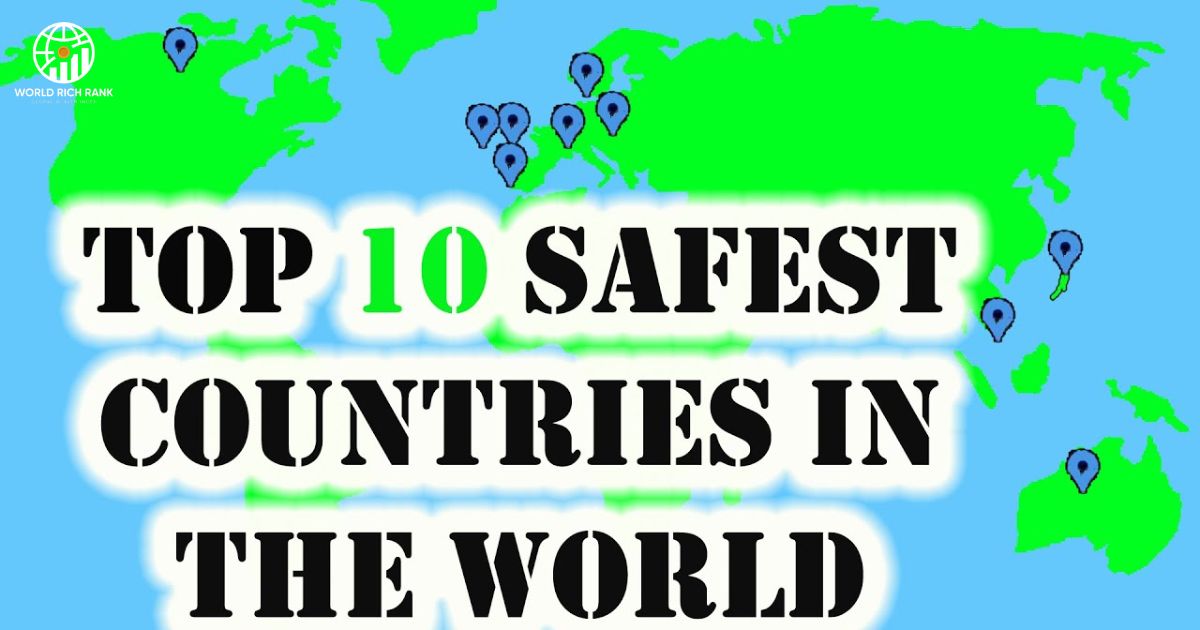
The safest countries in 2026 are generally recognized for their low levels of violence, political stability, strong institutions, peaceful societies, and reliable public services. The ranking below highlights countries that consistently perform strongly across major peace and safety measures, although exact positions can vary depending on the index and methodology used.
1. Iceland
Iceland is widely regarded as one of the safest countries in the world because of its exceptionally peaceful society and very low levels of violent crime. The country benefits from political stability, strong social institutions, and a high level of public trust. Iceland also has a relatively small population and a close-knit community environment, which contributes to its strong sense of security. Its natural environment is generally safe for everyday life, although visitors should remain aware of volcanic activity, severe weather, and changing road conditions. Reykjavík and other populated areas are considered comfortable for travelers, while Iceland’s efficient emergency services provide additional reassurance. For families, tourists, and people seeking a peaceful lifestyle, Iceland remains an excellent choice.
2. Ireland
Ireland is known for its peaceful society, stable political environment, and generally low levels of serious violent crime. The country’s welcoming culture and strong community connections also make it attractive to international visitors and residents. Ireland’s modern healthcare system, established institutions, and reliable emergency services contribute to its overall safety. Travelers should still use normal precautions in busy tourist areas, particularly regarding petty theft and personal belongings. Outside major urban centers, many communities offer a relaxed and secure atmosphere. Ireland also benefits from its relatively low level of military involvement and strong social stability. These factors make it a strong choice for people looking for a safe destination, as well as those considering longer-term living or study opportunities.
3. New Zealand
New Zealand combines political stability, peaceful communities, and relatively low levels of violent crime, making it one of the world’s safest countries. The country has strong institutions, reliable public services, and a reputation for welcoming visitors. Its cities are generally easy to navigate, while smaller communities often provide a quiet and secure lifestyle. However, safety does not mean an absence of natural hazards. New Zealand experiences earthquakes, volcanic activity, and other weather-related risks, so residents and visitors should follow local emergency guidance. Road safety is another consideration, particularly on rural roads. Despite these factors, New Zealand’s overall peaceful environment, social stability, and high quality of life make it a popular choice for travelers, families, and people seeking relocation opportunities.
4. Austria
Austria is recognized for its political stability, peaceful society, and strong public infrastructure. Cities such as Vienna, Salzburg, and Innsbruck generally provide safe environments for residents and tourists, with dependable public transportation and emergency services. Violent crime is relatively uncommon, although travelers should still protect their belongings in crowded transportation hubs and tourist areas. Austria’s high standard of healthcare and well-developed infrastructure also contribute to its overall sense of security. The country’s location in Central Europe provides easy access to neighboring destinations while maintaining a stable domestic environment. Its combination of peaceful communities, organized public services, and economic stability makes Austria particularly appealing to families, tourists, students, and people looking for a secure European country in which to live.
5. Switzerland
Switzerland is widely associated with safety, stability, and well-organized public services. The country has low levels of violent crime, strong institutions, and a stable political and economic environment. Swiss cities and towns are generally clean, orderly, and well connected by reliable transportation. Its healthcare system is highly developed, while emergency services and infrastructure provide strong support during unexpected situations. Travelers should still take ordinary precautions against petty theft in busy tourist locations. Switzerland’s mountainous landscape can also create risks related to snow, avalanches, and hiking conditions, particularly during winter. Overall, its peaceful communities, strong economy, effective institutions, and dependable infrastructure make Switzerland one of the most attractive countries for people who prioritize personal security and quality of life.
6. Singapore
Singapore stands out for its strong public order, effective institutions, and very low levels of serious crime. The city-state has strict laws and consistently enforced regulations, helping create a highly controlled and secure environment for residents and tourists. Public transportation is efficient, streets are generally well maintained, and emergency services are readily accessible. Visitors can usually move around the city comfortably, even after dark, while common concerns are more likely to involve minor scams or property theft than violent crime. Singapore also has strong healthcare facilities and modern infrastructure. Its dense urban environment means natural risks are relatively different from those faced by mountainous or earthquake-prone countries. For travelers seeking an organized and predictable destination, Singapore offers a particularly high level of everyday security.
7. Portugal
Portugal has become a popular destination for travelers, families, and international residents partly because of its peaceful atmosphere and relatively low levels of violent crime. Cities such as Lisbon and Porto offer modern services, established transportation networks, and large international communities. Portugal’s political stability and generally welcoming environment further support its strong safety reputation. As with any popular tourist destination, visitors should remain alert for pickpocketing and other petty crimes in crowded areas. Coastal and rural regions can provide a quieter experience, although weather and wildfire risks should be considered during certain seasons. Overall, Portugal combines a relaxed lifestyle with strong social stability, making it an appealing option for people who want a safe European destination or are considering longer-term residence.
8. Denmark
Denmark is known for its peaceful society, strong institutions, and high levels of social trust. The country generally experiences low levels of violent crime and provides reliable public services, healthcare, transportation, and emergency assistance. Copenhagen and other major cities are considered relatively safe for tourists, although normal precautions are advisable in crowded locations. Denmark’s stable political system and strong economy also contribute to a secure living environment. The country places considerable emphasis on social welfare and community well-being, which can strengthen people’s overall sense of security. While no destination is completely free of risks, Denmark’s combination of peaceful communities, effective institutions, and high living standards makes it a strong choice for travelers and people seeking a stable place to live.
9. Slovenia
Slovenia is a small Central European country that combines peaceful communities with a relatively low level of serious crime. Its compact size, stable institutions, and high-quality public services contribute to a comfortable environment for both residents and visitors. Ljubljana, the capital, is generally considered safe and easy to explore, while the country’s mountains, lakes, and countryside attract travelers looking for outdoor experiences. Visitors should nevertheless pay attention to weather conditions and follow safety guidance when hiking or exploring mountainous areas. Slovenia’s peaceful political environment and strong social stability add to its reputation as a secure destination. For travelers who want a quieter European experience, Slovenia offers an appealing combination of natural beauty, safety, and quality of life.
10. Finland
Finland is recognized for its peaceful society, strong institutions, and high level of social trust. The country generally has low levels of violent crime and provides reliable public services, healthcare, education, and emergency assistance. Helsinki and other Finnish cities are considered safe and well organized, while rural areas offer a quieter environment. Winter conditions can create practical safety concerns, including icy roads, extreme cold, and limited daylight, so visitors should prepare appropriately. Finland’s stable government and resilient infrastructure also contribute to its overall security. Its combination of social stability, effective institutions, and peaceful communities makes Finland an attractive destination for travelers and an appealing country for people seeking a safe and dependable long-term living environment.
Safest Countries to Visit in 2026 (Travel Safety Ranking)
The safest countries to visit in 2026 are destinations where travelers can generally expect low crime, reliable healthcare, political stability, good infrastructure, and effective emergency services. Travel safety rankings may differ because each organization uses its own methodology, but countries such as Japan, Singapore, Iceland, Switzerland, Portugal, Denmark, Finland, New Zealand, Austria, and Ireland frequently perform well across different safety measures. However, being highly ranked does not mean a destination is completely risk-free. Travelers should still consider local crime patterns, weather conditions, transportation, health requirements, and current travel advisories before visiting. The safest destination for one traveler may also differ from another depending on activities, season, age, health needs, and the areas they plan to explore.
What Makes a Country Safe for Travelers?
A country’s overall safety for tourists depends on much more than its crime rate. Travelers need to consider the risks they may actually encounter during a trip, from petty theft and transportation problems to medical emergencies and extreme weather. A destination with strong institutions, dependable infrastructure, and accessible emergency services can provide a safer experience even when occasional risks exist.
Low Tourist-Targeted Crime:
Low levels of crime directed at visitors are an important part of travel safety. Pickpocketing, scams, theft, and harassment can affect tourists, particularly in crowded transportation hubs, popular attractions, nightlife areas, and busy city centers. Countries where these risks are relatively limited can provide travelers with greater peace of mind. Still, tourists should keep valuables secure, avoid displaying large amounts of cash, and remain aware of their surroundings. Crime can vary significantly between neighborhoods, so a country’s overall ranking does not guarantee that every location is equally safe.
Health and Sanitation:
Access to quality healthcare and good sanitation can make a major difference when travelers become sick or injured. Safe destinations generally have reliable hospitals, pharmacies, clean drinking water, food-safety standards, and effective sanitation systems. Travelers should also consider whether emergency medical treatment is easily accessible outside major cities. Depending on the destination, vaccinations, travel insurance, and appropriate medications may also be important. Strong healthcare infrastructure does not eliminate health risks, but it can significantly improve the ability to respond when problems occur.
Political Stability and Infrastructure:
Political stability helps create a predictable environment for visitors. Countries with effective governments, functioning emergency services, reliable transportation, and well-maintained roads and public facilities are generally easier and safer to navigate. Stable political conditions can also reduce the likelihood of sudden disruptions caused by protests, civil unrest, or conflict. For tourists, dependable airports, public transportation, telecommunications, police services, and emergency response systems can be just as important as low crime.
Disaster and Climate Resilience:
Natural disasters and extreme weather can create significant risks even in otherwise peaceful countries. Earthquakes, floods, wildfires, hurricanes, volcanic activity, extreme temperatures, and severe winter conditions can affect travel plans and personal safety. Countries with effective early-warning systems, emergency planning, resilient infrastructure, and clear public safety procedures are often better prepared to protect residents and visitors. Travelers should check seasonal conditions before departure and understand local emergency instructions, particularly when participating in outdoor activities or visiting areas exposed to natural hazards.
Safest Countries by Region (2026)
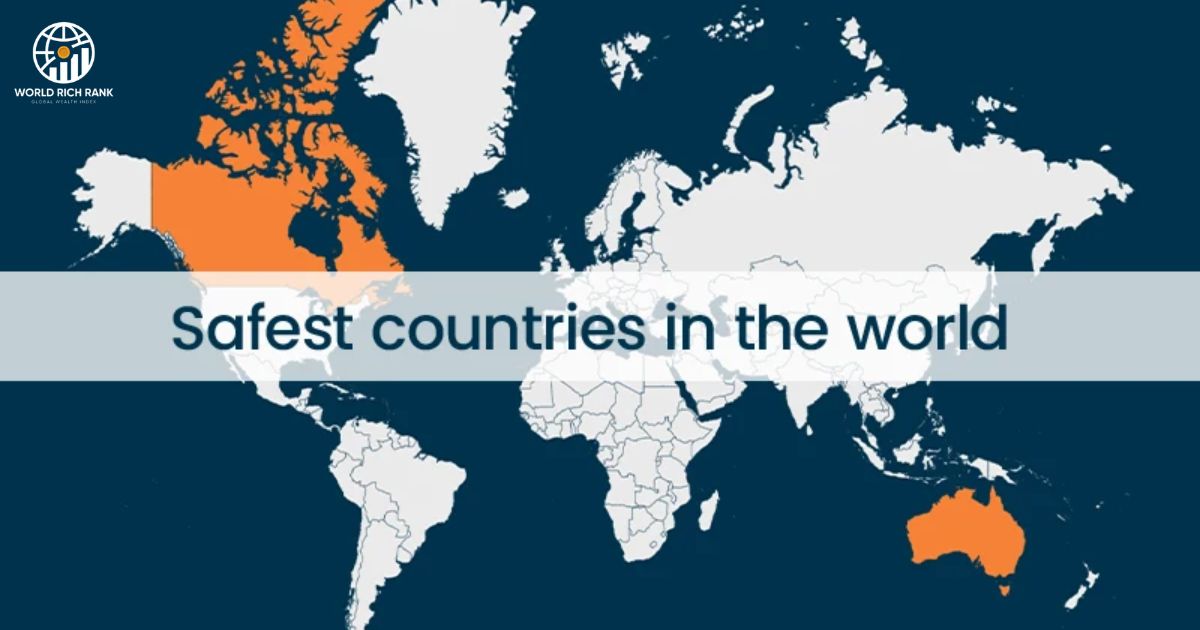
Safety looks different from one region to another. Some countries stand out because of very low crime and strong public institutions, while others benefit from political stability, good healthcare, reliable infrastructure, or relatively low exposure to conflict. The safest countries by region in 2026 should therefore be viewed as a broad guide rather than an absolute ranking. Travelers and people considering relocation should also check current conditions, because safety can change because of elections, natural disasters, economic conditions, or regional conflicts. The countries below represent strong options when considering overall peace, personal security, infrastructure, healthcare, and stability.
Europe:
Europe contains many of the world’s strongest performers for peace and personal safety. Countries such as Iceland, Ireland, Switzerland, Austria, Denmark, Finland, Portugal, Slovenia, and Norway are frequently associated with high levels of stability and low violent crime. Their strong institutions, dependable transportation, healthcare systems, and relatively peaceful societies make them attractive to both tourists and residents. Iceland is particularly notable for its peaceful environment, while Switzerland and Denmark benefit from strong infrastructure and political stability. Portugal is also popular among international visitors because of its generally relaxed atmosphere and developed tourism infrastructure. However, travelers should still be aware of petty theft in busy tourist areas and seasonal risks such as extreme winter weather or wildfires.
Asia:
Asia includes several countries that offer excellent safety conditions, although the region varies considerably in political and social conditions. Singapore, Japan, South Korea, Malaysia, and Bhutan are among the countries often considered safer choices for travelers. Singapore is particularly known for low crime, strict law enforcement, efficient public transportation, and excellent infrastructure. Japan combines low violent crime with highly organized transportation and emergency systems, although earthquakes and other natural hazards require preparation. South Korea also benefits from modern infrastructure and efficient public services. Bhutan provides a peaceful environment and a distinctive low-volume tourism model. Visitors should nevertheless research local laws and customs, as regulations and social expectations can differ considerably across Asian countries.
North America:
In North America, Canada is one of the strongest choices for overall safety, supported by political stability, developed infrastructure, reliable healthcare services, and generally low levels of violent crime compared with many destinations worldwide. The United States has excellent infrastructure and healthcare facilities but presents a more varied safety picture because crime levels can differ significantly between states, cities, and neighborhoods. Costa Rica is another popular choice for travelers seeking a relatively peaceful destination in the region, particularly because of its established tourism industry and natural attractions. Mexico also has many highly visited and safe tourist areas, but security conditions vary substantially by state and city. Travelers should therefore assess their specific destination rather than relying on country-level rankings alone.
South America:
South America has several destinations that can provide safe and enjoyable travel experiences when visitors choose their locations carefully. Uruguay is frequently regarded as one of the region’s more stable and peaceful countries, with established institutions and a relatively high standard of living. Chile also benefits from strong infrastructure, developed cities, and relatively stable institutions. Argentina offers many popular tourist destinations and generally has good infrastructure in major cities, although economic conditions and petty crime can affect visitors. Countries such as Colombia have made significant improvements in tourism and infrastructure, but safety can vary considerably between regions. Travelers should research individual cities and attractions, avoid displaying valuables, and follow local security guidance.
Africa:
Africa is extremely diverse, so countrywide safety rankings do not always reflect conditions in individual cities or tourist regions. Mauritius is one of the continent’s strongest choices for travelers, offering political stability, a developed tourism industry, and a relatively peaceful environment. Seychelles is another attractive option, particularly for visitors staying in established resort and tourism areas. Botswana is known for political stability and is a popular destination for safari tourism. Namibia also offers established tourism infrastructure and extensive natural attractions. Rwanda has developed a strong reputation for cleanliness, organization, and tourism management, particularly in major visitor areas. Nevertheless, travelers should consider road conditions, healthcare availability outside major cities, wildlife-related risks, and regional differences before visiting.
Middle East:
Safety conditions in the Middle East differ significantly from country to country, particularly because regional conflicts can change the security environment quickly. Qatar and the United Arab Emirates are among the region’s strongest options for travelers seeking modern infrastructure, low street crime, and well-developed tourism services. Cities such as Doha and Abu Dhabi offer extensive transportation networks, modern healthcare facilities, and strong public security. Oman is also widely appreciated for its peaceful atmosphere, welcoming culture, and natural attractions. Jordan remains an important tourism destination with established visitor infrastructure, although travelers should monitor regional developments. Because the Middle East can experience rapid geopolitical changes, visitors should always check current government travel advisories before departure rather than relying solely on general safety rankings.
Oceania:
New Zealand and Australia are the region’s leading choices for many travelers seeking safe and well-developed destinations. New Zealand is known for its peaceful society, strong institutions, and generally low levels of violent crime. It also has excellent opportunities for outdoor tourism, although earthquakes, volcanic activity, changing weather, and remote hiking conditions require preparation. Australia has strong infrastructure, high-quality healthcare, and generally stable political conditions. However, its enormous size means visitors may encounter different risks depending on the region, including extreme heat, bushfires, dangerous marine environments, and remote-road conditions. Travelers should follow local warnings and prepare appropriately when exploring rural or wilderness areas. Overall, both countries offer strong infrastructure and dependable services for international visitors.
Safest Countries for Different Travelers (2026)
The safest country can depend on who is traveling and what kind of trip they are planning. A destination that works well for a solo backpacker may not offer the same advantages for families with young children or LGBTQ+ travelers. Factors such as street crime, healthcare, transportation, social attitudes, legal protections, political stability, and emergency services can all influence the travel experience. In 2026, countries such as Iceland, Switzerland, Denmark, Finland, New Zealand, Singapore, Ireland, Portugal, Canada, and Australia are among the destinations that can provide strong safety conditions for different types of travelers.
Solo Travelers
Solo travelers often benefit from destinations with low crime, easy transportation, good communication networks, and reliable emergency services. Iceland is an excellent choice because of its peaceful environment, low levels of violent crime, and relatively easy travel infrastructure. Japan is another strong option, with highly organized public transportation, generally low crime, and a culture that makes independent travel relatively straightforward. Singapore is particularly convenient for first-time solo travelers because of its efficient public transport, clean streets, and strong public security.
Switzerland, Denmark, Finland, and New Zealand are also appealing for independent travelers. Their stable institutions and reliable infrastructure can make it easier to navigate unfamiliar surroundings. However, solo travelers should not assume that a high national safety ranking eliminates personal risks. Keeping valuables secure, sharing itineraries with someone at home, avoiding isolated areas late at night, and checking local transportation and weather conditions are still sensible precautions. Outdoor adventures require additional preparation, especially in countries with mountains, wilderness, or rapidly changing weather.
Women Travelers
For women traveling alone or with friends, safety can involve more than violent crime. Harassment, unwanted attention, transportation safety, access to healthcare, and social attitudes can all influence how comfortable a destination feels. Iceland, Finland, Denmark, Switzerland, New Zealand, Ireland, and Singapore are often attractive choices because of their overall stability, established infrastructure, and relatively safe public environments.
Japan can also be appealing because of its low crime levels and extensive transportation system, while Portugal is popular with women travelers because of its tourism infrastructure and generally relaxed atmosphere. Regardless of destination, women should research local customs and laws, particularly when traveling alone. Using reputable accommodation, keeping emergency contacts available, and being cautious with strangers are practical steps. Safety can also vary within the same country, so checking the specific city or region is more useful than relying only on a national ranking. Travel insurance and access to medical services are additional considerations worth planning before departure.
Families (Traveling with Children)
Families generally need destinations that offer safe transportation, dependable healthcare, clean public spaces, family-friendly accommodation, and activities suitable for children. Singapore is particularly attractive because of its efficient public transportation, organized urban environment, strong healthcare system, and low levels of serious crime. Japan is another excellent choice, offering reliable trains, family-friendly attractions, and generally safe cities.
European countries such as Denmark, Finland, Switzerland, Austria, and Portugal can also work well for family vacations. These destinations offer developed infrastructure and numerous attractions suitable for different age groups. New Zealand and Australia provide excellent family experiences, particularly for families interested in nature and outdoor activities, although parents should pay attention to weather, wildlife, and road safety.
Families should also consider practical issues such as stroller accessibility, availability of children’s medicines, food options, accommodation location, and proximity to hospitals. Parents traveling internationally should keep copies of important documents and emergency contacts. A destination can be statistically safe while still presenting specific challenges for young children, so planning around the family’s age, health needs, and activities is essential.
LGBTQ+ Travelers
For LGBTQ+ travelers, safety involves both physical security and the legal and social environment. Countries with stronger anti-discrimination protections, broader legal recognition, and more accepting public attitudes can provide a more comfortable experience. Iceland, Denmark, Finland, Switzerland, Ireland, Portugal, New Zealand, Canada, and Australia are generally among the more LGBTQ+-friendly destinations, although protections and social attitudes can vary between regions.
Portugal is particularly popular among LGBTQ+ travelers because of its established tourism industry and generally welcoming environment. Canada and New Zealand also offer strong legal protections and diverse communities. Major cities such as Copenhagen, Dublin, Lisbon, Toronto, Sydney, and Auckland can provide particularly welcoming environments and established LGBTQ+ tourism resources.
Travelers should still research local laws before visiting, especially when traveling beyond major cities. Laws concerning same-sex relationships, public displays of affection, gender identity, and LGBTQ+ expression differ significantly around the world. Checking current travel advisories and local regulations before departure is especially important for LGBTQ+ travelers, as legal protections and social conditions can change over time.
Safest Countries to Move to in 2026
For people planning an international move in 2026, safety is only one part of the decision. Political stability, healthcare, employment opportunities, immigration pathways, housing costs, education, and quality of life are equally important. Countries such as Switzerland, Portugal, New Zealand, Austria, Denmark, Canada, and Singapore stand out because they combine relatively strong personal security with developed infrastructure and stable institutions.
The best destination depends heavily on a person’s circumstances. A skilled professional may prioritize employment-based residence, while a remote worker may prefer a country offering a digital-nomad route. Families may place greater importance on schools and healthcare, while retirees may focus on cost of living and long-term residence options. Immigration rules can also change, so applicants should verify current visa requirements before making a relocation decision.
| Country | Why People Move There | Main Residence Options | Key Advantages |
| Switzerland | Political stability, strong economy, low crime | Work permits, residence permits, investor routes | High salaries, excellent healthcare, safety |
| Portugal | Safety and relatively affordable European lifestyle | D7 visa, digital nomad visa, work residence | Mild climate, established expat communities |
| New Zealand | Peaceful society and English-speaking environment | Skilled Migrant Category, work and investor pathways | Nature, safety, strong social systems |
| Austria | High quality of life and strong healthcare | Red-White-Red Card, EU Blue Card | Excellent infrastructure, central European location |
| Denmark | Strong welfare system and social trust | Work permits, Positive List schemes | Family-friendly environment, stability |
| Canada | Stable cities and established immigration pathways | Express Entry, PNP, work permits | Multicultural society, healthcare access |
| Singapore | Very low crime and strong economy | Employment Pass, investor programmes | Business opportunities, public safety |
What Changed from 2025 to 2026?
The 2026 Global Peace Index shows that global peacefulness deteriorated for the 12th consecutive year, with 99 countries becoming less peaceful and 62 improving compared with 2025. The biggest changes were influenced by ongoing conflicts, internal instability, militarisation, and political unrest. Despite the overall decline, several countries improved enough to move higher in the rankings, while others experienced significant falls.
Countries That Improved
Several countries made notable progress between the 2025 and 2026 GPI editions. New Zealand was one of the strongest performers among highly ranked countries, moving from third to second place. Its overall peacefulness improved by about 0.4%, supported particularly by a reduction in militarisation and weapons imports. Slovenia also made a significant advance, rising from sixth to fourth. Its improvement was driven mainly by stronger performance in the Safety and Security domain.
Portugal moved from eighth to seventh, continuing its consistent performance across the three major GPI domains. Iceland remained in first place while improving its overall peacefulness by about 2%. Its Safety and Security score improved notably, helped by a substantial reduction in the violent demonstrations indicator. These changes show that improvement does not always mean a country enters the top 10 for the first time; even already-peaceful nations can strengthen their position through better security, lower conflict, or reduced militarisation.
Beyond the top rankings, the 2026 index recorded improvements in a number of countries. However, the overall number of improving countries was considerably smaller than the number experiencing deterioration. This highlights how difficult it has become for countries to maintain or improve peacefulness amid rising global conflict and geopolitical tensions.
Countries That Dropped
The 2026 GPI recorded deterioration in 99 countries, making it the largest number of countries to experience a decline in peacefulness in the history of the index. The biggest pressure came from the Ongoing Conflict domain, which includes factors such as deaths from internal conflict, participation in external conflicts, and active wars. Global conflict deaths also remained exceptionally high during the period measured by the index.
Among countries that remained near the top of the rankings, Switzerland slipped from second to third, while Ireland fell from third to fifth. Austria dropped from fifth to sixth. These countries remained highly peaceful despite their ranking declines, showing that a fall in position does not necessarily mean a country became unsafe. In some cases, another country simply improved more strongly.
Singapore also moved down one place to eighth, although its overall score remained essentially unchanged and it continued to perform strongly in Safety and Security. Denmark and Japan also moved outside the top positions compared with the previous ranking. The changes demonstrate why rankings should be interpreted alongside actual scores and individual indicators rather than by position alone.
The most serious deteriorations occurred in countries affected by major conflicts or domestic instability. Pakistan, for example, fell six places to 152nd, its lowest position since 2017, with its overall score deteriorating by 5.5%. The 2026 report attributed much of the decline to worsening conditions in the Ongoing Conflict domain. The Republic of the Congo fell 15 places, while other conflict-affected countries also recorded substantial declines.
The United States also experienced a notable decline, falling to 134th, its lowest-ever position in the GPI. The report attributed the deterioration partly to political instability and an increase in violent demonstrations. Overall, these changes demonstrate that safety rankings can shift significantly from year to year when countries experience conflict, political unrest, or changes in security conditions.
Frequently Asked Questions
What is the safest country in the world in 2026?
Iceland is widely regarded as the safest and most peaceful country in the world in 2026. Its low levels of violent crime, political stability, social trust, and peaceful environment contribute to its strong position in global safety and peace rankings.
Which countries are the safest to travel to in 2026?
Countries such as Iceland, Singapore, Japan, Switzerland, New Zealand, Denmark, Finland, Portugal, Austria, and Ireland are among the strongest choices for travelers. They generally offer low crime, reliable infrastructure, good healthcare, and stable political conditions.
Which country has the lowest crime rate in the world?
There is no single universally accepted country with the absolute lowest crime rate because crime statistics are measured differently between countries. Singapore, Iceland, Japan, Switzerland, and several Nordic countries are frequently recognized for very low levels of serious crime.
How are “safest country” rankings determined?
Safety rankings use different criteria depending on the organization. Common factors include violent crime, political stability, conflict, terrorism, healthcare, infrastructure, natural-disaster risks, and social security. The Global Peace Index, for example, focuses heavily on peace, conflict, and societal safety.
Is the world becoming safer or more dangerous?
According to the 2026 Global Peace Index, the world has generally become less peaceful. The report recorded deterioration in peacefulness across more countries than those that improved, with ongoing conflicts, political instability, and militarization contributing to the broader decline.
What is the safest country in Africa in 2026?
Mauritius is one of the strongest candidates for the safest country in Africa, particularly for travelers. Seychelles, Botswana, Namibia, and Rwanda are also often considered relatively safe options, although conditions vary considerably between countries and regions.
Is the United States considered a safe country?
The United States has strong infrastructure, advanced healthcare, and many safe cities and communities, but safety varies significantly by state, city, and neighborhood. It does not rank among the world’s most peaceful countries overall, partly because of relatively high levels of violent crime and other security factors.
Is Europe safer than Asia?
Neither continent can be considered universally safer. Europe contains many of the world’s highest-ranked peaceful countries, while Asia includes exceptionally safe destinations such as Singapore and Japan. Safety depends more on the individual country, city, and type of risk being measured than on the continent alone.
What is the safest country for expats?
There is no single best choice for every expat. Switzerland, Portugal, Denmark, New Zealand, Austria, Singapore, and Canada can be attractive because they combine safety with strong infrastructure, healthcare, economic opportunities, and quality of life. Visa requirements and living costs should also be considered.
What is the safest country for raising children?
Countries such as Denmark, Finland, Switzerland, New Zealand, Iceland, and Austria can be excellent choices for families. They generally combine personal safety with strong healthcare, education systems, social services, and family-friendly infrastructure.
What is the safest English-speaking country?
New Zealand, Ireland, Canada, and Australia are among the safest English-speaking countries. New Zealand and Ireland are particularly strong choices for people who prioritize peacefulness and low crime, while Canada and Australia offer large economies, developed infrastructure, and diverse communities.
What do the safest countries have in common?
The safest countries generally have stable governments, effective institutions, low levels of violent crime, strong social trust, reliable healthcare, good infrastructure, and peaceful communities. Many also have effective emergency services and relatively resilient systems for managing political, economic, and environmental risks.

Stoke is a passionate writer and researcher focused on the world’s richest countries, global wealth, economies, and country rankings. He creates clear, easy-to-understand content to help readers explore global economic trends.