

Best Education Systems in the World: Countries with the best education systems in 2026 combine strong academic performance, skilled teachers, modern schools, equal access, and practical learning. Finland is widely admired for student-centered education and teacher quality, while Singapore stands out for academic achievement, mathematics, science, and structured learning. Other leading systems include Japan, South Korea, Canada, the Netherlands, Switzerland, Australia, New Zealand, and Estonia.
You can also read: What Are the Safest Countries in the World in 2026?
Finland
- Student-centered learning: Focuses on understanding, creativity, and independent thinking rather than excessive testing.
- Highly trained teachers: Teaching is a respected profession with strong preparation and professional independence.
- Balanced education: Students receive academic instruction alongside creativity, play, and practical skills.
- Equal opportunities: Finland emphasizes accessible, high-quality education across different communities.
Singapore
- Excellent academic results: Students consistently perform strongly in mathematics, science, and reading.
- Strong STEM focus: Schools place significant attention on science, technology, engineering, and mathematics.
- Structured curriculum: Clear learning goals and rigorous teaching help students build strong foundations.
- Future-ready skills: Education increasingly combines academic knowledge with digital skills, problem-solving, and innovation.
Top 10 Education Systems (2026)
- Singapore – Academic excellence and STEM education
- Finland – Student well-being and teaching quality
- Japan – Discipline, consistency, and academic standards
- South Korea – Strong academic achievement
- Canada – Inclusive and well-rounded education
- Netherlands – Flexible and student-focused learning
- Switzerland – Vocational and higher education pathways
- Australia – Research and international education
- New Zealand – Creative and inclusive learning
- Estonia – Digital education and strong outcomes
Best by Category
- Best overall academic performance: Singapore
- Best for student well-being: Finland
- Best for STEM: Singapore
- Best for vocational education: Switzerland
- Best for inclusive education: Canada
- Best for digital learning: Estonia
- Best for creativity: Finland and New Zealand
- Best for discipline and consistency: Japan
2026 Trends
Education systems in 2026 are placing greater emphasis on AI literacy, digital skills, personalized learning, critical thinking, mental well-being, and practical career preparation. Schools are increasingly using technology to support teachers rather than simply replacing traditional classroom methods. Another major trend is preparing students for jobs that may change rapidly because of artificial intelligence and automation. Countries with strong teacher training, flexible curricula, digital infrastructure, and equal access to education are particularly well positioned for the future.
What Country Has the Best Education in 2026?

There is no single country that can be called the best in every part of education, but Singapore is one of the strongest overall choices in 2026. Its education system is known for excellent academic performance, particularly in mathematics, science, and reading. Schools follow a structured curriculum while increasingly developing problem-solving, technology, and critical-thinking skills. Teachers receive strong professional preparation, and students are encouraged to build solid academic foundations from an early age.
Finland is another leading example, especially when education quality is measured beyond test scores. Its system places greater emphasis on student well-being, creativity, independent learning, and equal access to education. Teachers are highly respected and have considerable professional responsibility in the classroom. Rather than relying heavily on standardized testing, Finnish schools focus on helping students understand concepts and develop useful skills.
Other countries also stand out for specific strengths. Japan is recognized for discipline and consistent educational standards, while South Korea has exceptionally strong academic achievement. Canada is known for inclusive and diverse education, and Estonia has developed an impressive digital learning environment.
Overall, Singapore can be considered the best country for academic performance in 2026, while Finland may be a better choice for those who prioritize student well-being and balanced learning. The right education system ultimately depends on whether the priority is test results, creativity, affordability, university preparation, or career-focused skills.
Top 10 Countries with the Best Education Systems (2026 Ranking)
The best education systems in 2026 are not defined by test scores alone. Strong countries combine academic achievement with teacher quality, modern infrastructure, digital learning, equal access, student well-being, and preparation for higher education and future careers. The following ranking highlights countries and education systems that consistently stand out internationally. China, South Korea, Finland, Hong Kong, Singapore, Canada, New Zealand, Japan, Australia, and the Netherlands each offer distinctive strengths, although their approaches to teaching and learning are quite different.
1. China
China has one of the world’s largest and most competitive education systems. Its schools place strong emphasis on mathematics, science, reading, and academic discipline. Students often follow a structured curriculum with considerable preparation for important examinations and university admission. Major cities such as Beijing and Shanghai have developed particularly strong schools and universities, supported by modern facilities and highly qualified educators.
China has also invested heavily in technology and educational infrastructure. Digital classrooms, online learning platforms, and technology-focused programs are becoming increasingly common. While the system can be demanding because of its examination culture, its focus on academic foundations and STEM subjects makes China a major global education leader.
2. South Korea
South Korea is widely recognized for its strong academic culture and high educational expectations. Students generally receive substantial support in mathematics, science, reading, and other core subjects. Families place significant importance on education, and students may spend additional time studying outside regular school hours.
The country also has excellent digital infrastructure, allowing schools to incorporate technology into teaching and learning. South Korea’s universities are increasingly connected with research, technology, and innovation. Although the pressure to achieve academically can be intense, the country’s commitment to education has helped produce strong learning outcomes and a highly educated workforce.
3. Finland
Finland takes a different approach from many high-performing education systems. Instead of placing excessive emphasis on standardized examinations, Finnish schools focus on understanding, creativity, cooperation, and student well-being. Teachers are highly trained and enjoy considerable professional independence when designing lessons.
Another major strength is educational equality. Finland works to provide students from different backgrounds with access to high-quality education and support services. Classroom learning is often balanced with practical activities and time for students to develop independently. This combination of teacher quality, equality, and student-centered learning keeps Finland among the world’s most respected education systems.
4. Hong Kong (China)
Hong Kong has a highly competitive education system with strong performance in mathematics, science, and reading. Schools generally maintain high academic standards and place considerable emphasis on preparing students for further education. Its position as an international financial and academic center also gives students access to a diverse educational environment.
The education system combines Chinese educational traditions with international influences. English-language instruction is widely available, and students can access internationally recognized universities and qualifications. Hong Kong also benefits from strong digital infrastructure and a culture that places considerable value on academic achievement.
5. Singapore
Singapore is one of the strongest education systems in the world, particularly in mathematics, science, and reading. Its schools use a structured curriculum designed to build strong academic foundations while increasingly emphasizing critical thinking, problem-solving, and technology.
Teachers receive extensive professional training, while schools use assessment to identify areas where students need additional support. Singapore also places strong emphasis on STEM education and preparing students for a technology-driven economy. Although the system can be demanding, its combination of rigorous teaching, strong teachers, and excellent academic outcomes makes it a leading education model in 2026.
6. Canada
Canada is known for providing a relatively inclusive and well-rounded education. Its schools generally emphasize academic knowledge alongside communication, creativity, critical thinking, and practical skills. Education is administered largely at the provincial level, which allows different regions to adapt programs to local needs.
Another important advantage is diversity. Canadian schools serve students from many cultural and linguistic backgrounds, creating internationally oriented learning environments. The country also has respected universities and colleges that attract students from around the world. Strong research institutions and career-focused post-secondary programs further strengthen Canada’s position.
7. New Zealand
New Zealand offers an education system that combines academic learning with creativity, independence, and practical development. Schools often encourage students to participate actively in their learning rather than simply memorize information. Communication, problem-solving, and personal development are important parts of the educational experience.
The country’s relatively flexible curriculum allows schools to incorporate local culture, technology, and community-based learning. New Zealand also has internationally respected universities and a strong reputation among international students. Its combination of quality education, English-language instruction, and a supportive learning environment makes it an attractive destination for students.
8. Japan
Japan’s education system is known for discipline, organization, strong academic foundations, and respect for learning. Mathematics, science, reading, and other core subjects receive significant attention, while students are also encouraged to develop responsibility and cooperation.
Japanese schools often teach students important habits such as punctuality, cleanliness, teamwork, and respect for others. The country also has excellent universities and strong connections between education, research, technology, and industry. Although the academic environment can be competitive, Japan’s consistent standards and strong classroom culture make it one of the leading education systems in 2026.
9. Australia
Australia has a strong and internationally recognized education system covering primary schools, secondary education, vocational training, and universities. Its schools increasingly emphasize critical thinking, digital literacy, communication, and independent learning rather than relying only on memorization.
Australian universities are particularly attractive to international students and have strong research programs across science, medicine, technology, and business. The country’s multicultural environment also helps create diverse classrooms. Flexible educational pathways allow students to move between academic and vocational options, giving Australia a strong position in both school and higher education.
10. Netherlands
The Netherlands is recognized for its student-focused and flexible approach to education. Schools encourage independent thinking, communication, collaboration, and practical problem-solving. Students can follow different educational pathways according to their interests, academic abilities, and career goals.
The country also has a strong higher-education sector, with many internationally respected universities and programs taught in English. Vocational education is another important part of the Dutch system, helping students develop practical skills for employment. Its combination of flexibility, quality teaching, career preparation, and international orientation makes the Netherlands a strong choice in 2026.
Final Ranking at a Glance
| Rank | Country/Education System | Main Strength |
| 1 | China | Academic achievement and STEM |
| 2 | South Korea | Strong academic performance |
| 3 | Finland | Student well-being and teaching quality |
| 4 | Hong Kong (China) | Mathematics and science |
| 5 | Singapore | Academic excellence and STEM |
| 6 | Canada | Inclusion and balanced education |
| 7 | New Zealand | Creativity and independent learning |
| 8 | Japan | Discipline and strong foundations |
| 9 | Australia | Higher education and research |
| 10 | Netherlands | Flexible and student-focused learning |
Comparison Table (K-12, Universities, Affordability, etc.)
| Country | K-12 Performance (PISA 2022) | Top Universities (Global Ranking) | Higher Ed Affordability | Adult Literacy Rate |
| Finland | Strong performance in reading and science, with high educational equity | University of Helsinki is a leading global institution | Public higher education is tuition-free for eligible EU/EEA students | 99% |
| South Korea | Among the world’s strongest performers in mathematics and reading | Seoul National University and KAIST are internationally recognized | Public universities are relatively affordable, but tuition is not generally free | 98% |
| Singapore | #1 in PISA 2022 mathematics with very strong science and reading results | National University of Singapore and Nanyang Technological University rank highly worldwide | Subsidized for eligible students, with financial aid available | 97% |
| United States | Above OECD average in reading and science, but weaker in mathematics | MIT, Harvard, Stanford, and other universities dominate global rankings | Higher tuition costs, although extensive financial aid is available | 99% |
| United Kingdom | Above OECD average across reading, mathematics, and science | Oxford, Cambridge, and Imperial College London are global leaders | Universities charge tuition, with financial support and loans available | 99% |
| Canada | Strong reading performance with above-average mathematics and science results | University of Toronto, McGill, and UBC are leading institutions | Public K-12 education is free; university tuition is moderate compared with some countries | 99% |
Key Takeaways
- Best K-12 academic performance: Singapore stands out, particularly in mathematics, while South Korea also performs exceptionally well.
- Best education equity: Finland is widely recognized for providing strong educational opportunities across different student groups.
- Best universities: The United States has the greatest concentration of globally leading universities, followed by the United Kingdom.
- Best affordability: Finland offers particularly attractive public higher education conditions for eligible EU/EEA students, while Canada provides relatively accessible public education.
- Best combination of school and university education: Canada and Singapore offer strong performance across multiple stages of education.
- Highest literacy: Finland, the United States, the United Kingdom, and Canada have adult literacy rates around 99%, although literacy statistics can vary by measurement and source.
Best Countries by Education Category
Different countries lead in different areas of education, from strong K-12 foundations and world-class universities to affordable access and advanced STEM programs.
K-12 Education (Primary and Secondary)
K-12 education is the foundation of a country’s education system, and several countries stand out for their teaching quality, student performance, and learning environments. Singapore is one of the strongest performers academically, particularly in mathematics, science, and reading. Its structured curriculum, highly trained teachers, and emphasis on problem-solving help students achieve consistently strong results.
Finland takes a different approach and is especially respected for student well-being, educational equality, and teacher quality. Students are encouraged to understand concepts, think independently, and develop practical skills rather than simply prepare for frequent standardized tests. South Korea and Japan are also known for strong academic foundations, disciplined learning environments, and high expectations.
Canada provides a more flexible and inclusive K-12 experience, with schools serving students from diverse cultural and linguistic backgrounds. Australia and New Zealand similarly emphasize creativity, communication, critical thinking, and independent learning.
Overall, Singapore is a leading choice for academic performance, while Finland is particularly attractive for balanced learning and student well-being. The best system ultimately depends on whether families prioritize examination results, creativity, equality, or a less stressful educational environment.
Higher Education (Universities and Colleges)
Higher education rankings look beyond classroom performance and consider universities, research, innovation, academic reputation, and opportunities for students. The United States remains a major global leader because of its large concentration of internationally recognized universities, including Harvard, MIT, Stanford, and Princeton. American institutions are particularly strong in research, technology, medicine, business, and engineering.
The United Kingdom is another leading destination, with universities such as Oxford, Cambridge, Imperial College London, and University College London attracting students from around the world. The country’s universities have strong research networks and internationally recognized qualifications.
Canada also performs well, particularly through institutions such as the University of Toronto, McGill University, and the University of British Columbia. Australia has several globally respected universities and is a popular destination for international students.
In Asia, Singapore offers excellent universities with strong connections to technology, business, and research, while Japan and South Korea have powerful universities and advanced research programs. Switzerland and the Netherlands are also attractive for specialized programs and international education.
For overall university choice, the United States and United Kingdom stand out for elite institutions, while Canada, Australia, Singapore, and the Netherlands offer strong alternatives with international opportunities.

Affordability and Access
Affordability and access are important when comparing education systems because excellent academic results mean little if students cannot realistically reach or afford quality education. Countries approach this challenge differently through free public schooling, government subsidies, scholarships, student loans, and other financial support.
Finland is particularly attractive for accessible public education. Students who meet the relevant eligibility requirements can benefit from tuition-free public higher education, while the country also provides strong support throughout the education system. Other Nordic countries, including Norway, Sweden, and Denmark, have historically emphasized broad access to education, although tuition rules can vary according to citizenship and program.
Germany is another popular option for students seeking affordable higher education. Many public universities charge little or no tuition for eligible students, although administrative and semester fees may apply. This makes Germany particularly attractive to international students comparing the total cost of studying abroad.
Canada offers free public K-12 education for eligible residents and has numerous universities and colleges, although international students generally pay higher tuition. Australia and the United Kingdom also provide strong educational opportunities but can be expensive, particularly for international students.
Access is not only about tuition. Living costs, transportation, accommodation, scholarships, admission requirements, and financial aid can significantly affect the overall price. Singapore uses substantial government subsidies and financial assistance to make education more accessible to eligible students.
For students seeking lower costs, Germany and Finland are strong options, while countries such as Canada and Australia provide numerous scholarships and educational pathways. Ultimately, the most affordable destination depends on a student’s nationality, degree level, institution, and eligibility for financial support.
STEM Education (Science, Technology, Engineering, Math)
STEM education has become one of the most important measures of educational strength because science and technology skills are increasingly connected to innovation, economic growth, and future employment. Singapore is one of the strongest countries in STEM education, particularly in mathematics and science. Its schools emphasize analytical thinking, problem-solving, technology, and strong academic foundations from an early age.
South Korea is another major STEM leader. Its education system places significant emphasis on mathematics, science, engineering, and technology, while its universities and research institutions contribute to areas such as electronics, artificial intelligence, robotics, and advanced manufacturing.
Japan also has a long-established reputation for science and engineering. Strong connections between universities, research institutions, and technology companies create opportunities for students interested in engineering, robotics, automotive technology, and scientific research.
The United States remains exceptionally strong in higher-level STEM education and research. Universities such as MIT, Stanford, and Caltech have major influence in computer science, engineering, biotechnology, and artificial intelligence. The country also benefits from a large technology and research ecosystem.
China has rapidly expanded investment in STEM education, particularly in engineering, computer science, artificial intelligence, and scientific research. Switzerland, Germany, Canada, and the Netherlands also offer strong engineering, research, and technical education pathways.
For school-level STEM performance, Singapore and South Korea are among the strongest choices. For university research and advanced innovation, the United States is a global leader, while Japan, China, Germany, Switzerland, and Canada provide strong alternatives.
How Education Rankings Are Measured (Criteria Overview)
Education rankings use several indicators to compare how effectively countries educate their populations. There is no single universal ranking method, so organizations may give different countries different positions depending on whether they focus on school performance, literacy, universities, affordability, or public opinion. A strong comparison usually combines international test results, educational attainment, literacy, higher education quality, public perception, access, funding, and learning conditions.
International Standardized Tests
International assessments provide one of the clearest ways to compare student performance across countries. The Programme for International Student Assessment (PISA) evaluates 15-year-old students in areas such as reading, mathematics, and science. Results help researchers understand whether students can apply knowledge to real-world problems rather than simply memorize information.
Other assessments, including TIMSS for mathematics and science and PIRLS for reading, provide additional information about student achievement. Countries that consistently perform well across several assessments are often considered to have strong K-12 education systems.
However, test scores should not be treated as the only measure of educational quality. They may not fully capture creativity, emotional development, practical skills, classroom experience, or student well-being.
Educational Attainment and Literacy
Educational attainment measures how much formal education people complete. Rankings may consider the percentage of adults who finish secondary school, attend college or university, or obtain advanced qualifications. Higher attainment can indicate that a country’s education system provides students with opportunities to continue learning.
Adult literacy rates are another important indicator. Literacy measures whether people have fundamental reading and writing abilities, although definitions and measurement methods can differ between countries. A high literacy rate generally suggests broad access to basic education.
Researchers may also examine graduation rates, years of schooling, school enrollment, and differences in educational outcomes between socioeconomic groups.
Higher Education Quality
Universities and colleges are measured using criteria that differ from K-12 assessments. Global university rankings may consider academic reputation, research output, citations, international faculty, international students, employer reputation, and research partnerships.
The number and quality of internationally recognized universities can influence a country’s overall education reputation. Countries such as the United States and United Kingdom perform particularly well because they have many highly ranked research universities.
Higher education rankings can also examine graduate employment, innovation, patents, research funding, and connections between universities and industry.
Public Surveys and Perception
Public perception provides another perspective on education quality. Surveys may ask students, parents, teachers, employers, and citizens how they view their country’s schools and universities.
These surveys can reveal information that test scores cannot easily capture, such as teacher satisfaction, confidence in schools, perceived fairness, educational stress, and satisfaction with learning opportunities.
International reputation also matters. A country may have excellent universities or schools but receive a different ranking if people perceive its education system as expensive, stressful, unequal, or difficult to access.
Other Criteria
Education rankings may include several additional factors that influence the overall quality of learning. Affordability and access are important because students need realistic opportunities to enter and complete education. Rankings may consider tuition fees, government funding, scholarships, student aid, and enrollment rates.
Teacher quality is another major factor. Countries with well-trained, well-supported, and adequately compensated teachers often create stronger learning environments. Technology and infrastructure are also increasingly important, including internet access, digital learning tools, laboratories, libraries, and modern classrooms.
Other measures can include student-to-teacher ratios, education spending, school completion rates, equality between regions and income groups, vocational training, employment outcomes, and student well-being. Because each ranking organization weights these factors differently, two reputable rankings can produce different results. Therefore, when comparing the best education systems, it is better to examine several indicators rather than relying on one ranking alone.
Why These Countries Rank Highest (Explaining Key Drivers)
Countries with some of the world’s strongest education systems do not rely on one advantage alone. Their success usually comes from a combination of long-term investment, excellent teachers, equal access, effective curricula, strong institutions, and cultural support for learning. While Finland, Singapore, South Korea, Japan, Canada, China, Australia, and other leading systems use different approaches, they share several important characteristics that help students achieve strong academic and personal outcomes.
Strong Investment in Education
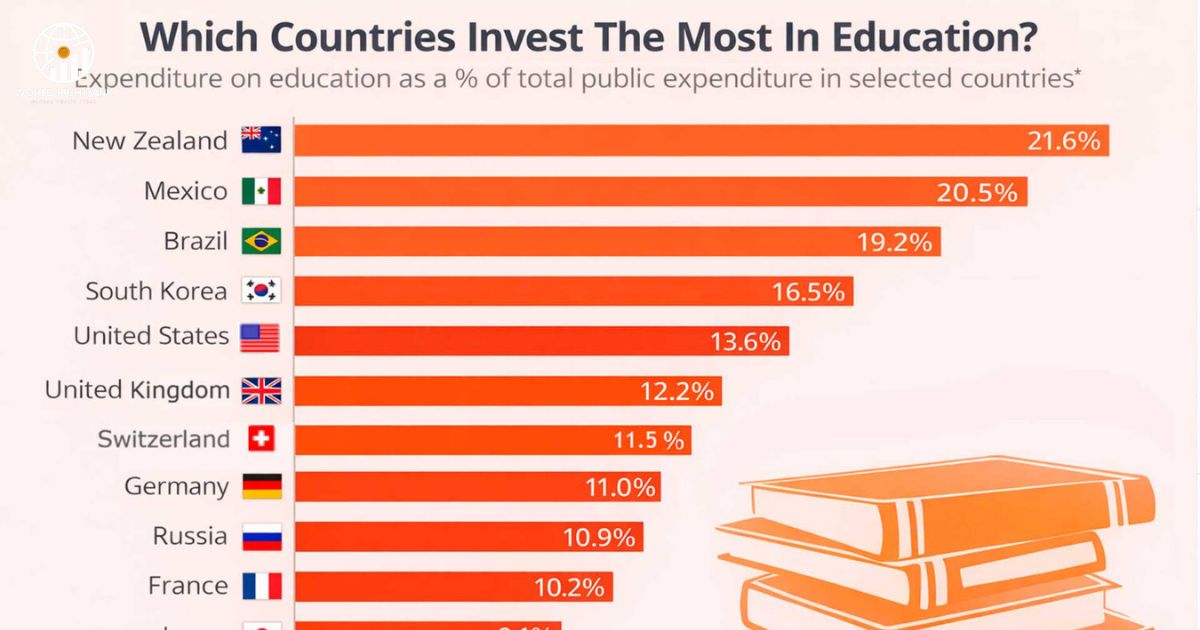
High-performing countries generally treat education as a long-term investment rather than simply a government expense. They provide funding for schools, teacher training, technology, libraries, laboratories, student support, and higher education. Consistent investment also allows schools to maintain buildings and learning resources while adapting to new educational needs.
Singapore, for example, has developed a highly organized education system supported by substantial public investment. Its schools benefit from modern facilities, technology, teacher development, and structured academic programs. South Korea and China have also invested heavily in science, technology, universities, and research.
Investment is not only about spending more money. How resources are distributed matters just as much. Finland focuses strongly on providing comparable educational opportunities across communities, helping reduce large differences between schools. Effective funding allows countries to identify struggling students, provide additional support, and maintain quality across different regions.
High Teacher Quality and Status
Teachers are one of the most important factors behind a successful education system. Countries that perform well often place strong emphasis on teacher education, professional development, classroom autonomy, and working conditions.
Finland is particularly well known for its highly educated teaching workforce. Becoming a teacher is competitive, and teachers receive extensive preparation before entering the profession. They are also trusted to make professional decisions about how lessons are delivered.
Singapore similarly invests heavily in teacher development. Teachers receive structured training and opportunities to improve their skills throughout their careers. In countries such as Japan and South Korea, teachers also hold an important position within the education system and play a central role in maintaining academic standards.
Strong teacher status can attract talented graduates to the profession. When teachers are well prepared, supported, and respected, schools are better positioned to provide consistent instruction and respond to different student needs.
Equity and Inclusion Policies
A strong education system should not only produce excellent results for the highest-performing students. It should also provide opportunities for students from different economic, cultural, geographic, and social backgrounds.
Finland and Canada are notable for emphasizing inclusion and equal access. Schools can provide additional assistance to students who experience learning difficulties or require extra support. Canada also benefits from highly diverse classrooms and educational environments.
Equity does not mean that every student receives exactly the same resources. Instead, successful systems try to provide the support students need to reach their potential. This may include special education services, language assistance, financial support, school meals, counseling, or additional teaching.
Countries that reduce large gaps between disadvantaged and advantaged students are better able to maintain strong national education outcomes. Equal access also helps ensure that talent is not lost because of a student’s financial circumstances or location.
Curriculum and Assessment Balance
The strongest systems generally understand that education involves more than examination scores. Singapore and South Korea have achieved excellent academic results through rigorous curricula and clear learning expectations, while Finland places greater emphasis on broader development and student well-being.
A balanced curriculum can combine mathematics, science, languages, social studies, arts, physical education, technology, and practical skills. Students also need opportunities to develop communication, creativity, collaboration, critical thinking, and problem-solving.
Assessment plays an important role, but excessive testing can create pressure and encourage memorization. Leading systems increasingly use different forms of assessment to understand student progress. Technology can also help teachers identify learning gaps and provide personalized support.
The goal is therefore not simply to produce students who perform well on tests. It is to develop learners who can apply knowledge, solve unfamiliar problems, communicate effectively, and continue learning throughout their lives.
Cultural Values and Expectations
Cultural attitudes toward education can strongly influence student motivation and achievement. In countries such as South Korea, Japan, Singapore, and China, education has traditionally been associated with personal development, career opportunities, and social advancement. Families may place significant importance on academic achievement and encourage children to take their studies seriously.
However, high expectations can have both benefits and disadvantages. Strong motivation can contribute to excellent academic performance, but excessive competition may increase stress among students. This is why countries such as Finland have taken a different approach, emphasizing trust, independence, well-being, and a less test-focused environment.
Ultimately, the highest-performing systems find ways to combine high expectations with appropriate student support. They encourage students to work hard without making academic success the only measure of personal achievement. This balance, together with strong teachers, equitable access, effective funding, and relevant curricula, helps explain why these countries consistently appear among the world’s leading education systems.
Emerging Education Leaders (Estonia, Taiwan, etc.)
The global education landscape is changing, with several countries and education systems rapidly strengthening their schools, digital infrastructure, teaching methods, and student outcomes. While countries such as Finland, Singapore, Japan, and South Korea remain major education leaders, Estonia, Taiwan (Chinese Taipei), Ireland, Poland, and Vietnam have attracted increasing attention. Their progress shows that a successful education system does not always require the largest population or the highest education budget. Strong policies, teacher development, technology, and a clear focus on learning can produce impressive results.
Estonia
Estonia has become one of Europe’s most impressive education success stories. Its students perform strongly in international assessments, particularly in reading, mathematics, and science. The country has also developed a reputation for using technology effectively in schools.
Digital education is an important part of Estonia’s approach. Schools have access to online learning resources, digital tools, and technology-supported teaching. However, Estonia’s success is not based on technology alone. Its education system also emphasizes teacher quality, independent thinking, problem-solving, and relatively equal opportunities for students.
Another advantage is Estonia’s willingness to experiment with new educational approaches. Schools and teachers have flexibility to incorporate modern tools and learning methods. As artificial intelligence and digital skills become increasingly important, Estonia is well positioned to remain a strong European education leader.
Taiwan (Chinese Taipei)
Taiwan has developed a strong education system supported by high academic expectations and a major emphasis on science and technology. Students generally perform well in mathematics and science, while the country benefits from strong connections between education, technology, manufacturing, and research.
STEM education is particularly important. Universities and schools help prepare students for fields such as engineering, electronics, computer science, and advanced technology. Taiwan’s globally important technology industry also creates a strong environment for technical skills and innovation.
The education system has been gradually moving beyond traditional examination-focused learning by giving greater attention to creativity, communication, digital literacy, and practical skills. Its combination of academic discipline and technological expertise makes Taiwan an important emerging education leader.
Ireland
Ireland has become a strong performer in European education, particularly in reading and other core academic areas. Its education system benefits from widespread English-language instruction, relatively strong literacy outcomes, and a growing higher education and research sector.
Ireland is also attractive to international students because of its English-speaking environment and connections to major technology, pharmaceutical, and business companies. Universities and colleges increasingly cooperate with industry, creating opportunities for students to develop skills relevant to modern employment.
The country has also worked to improve access and participation in higher education. With its combination of strong school performance, English-language education, research opportunities, and a growing technology economy, Ireland has considerable potential to move further up global education comparisons.
Poland
Poland has made significant progress in education over recent decades. Its students have demonstrated strong performance in international assessments, particularly in mathematics, reading, and science. The country’s education system has benefited from curriculum improvements, increased access to education, and broader investment in learning infrastructure.
Poland also has a large network of universities and technical institutions. Engineering, information technology, mathematics, and scientific research are increasingly important areas. The country’s growing technology sector provides additional opportunities for graduates with specialized skills.
Another strength is its location within Europe, which creates opportunities for international study, research cooperation, and academic exchange. Continued investment in teachers, digital education, and higher education could help Poland strengthen its position among Europe’s emerging education leaders.
Vietnam
Vietnam has gained international attention because of its strong student performance despite having fewer resources than many wealthier countries. Vietnamese students have performed particularly well in mathematics and science, reflecting a strong academic culture and emphasis on core subjects.
Families often place considerable value on education, and students are generally encouraged to work hard and achieve strong academic results. The government has also invested in improving school infrastructure, teacher training, and access to education.
Vietnam is increasingly focusing on digital learning, foreign-language skills, STEM education, and preparation for a modern economy. Challenges remain, including differences between urban and rural schools and pressure associated with examinations. Nevertheless, its strong academic foundations and continuing reforms make Vietnam an important education system to watch.
Why These Countries Matter
These emerging leaders demonstrate that education success can come from different strategies. Estonia highlights digital innovation, Taiwan combines education with advanced technology, Ireland benefits from English-language and industry connections, Poland has strengthened academic outcomes, and Vietnam demonstrates how strong educational expectations can produce impressive results with comparatively limited resources.
Together, these systems suggest that the future of global education will increasingly depend on digital skills, STEM learning, teacher quality, equal access, critical thinking, and adaptability. As education continues to evolve, these countries could become even more influential in global rankings during the coming years.

Education Trends in 2026 (AI, Digital Learning, etc.)
Education in 2026 is changing rapidly as schools, universities, governments, and employers respond to artificial intelligence, digital technology, changing job requirements, and new expectations from students and families. Traditional classroom teaching remains important, but education is increasingly becoming more personalized, technology-supported, skills-focused, and flexible. The biggest trends include the growth of AI tools, hybrid learning, career preparation, student well-being, new approaches to teacher shortages, and opportunities for lifelong learning.
Integration of AI in Education
Artificial intelligence is becoming one of the most important developments in education in 2026. Schools and universities are increasingly exploring AI tools that can help teachers prepare lessons, create learning materials, analyze student progress, and provide personalized practice. Students can also use AI-powered systems for explanations, language support, brainstorming, tutoring, and feedback.
One major advantage of AI is personalization. Traditional classrooms often require one teacher to support many students at different learning levels. AI tools can potentially provide additional exercises to students who need practice while offering more advanced material to those who progress quickly. This can make learning more adaptable to individual needs.
AI is also changing how teachers work. Instead of replacing teachers, many education systems are focusing on using technology as an assistant. Teachers can spend less time on repetitive administrative tasks and more time interacting with students, explaining difficult concepts, and providing personal guidance.
However, AI also creates challenges. Schools need clear policies covering academic honesty, privacy, inaccurate information, bias, and appropriate student use. Students must learn how to evaluate AI-generated information rather than accepting every answer automatically. AI literacy is therefore becoming an important part of digital literacy.
Another major issue is assessment. If students can use AI to produce essays or solve assignments, schools need new ways to measure genuine understanding. More oral presentations, classroom projects, practical tasks, and process-based assessments may become increasingly important.
Digital and Hybrid Learning Environments
Digital learning is no longer limited to emergency remote education. In 2026, online platforms, learning management systems, educational applications, digital textbooks, recorded lessons, and interactive resources are becoming regular parts of education.
Hybrid learning combines face-to-face instruction with digital resources. Students may attend traditional classes while using online platforms for homework, revision, assessments, group projects, or additional lessons. This approach can provide greater flexibility without removing the benefits of classroom interaction.
Digital learning can also improve access. Students who live far from major educational centers may be able to access courses, teachers, and resources online. Universities can offer programs to international students without requiring them to relocate immediately. Adult learners can study around work and family responsibilities.
Interactive technology is also changing classroom experiences. Simulations, virtual laboratories, educational games, digital collaboration tools, and multimedia resources can make complex subjects easier to understand. In technical fields, students may practice using virtual environments before working with expensive equipment.
However, digital education also has an important limitation: not every student has equal access to reliable devices, high-speed internet, or a suitable place to study. This digital divide can increase educational inequality if governments and schools do not address it. Successful digital education therefore requires both technology and reliable infrastructure.
Focus on Skills and Employability
Education in 2026 is increasingly focused on preparing students for a changing labor market. Academic qualifications remain valuable, but employers are also looking for practical and transferable skills.
Critical thinking, communication, problem-solving, creativity, collaboration, digital literacy, data skills, and adaptability are becoming increasingly important. Students need to understand how to apply knowledge rather than simply memorize information for examinations.
The growth of AI and automation is accelerating this shift. Some routine tasks are becoming automated, while demand is increasing for workers who can manage technology, analyze information, make decisions, and solve complex problems. Schools and universities are therefore placing greater emphasis on real-world projects and practical learning.
Vocational and technical education is also receiving renewed attention. Students can develop skills in areas such as healthcare, engineering, construction, cybersecurity, renewable energy, manufacturing, and information technology. Apprenticeships and work-based learning can help students move more smoothly from education into employment.
Universities are also strengthening relationships with employers. Industry projects, internships, career services, professional certifications, and practical placements can help students understand how their education connects to actual jobs.
The goal is increasingly to create graduates who are not only knowledgeable but also ready to adapt when industries, technologies, and job roles change.
Student Well-being and Mental Health
Student well-being has become a much more visible education priority. Academic performance is important, but schools and universities increasingly recognize that students learn more effectively when they feel safe, supported, and mentally healthy.
Heavy workloads, examination pressure, social challenges, financial concerns, bullying, and uncertainty about the future can affect students’ ability to learn. Education systems are responding by expanding counseling services, mental health programs, peer-support initiatives, and activities that encourage healthy social development.
Schools are also paying greater attention to the overall learning environment. Physical activity, sleep, social connection, creativity, and time away from screens can all contribute to student well-being. Some education systems are reconsidering excessive homework and testing when these create unnecessary pressure without improving learning.
Teachers also play an important role. They are often among the first adults to notice changes in a student’s behavior or engagement. Providing teachers with appropriate training can help schools identify students who may need additional support.
The challenge is finding the right balance. Schools should support mental health without turning teachers into medical professionals. Strong education systems increasingly use partnerships between schools, families, counselors, and qualified health professionals to provide appropriate assistance.
Global Teacher Shortage and Innovation in Teaching
Teacher shortages are becoming a major concern in many countries. Aging workforces, demanding workloads, limited recruitment, and changing career preferences can make it difficult for schools to attract and retain enough qualified teachers.
The shortage is particularly concerning in subjects such as mathematics, science, special education, technology, and foreign languages. When schools lack teachers, class sizes may increase and students may receive less individual attention.
Education systems are responding with several strategies. Governments are improving teacher training, offering financial incentives, creating alternative pathways into teaching, and exploring technology that can reduce administrative workloads.
AI and digital tools may also help teachers manage repetitive tasks. Automated feedback, lesson-planning assistance, digital assessment, and administrative systems can save time. However, technology cannot completely replace the human role of teachers. Students still need encouragement, explanation, emotional support, classroom management, and meaningful relationships.
Teaching itself is also becoming more collaborative. Teachers can share resources online, participate in professional learning communities, observe successful practices, and access training from institutions around the world.
The most successful approach is likely to combine technology with strong human teaching, rather than treating AI as a substitute for qualified educators.
Lifelong and Adult Learning
Education is increasingly becoming a lifelong process rather than something completed during childhood or early adulthood. Rapid technological change means that workers may need to update their skills several times throughout their careers.
Adult learners are using online courses, professional certificates, vocational programs, university courses, and employer-sponsored training to develop new skills. Flexible learning makes it easier for people to study while working or managing family responsibilities.
Reskilling is particularly important as automation and AI change traditional occupations. A worker whose job is affected by new technology may need training in data analysis, digital tools, project management, cybersecurity, healthcare, or another growing field.
Universities and colleges are responding by offering shorter programs, microcredentials, online certificates, and modular courses. Employers are also becoming more involved in professional development because companies need workers who can adapt to changing technologies.
Lifelong learning can also benefit older adults. Digital literacy programs can help people remain connected to society, access services, communicate with others, and participate in the modern economy.
Overall, the education system of 2026 is becoming more flexible. Instead of following a simple path from school to university to a single lifelong career, people are increasingly expected to learn, work, reskill, and learn again.
What These Trends Mean for the Future
The major education trends of 2026 point toward a system that is more digital, personalized, flexible, skills-based, and focused on student well-being. AI will influence how students learn and how teachers work, while hybrid education will make learning more accessible. At the same time, practical skills and employability will become increasingly important as technology changes the labor market.
The strongest education systems will not necessarily be those that adopt the most technology. They will be the ones that use technology responsibly while protecting human teaching, equal access, critical thinking, privacy, and student well-being. As AI and other technologies continue to develop, education will increasingly focus on teaching people how to learn, adapt, evaluate information, and work effectively with technology rather than simply memorizing knowledge.
Frequently Asked Questions
Which country has the #1 education system in the world (2026)?
There is no single official ranking that determines the world’s best education system. However, Singapore is often considered a leading country for school-level academic performance, particularly in mathematics, science, and reading. Finland is also highly regarded for teacher quality, educational equality, student well-being, and balanced learning.
How does the United States’ education rank globally?
The United States remains one of the world’s strongest countries for higher education, with many globally recognized universities and research institutions. However, its K-12 performance is more mixed compared with leading systems such as Singapore, South Korea, and Japan. The U.S. is particularly strong in university research, technology, innovation, and advanced STEM education.
Which country is best in science and math education?
Singapore is one of the strongest countries for mathematics and science education, particularly at the school level. South Korea, Japan, China, and Taiwan (Chinese Taipei) also perform strongly in STEM-related subjects. For advanced university research and innovation, the United States remains a global leader.
What countries offer free college education?
Several countries provide tuition-free or very low-cost public higher education for certain students. Germany, Finland, Norway, and some other European countries can offer highly affordable public university options, although eligibility depends on citizenship, residency, institution, and program. Students should also consider living costs, administrative fees, and other expenses because “free tuition” does not necessarily mean studying is completely free.
How are education rankings determined?
Education rankings use different criteria depending on the organization. Common measures include PISA and other international test results, literacy rates, graduation and educational attainment, university quality, research performance, teacher quality, education spending, access, affordability, and public perception. Because rankings use different methods and weightings, a country can rank highly in one list and lower in another.

Stoke is a passionate writer and researcher focused on the world’s richest countries, global wealth, economies, and country rankings. He creates clear, easy-to-understand content to help readers explore global economic trends.