


Dual citizenship allows a person to legally hold the nationality of two countries at the same time, giving them rights and responsibilities in both. In 2026, rules surrounding dual citizenship continue to vary widely between countries, making it important to understand the laws that apply to your specific situation. Some countries freely recognize multiple nationalities, while others restrict or do not permit dual citizenship. Having two citizenships can offer advantages such as broader travel options, greater freedom to live and work abroad, and access to rights in both countries. However, it may also involve obligations such as taxation, military service, or passport requirements. Understanding the relevant laws before applying can help you make an informed decision.
Trending Today ; Croatian citizenship: obtaining an EU passport under a government program
What Is Dual Citizenship
Dual citizenship, also called dual nationality, means that a person is legally recognized as a citizen of two countries at the same time. This status can arise in different ways, including birth, descent, marriage, naturalization, or changes in nationality laws. A person with dual citizenship may have rights and responsibilities connected to both countries, although the exact rules depend on their individual circumstances.
Holding two nationalities can provide practical advantages. A dual citizen may be able to live, work, study, or establish a business in either country, depending on the laws governing each nationality. They may also have access to certain public services and political rights available to citizens. In addition, having two passports can make international travel more convenient when different countries have different entry requirements.
However, dual citizenship is not universally accepted. Some countries allow multiple nationalities without major restrictions, while others require a person to give up their previous citizenship when acquiring a new one. There may also be obligations involving taxation, military service, voting, or the use of a particular passport when entering or leaving a country.
For this reason, dual citizenship should not be viewed as simply holding two passports. It is a legal status that can create opportunities as well as responsibilities. Anyone considering acquiring another nationality should carefully review the laws of both countries before making a decision.
How Does Dual Citizenship Work
Dual citizenship works by allowing one person to hold the legal nationality of two countries at the same time. Each country determines its own citizenship rules, so being recognized as a citizen by one country does not automatically mean that the second country will accept dual nationality. The person’s status therefore depends on the nationality laws of both countries and the way citizenship was acquired.
A person can become a dual citizen in several ways. Some people receive two citizenships automatically at birth because their parents have different nationalities or because the countries involved apply different citizenship principles. Others acquire a second nationality later through naturalization, marriage, ancestry, or special citizenship programs. In some cases, the original country allows the person to keep their first nationality; in other cases, acquiring a new citizenship may result in the loss or renunciation of the original one.
Dual citizens generally have a legal relationship with both countries. This can include the right to live and work in either country, access to certain public services, participation in elections where permitted, and protection under each country’s laws. However, these rights are not necessarily identical in both countries. Each government may apply its own rules concerning residency, taxation, voting, military obligations, and public benefits.
Travel is another important part of dual citizenship. A person may possess two passports and choose which document to use when traveling internationally, depending on the destination and the requirements of each country. Some countries require their citizens to enter or leave using that country’s passport, so travelers should understand the relevant rules before making travel plans.
Dual citizenship can also affect family members. In certain countries, citizenship may be passed to children automatically or through registration, while other countries impose conditions or limits on transmission. The same applies to spouses and future generations.
Ultimately, dual citizenship is not governed by one universal international system. It is a legal arrangement created by the laws of individual countries. Before applying for a second nationality, it is important to check whether both countries recognize the arrangement and understand any responsibilities that may come with holding two citizenships.
Ways to Obtain Dual Citizenship
By Birth
Birth is one of the most common ways a person can acquire dual citizenship. A child may receive citizenship from a parent while also becoming a citizen of the country where they are born, depending on the nationality laws of the countries involved. For example, if one parent is a citizen of one country and the child is born in another country that grants citizenship by birth, the child may qualify for both nationalities. Some countries automatically recognize this status, while others require registration or additional procedures. Rules can also differ depending on whether the parents are married, where they live, and how citizenship is transmitted. Because countries apply different principles to citizenship by birth, parents should check the laws of both countries to determine whether the child can legally retain both nationalities.
By Descent
Citizenship by descent allows eligible people to claim nationality through a parent, grandparent, or, in some cases, more distant ancestors. The requirements vary considerably between countries and may involve proving the family connection, collecting historical records, and demonstrating that citizenship was not lost through previous events.
- Slovenia may provide citizenship pathways based on Slovenian origin and family connections.
- Romania has provisions that can allow certain former citizens and their descendants to pursue Romanian nationality.
- Bulgaria recognizes routes connected with Bulgarian origin under applicable nationality rules.
- Italy offers citizenship-by-descent pathways for people who can establish qualifying Italian ancestry.
- Ireland can allow citizenship through Irish parents or grandparents when the relevant legal conditions are met.
For applicants pursuing citizenship through ancestry, the most important step is usually establishing an unbroken and legally recognized family connection. Birth certificates, marriage records, naturalization records, and other historical documents may be required to demonstrate eligibility.
By Marriage
Marriage to a citizen of another country can create a pathway toward dual citizenship, but marriage itself rarely grants citizenship automatically. Most countries impose additional conditions, such as a minimum period of marriage, residence requirements, proof of a genuine relationship, language proficiency, or knowledge of the country’s society and legal system.
The rules can also differ depending on whether the applicant lives in the spouse’s country or abroad. Some jurisdictions provide a simplified naturalization or declaration procedure for spouses, while others require the applicant to follow the standard naturalization process. Applicants should also check whether their existing country permits them to retain their original nationality after acquiring citizenship through marriage.
By Naturalization
Naturalization is a common route for people who have established a long-term connection with another country. Applicants typically need to satisfy conditions relating to lawful residence, good character, language ability, knowledge of the country’s institutions or society, and financial or integration requirements where applicable.
The possibility of keeping an existing nationality depends on the laws of both countries. Some governments expressly permit dual or multiple citizenship, while others require applicants to renounce their previous nationality. Before beginning the process, applicants should therefore review both sets of nationality rules and determine whether acquiring the new citizenship will affect their existing status.
By Investment
Some countries have historically offered citizenship or nationality pathways connected with qualifying investment, although these programs vary significantly and can be changed, restricted, or discontinued by governments. Where a legitimate program exists, applicants may need to meet strict requirements concerning the type, amount, source, and duration of an investment.
Investment-based citizenship should not be confused with residency-by-investment. Purchasing property, making a business investment, or obtaining investor residence does not automatically create citizenship rights in most countries. Applicants should verify that a program is officially established under current law and carefully assess its eligibility criteria, costs, compliance requirements, and long-term implications before investing.
Benefits and Drawbacks of Dual Citizenship
Dual citizenship can be genuinely useful:
- Greater mobility: Two citizenships can provide more flexibility when choosing where to live, work, study, or travel.
- Family and inheritance advantages: Dual nationality may make it easier to maintain family connections and preserve certain citizenship rights for future generations.
- Broader opportunities: Depending on the countries involved, dual citizens may have access to education, employment, business opportunities, and public services in both countries.
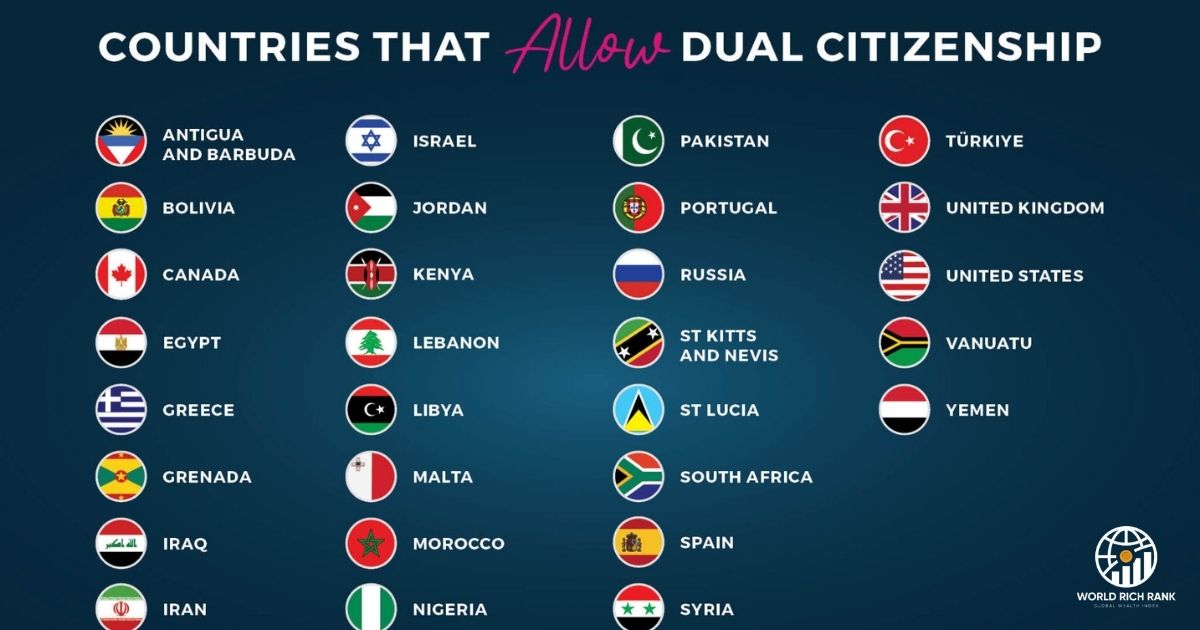
However, holding two citizenships can also create additional responsibilities. A person may be subject to different tax rules, military-service requirements, voting obligations, or passport regulations in each country. Some countries also limit dual nationality or impose conditions on retaining it, so the legal consequences should be checked before acquiring a second citizenship.
The practical value of dual citizenship depends heavily on the countries involved and the way citizenship was obtained. Before applying, it is important to understand whether both governments recognize the status, what rights are provided, and whether any obligations or restrictions could affect your personal, financial, or family circumstances.
| Potential Benefit | Why It Matters | Potential Drawback | Why It Matters |
| Two passports | Having two passports can make international travel more flexible and provide an additional official travel document when one passport has restrictions or limited access. | Passport-use rules | Some countries require their citizens to enter or leave using that country’s passport, so dual nationals may need to follow specific travel procedures. |
| Live and work rights | Dual citizens may have the right to live and work in both countries without needing the same immigration permissions required by foreign residents. | Legal conflicts | Each country may impose separate duties, and certain obligations can apply even when the person primarily lives abroad. |
| Study and healthcare access | Citizenship may provide easier access to education, public healthcare, or other national programs, subject to the rules of the country and the individual’s circumstances. | Administrative burden | Maintaining two citizenships can involve additional registrations, renewals, documentation, and communication with authorities. |
| Family strategy | Dual citizenship can create additional options for families when planning residence, education, travel, and citizenship possibilities for children. | Tax and reporting complexity | Some countries impose citizenship-based or worldwide tax and reporting obligations, making professional advice important in certain cases. |
| Political rights | Citizens may gain voting rights and, depending on national law, eligibility to participate more fully in political life or hold certain public positions. | Security-clearance concerns | In some sensitive jobs, foreign citizenship, foreign travel, or overseas connections may receive additional scrutiny, depending on the country’s rules. |
Top 8 Countries That Allow Dual Citizenship in 2026
Dual citizenship is recognized in many countries, but the conditions can differ depending on how nationality is acquired and which other citizenship a person already holds. The following eight countries generally permit citizens to maintain another nationality, although applicants should always check the current rules of both countries before applying.
| Country | Allows dual citizenship? | Key note |
| USA | Yes | The United States generally permits dual nationality. U.S. citizens must use a U.S. passport when entering and leaving the country. |
| Canada | Yes | Canada allows its citizens to hold another nationality at the same time, provided the other country also permits dual citizenship. |
| UK | Yes | British law permits dual citizenship, allowing eligible British citizens to retain another nationality alongside British citizenship. |
| Ireland | Yes | Ireland allows citizens to hold Irish nationality together with another citizenship, subject to the laws of the other country. |
| Italy | Yes | Italy generally recognizes multiple citizenship, although specific rules can vary depending on how Italian citizenship was acquired. |
| Germany | Yes, generally | Since 27 June 2024, Germany has generally allowed naturalized citizens to retain their previous nationality, subject to applicable requirements. |
| Australia | Yes | Australia generally recognizes dual citizenship, although the other country’s laws determine whether the original nationality can be retained. |
| Poland | Yes, with Polish priority | Poland recognizes multiple citizenship, but a Polish citizen who holds another nationality is generally treated as Polish by Polish authorities. |
USA
The United States generally allows its citizens to hold another nationality at the same time. A person who acquires foreign citizenship does not automatically lose U.S. citizenship, provided they do not voluntarily intend to give it up. Dual nationals must still follow U.S. legal obligations and may need to use a U.S. passport when entering or leaving the country.
Canada
Canada permits dual citizenship, allowing citizens to maintain Canadian nationality while also holding citizenship elsewhere when the other country permits it. This can provide flexibility for people with family, professional, or residential connections abroad. Canadian citizens with another nationality should still understand the travel, tax, and legal requirements that may apply in both countries.
UK
The United Kingdom generally permits dual citizenship, meaning British citizens can acquire another nationality without normally being required to surrender their British status. However, nationality rules can become more complicated where another country does not recognize multiple citizenships. People considering a second nationality should therefore check both British rules and the laws of the other country.
Ireland
Ireland permits dual citizenship in many circumstances, making it possible for Irish citizens to hold another nationality as well. Citizenship may be obtained through routes such as birth, descent, or naturalization, depending on the circumstances. Individuals acquiring Irish citizenship should also check whether their existing country allows them to retain their original nationality.
Italy
Italy generally recognizes multiple citizenship, allowing eligible individuals to acquire Italian citizenship without automatically losing another nationality in many cases. Citizenship may be available through descent, marriage, or naturalization, subject to specific requirements. Because rules concerning ancestry and documentation can be detailed, applicants should confirm the current requirements for their particular route.
Germany
Germany’s citizenship rules changed significantly in 2024, making multiple citizenship more broadly possible for many naturalization applicants. German citizens can generally hold another nationality where the relevant legal conditions are satisfied. However, individual cases can depend on the method of acquiring citizenship, so applicants should review the current German nationality rules before proceeding.
Australia
Australia allows its citizens to hold dual or multiple citizenship when the other country also recognizes the arrangement. This can give eligible people greater flexibility for residence, family connections, travel, and employment abroad. However, dual nationals remain subject to Australian laws and may have additional responsibilities or entry requirements when traveling between countries.
Poland
Poland recognizes dual citizenship, meaning Polish citizens may also hold another nationality under applicable law. A person who possesses Polish citizenship generally remains treated as a Polish citizen by Polish authorities even when they also have another nationality. Individuals should therefore understand the specific rights and obligations that arise from each citizenship.
Taxes and Travel With Dual Citizenship
Holding two citizenships can make international life more flexible, but it can also create additional tax and travel responsibilities. Citizenship alone does not automatically mean that a person must pay tax in both countries. Tax liability usually depends on the laws of each country, including factors such as tax residence, income source, property ownership, and where economic activities take place.
For dual citizens, it is important to distinguish citizenship from tax residency. A person may be a citizen of two countries while being a tax resident of only one. However, some countries apply special rules to their citizens even when they live abroad. The United States is a notable example because U.S. citizens generally remain subject to U.S. tax filing requirements on worldwide income, subject to applicable exclusions, credits, and treaties.
Tax agreements can help prevent the same income from being taxed twice. Depending on the countries involved, a tax treaty or foreign tax credit may reduce or eliminate double taxation. Nevertheless, reporting obligations can still exist even when little or no additional tax is ultimately owed. Professional tax advice can be particularly useful when a person owns businesses, investments, or property in more than one country.
Travel is another area where dual citizenship can be beneficial. A dual citizen may have two passports and can sometimes choose the document that provides the most convenient entry conditions for a particular destination. Visa requirements, permitted length of stay, and transit rules can differ depending on which passport is presented.
However, dual nationals should not assume that both passports can always be used interchangeably. Some countries require their citizens to enter or leave using their national passport. A country may also treat a dual national solely as its own citizen while that person is within its territory. This can affect access to consular assistance or the ability of another country to intervene on the person’s behalf.
Travelers should also keep both passports valid and ensure that names and personal details are consistent across official documents whenever possible. When booking flights, the passport used for immigration purposes should match the relevant travel documentation and destination requirements.
Because tax and travel rules change and depend heavily on the countries involved, dual citizens should verify current requirements before making major financial decisions or international trips. Understanding both countries’ rules in advance can prevent unexpected tax filings, visa problems, or difficulties at border control.
Can You Lose Dual Citizenship and Is It Worth It
Dual citizenship can be lost in certain circumstances, although the exact rules depend on the laws of the countries involved. Some countries allow citizens to voluntarily renounce their nationality, while others may withdraw citizenship if specific legal conditions are met. In some situations, acquiring another nationality can affect a person’s existing citizenship, particularly where the original country restricts dual nationality. For this reason, anyone planning to obtain a second passport should check whether the new citizenship could change their current legal status.
Loss of citizenship may also occur through actions or circumstances defined by national law. These can include formal renunciation, fraudulent acquisition of nationality, or failure to meet specific conditions in countries where citizenship is conditional. However, citizenship cannot simply be assumed to disappear because a person lives abroad for a long period. The rules vary considerably, and some countries provide strong protections against involuntary loss of nationality.
| Factor | Dual Citizenship | Permanent Residency |
| Right to remain | Usually provides a more permanent legal connection to the country and is generally more difficult to lose. | Often provides long-term residence, but status may be affected by prolonged absence, abandonment, or specific legal violations. |
| Passport | Citizens can generally hold the country’s passport, subject to its rules. | Permanent residents normally travel using the passport of their existing nationality. |
| Voting rights | Citizens commonly have national voting rights, although eligibility can vary by country. | Permanent residents usually do not receive the same national voting rights as citizens. |
| Work rights | Usually includes unrestricted access to the country’s labor market and, where applicable, broader EU employment rights. | Often allows employment without a standard work visa, but conditions can vary and may be more limited than citizenship rights. |
| International mobility | Travel benefits depend largely on the citizenship and passport held, including visa requirements for different destinations. | International travel generally depends on the resident’s original passport and valid residence documentation for returning to the country. |
| Loss risk | Citizenship is generally secure, although it can be affected by voluntary renunciation, fraud, or specific nationality laws. | Permanent residence can be more vulnerable to long absences, failure to meet residency conditions, abandonment, or removal proceedings. |
Whether dual citizenship is worth pursuing depends on an individual’s goals and circumstances. It can be valuable for people who want greater freedom to live and work in two countries, maintain family connections, access educational opportunities, or preserve a long-term connection with their country of origin. Having two nationalities may also provide additional travel options and greater flexibility when planning a family’s future.
At the same time, dual citizenship can create responsibilities. A person may need to comply with the laws of both countries, deal with additional administrative requirements, and potentially manage tax or reporting obligations. Certain countries may also impose military service, voting, or passport-use requirements on their citizens.
The decision should therefore be based on more than the attractiveness of having two passports. Before applying, consider whether both countries recognize dual citizenship, whether your existing nationality can be retained, what obligations could apply, and whether the practical benefits match your personal needs. Since nationality and tax laws can change, checking the current official rules or obtaining qualified legal advice is sensible before making an irreversible decision.
FAQ’s
Can I have three citizenships?
Yes. Some countries allow a person to hold three or even more nationalities. There is no universal international limit, but every country involved must permit multiple citizenship or allow the person to retain their nationality under its laws.
Can my children inherit dual citizenship?
In many cases, children can acquire citizenship through one or both parents, depending on the nationality laws of those countries. Some countries require registration, documentation, or specific conditions before citizenship can be recognized.
Does dual citizenship affect taxes?
It can. Citizenship and tax residency are separate concepts, and tax obligations depend on the laws of the countries involved. Some countries may impose reporting or taxation obligations on citizens living abroad, so individual circumstances should be reviewed carefully.
Can I vote in both countries?
Possibly. Voting rights are determined separately by each country’s laws. If both countries allow citizens living abroad to vote and you meet their electoral requirements, you may be able to participate in elections in both. Certain elections or political positions can have additional restrictions.
Can I serve in the military?
Possibly. Some countries impose military-service obligations on their citizens, including certain dual nationals. The rules can depend on age, residence, gender, nationality, and other factors, and military obligations may sometimes arise when entering or leaving the country.
Can I own property?
Generally, dual citizenship does not by itself prevent you from owning property. However, property ownership rules are determined by each country and may differ for citizens, residents, and foreign nationals. Certain types of land may also have special restrictions.
Do I need two passports?
Not necessarily, but having two passports can be useful. Each citizenship gives you the possibility of holding that country’s passport, while some countries require their citizens to use their national passport when entering or leaving. U.S. citizens, for example, must use a U.S. passport for entry and departure from the United States.
Is dual citizenship permanent?
It can be, but it is not always guaranteed for life. Citizenship may be affected by voluntary renunciation, fraud, changes in nationality status, or specific rules of the countries involved. Some countries also restrict dual citizenship and may require a person to choose one nationality.
Which countries do not generally allow dual citizenship?
Several countries generally restrict or prohibit dual citizenship, including China, India, Japan, Singapore, Indonesia, and Malaysia. Some other countries permit it only in specific circumstances or with government permission, so it is important to check the exact rules rather than treating every country as simply “allowed” or “banned.”

Stoke is a passionate writer and researcher focused on the world’s richest countries, global wealth, economies, and country rankings. He creates clear, easy-to-understand content to help readers explore global economic trends.