

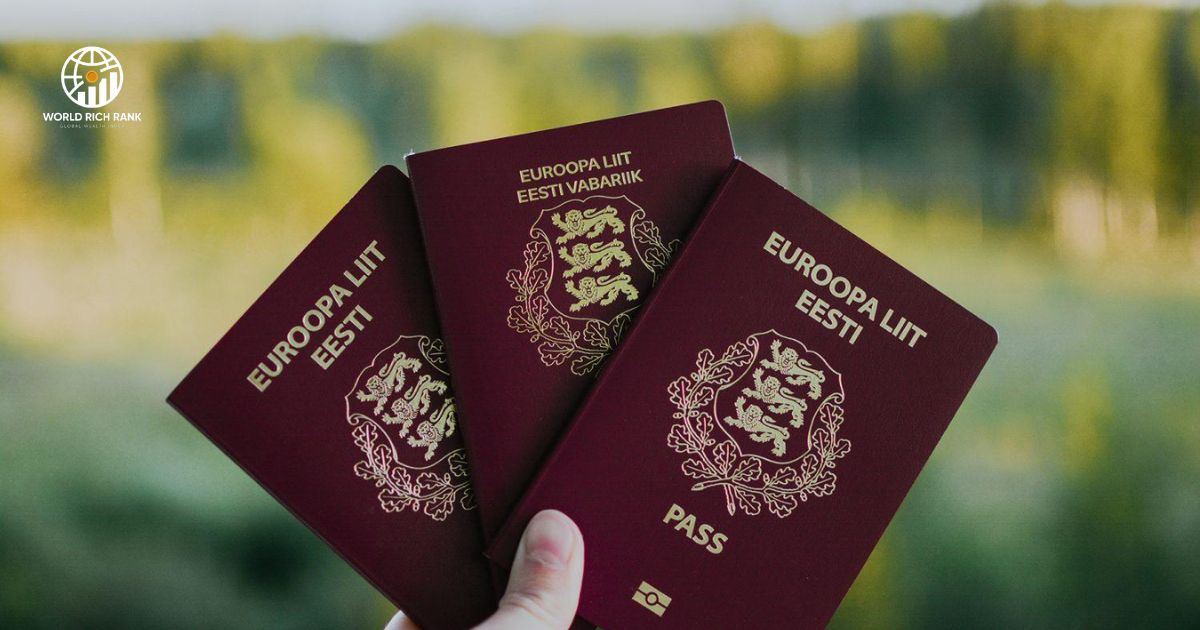
Estonian citizenship offers a pathway to a secure European future, providing access to the rights and opportunities associated with EU citizenship, along with greater freedom to live, work, study, and travel across Europe.
Opportunities offered by Estonian citizenship
Estonian citizenship provides a range of rights and opportunities within Estonia and the European Union, supporting greater mobility, access to services, and long-term personal and professional flexibility.
Visa-free access to more than 160 countries
An Estonian passport offers extensive international travel access, with many destinations allowing visa-free or simplified entry. Entry rules vary by country and can change over time.
Ability to live and work in any EU country
As an EU citizen, an Estonian citizen generally has the right to live, work, and study in other EU member states, subject to applicable EU rules and registration requirements.
The right to receive medical services according to European standards
Estonian citizens can access Estonia’s healthcare system when they meet the applicable eligibility conditions. EU rules may also provide healthcare rights when living or travelling in other member states.
Access to social support and benefits
Citizens may qualify for various social protection programs and benefits in Estonia, depending on factors such as residence, employment, income, and individual circumstances.
Freedom to do business in the EU
Estonian citizenship provides EU citizenship rights that can make it easier to live and pursue professional or entrepreneurial activities across the European Union under applicable regulations.
Transfer of citizenship by inheritance
Estonian citizenship may be passed to children in accordance with Estonian nationality law. The applicable rules depend on the parents’ citizenship status and the child’s circumstances.
Trending Today ; French citizenship – unlimited opportunities in the EU
Obtaining Estonian citizenship: who is eligible and under what conditions
Estonian citizenship can be acquired through several legal pathways, depending on a person’s residence, previous citizenship, family background, or special circumstances. Each route has its own eligibility requirements and application procedures.
Naturalized foreigners
Foreign nationals who have legally and permanently lived in Estonia may be eligible to apply for citizenship through naturalization after meeting the required residence period and other conditions, such as language proficiency, knowledge of the Constitution, and loyalty to Estonia.
Former citizens
People who previously held Estonian citizenship may have specific rights or procedures for restoring or confirming their citizenship, depending on how and when their citizenship was lost and their individual circumstances.
Persons with special merits
Estonian citizenship may exceptionally be granted for special merits to Estonia. This is a discretionary route intended for individuals whose achievements or contributions are considered particularly significant to the country.
How to obtain Estonian citizenship: step-by-step guide
Obtaining Estonian citizenship involves several stages, beginning with an assessment of eligibility and preparation of the required documents. The applicant then submits the application to the relevant authorities, completes any required procedures, and, after citizenship is granted, proceeds with obtaining Estonian identity documents and a passport.
Initial assessment and legal audit of the situation
The process begins with a detailed review of the applicant’s personal circumstances and eligibility.
This may include examining residence history, current citizenship, family background, and legal status in Estonia.
The applicable citizenship pathway is then identified based on these circumstances.
Potential difficulties or missing requirements can be identified at this stage.
A clear preparation plan can then be developed before the application is submitted.
Formation of the dossier
The next stage involves preparing the complete citizenship application dossier.
The required documents depend on the applicant’s specific citizenship route and circumstances.
These may include identity documents, residence records, and evidence of language proficiency.
Applicants may also need to provide documents demonstrating knowledge of Estonia’s Constitution and relevant legislation.
Foreign-issued documents may require translation or additional certification.
All information should be accurate and consistent across the documents.
Missing or incorrect documentation can lead to requests for additional information.
The dossier should therefore be carefully reviewed before submission.
Professional assistance can help identify potential documentation issues in advance.
Once the dossier is complete, it can be prepared for submission to the competent authority.
Filing an application and obtaining citizenship
After the dossier has been prepared, the application is submitted through the appropriate Estonian procedure.
The authorities review the application and supporting documents to determine whether the legal requirements have been satisfied.
Applicants may need to complete additional formalities or provide further information during the review.
The processing period can vary depending on the application and individual circumstances.
Once the authorities reach a decision, the applicant is informed of the outcome.
If citizenship is granted, the applicant can proceed with the formal steps required to obtain Estonian identity documents.
Passport issuance
After citizenship has been formally acquired, the applicant can apply for an Estonian identity document and passport.
The passport application is a separate administrative step from the citizenship application.
Applicants must provide the required identification information and complete the applicable formalities.
Once the application is processed, the Estonian passport can be issued.
This document provides proof of citizenship and facilitates international travel and the exercise of EU citizenship rights.
Why it is more reliable to obtain Estonian citizenship with specialists
Support at all stages of the process
Specialists can guide applicants through each stage of the citizenship process, from the initial eligibility assessment and document preparation to application submission and the final administrative formalities.
Saving time and reducing stress
Professional assistance can simplify the application process by helping organize documents, explain procedures, and address administrative requirements. This can reduce unnecessary delays and the stress associated with managing the process alone.
Minimizing errors and refusals
Careful review of the application and supporting documents can help identify missing information, inconsistencies, or other potential issues before submission. This may reduce avoidable errors that could lead to delays or an unfavorable decision.
Correct interpretation of legislation
Citizenship requirements can be complex and may depend on the applicant’s individual circumstances. Specialists can help interpret the applicable Estonian nationality rules and explain how they relate to the applicant’s specific situation.
Individualized strategy for obtaining citizenship
Every applicant has a different background, residence history, and legal situation. Specialists can assess these factors and develop an individualized approach that focuses on the most appropriate citizenship pathway and the requirements that need to be fulfilled.
Frequently asked questions about Estonian citizenship
How long do I have to live in Estonia to obtain citizenship?
For naturalization, applicants generally need to have lived in Estonia for at least eight years, including the last five years on a permanent basis, while also meeting other statutory requirements.
How long does the process of obtaining citizenship take?
The timeframe varies depending on the applicant’s circumstances and the completeness of the application. After submission, the authorities review the documents and verify whether all legal requirements have been met.
Do I have to take a test when obtaining citizenship?
Yes, naturalization generally requires applicants to demonstrate proficiency in the Estonian language and knowledge of the Constitution and Citizenship Act. Certain exemptions may apply.
Does Estonia recognize dual citizenship?
Estonian law generally restricts dual citizenship for naturalized citizens, although citizenship by birth is treated differently. The rules can be complex, so individual circumstances should be checked carefully.
Can children automatically acquire citizenship together with their parent?
Children do not necessarily become Estonian citizens automatically when a parent acquires citizenship through naturalization. Their eligibility depends on their age, citizenship status, parents’ circumstances, and the applicable nationality rules.

Stoke is a passionate writer and researcher focused on the world’s richest countries, global wealth, economies, and country rankings. He creates clear, easy-to-understand content to help readers explore global economic trends.