
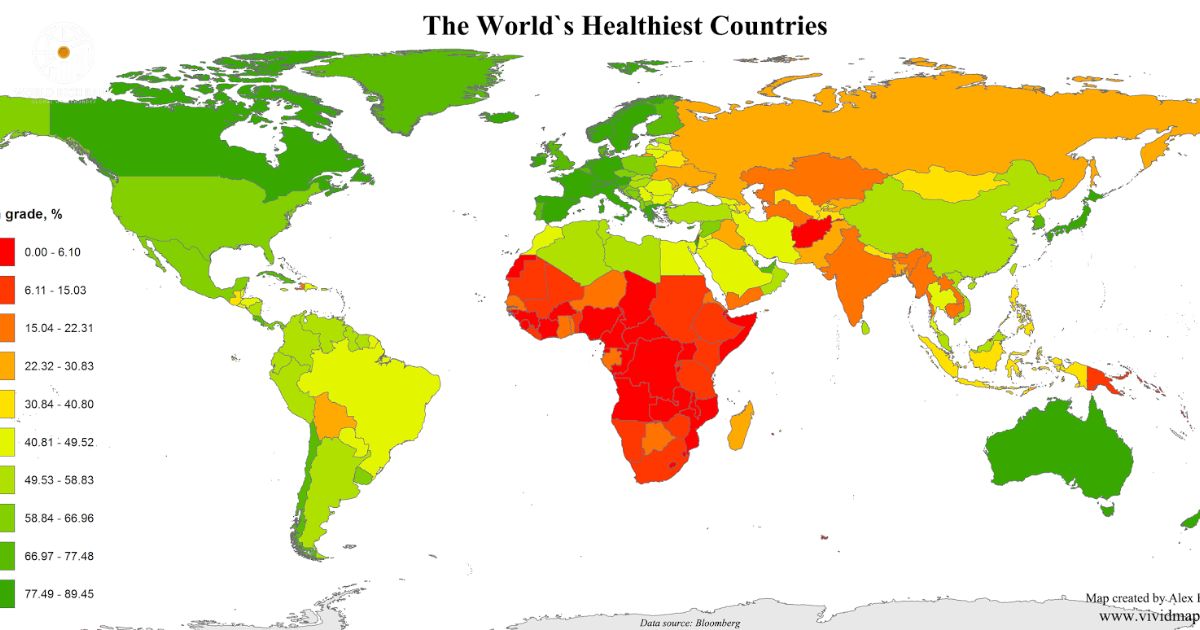
When it comes to living a long, active, and healthy life, some countries consistently stand out for their strong healthcare systems, nutritious diets, clean environments, and healthy lifestyles. The healthiest countries in the world in 2026 reflect a combination of these factors, along with life expectancy, access to medical care, and overall quality of life. This global ranking explores the countries performing best across key health indicators and highlights what makes their populations healthier. From preventive healthcare and balanced nutrition to active communities and safer environments, these nations offer valuable insights into the habits and systems that support better health and well-being.
Trending Today ; How to Get Citizenship Fast in 2026: Easiest Countries Ranked by Path & Eligibility
What does “healthiest country” actually mean?
A “healthiest country” is one where people generally experience strong physical and mental well-being, supported by factors such as life expectancy, healthcare access, nutrition, exercise, and preventive care. It is not determined by a single statistic. Clean air and water, low rates of preventable diseases, vaccination programs, and safe living conditions can all contribute to better population health.
Healthiest-country rankings therefore look at a combination of indicators to compare overall well-being between nations. A country may perform well because of its healthcare system, healthy eating habits, active lifestyle, environmental quality, or strong public health policies. These rankings provide a broad picture of national health, but they do not mean every person in the country has the same health outcomes or access to resources.
Data sources and methodology
To create a reliable global ranking of the healthiest countries in 2026, data can be gathered from established international health and development sources. Key indicators may include life expectancy, mortality rates, access to healthcare, disease prevalence, nutrition, vaccination coverage, physical activity, sanitation, air quality, and other measures of population well-being. Sources such as the World Health Organization, World Bank, United Nations, and national health agencies provide widely used statistics for comparing health outcomes across countries.
The methodology combines these indicators to provide a broader view of national health rather than relying on a single measurement. Countries with stronger results across several categories receive higher overall consideration, while differences in data availability and reporting standards are also taken into account. Because health statistics can be updated at different times, the ranking should be viewed as a comparative overview based on the most recent reliable information available for 2026, rather than a definitive measure of every individual’s health.
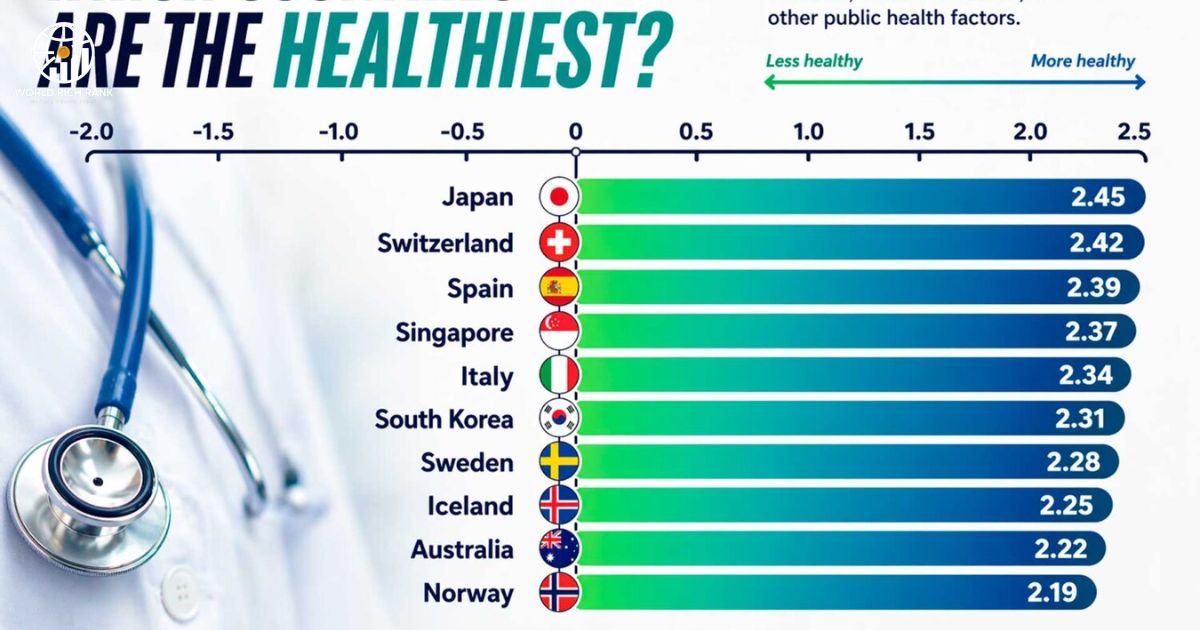
Top 10 healthiest countries in the world in 2026
The healthiest countries in 2026 stand out for their strong healthcare systems, longer life expectancy, healthy lifestyles, nutritious diets, and supportive living environments. While rankings can vary depending on the indicators and methodology used, the following ten countries consistently demonstrate strong overall health outcomes.
1. Japan
Japan is widely recognized for its exceptional life expectancy and relatively low rates of several major chronic diseases. Traditional eating habits, featuring fish, vegetables, rice, and moderate portions, contribute to the country’s strong health profile.
An accessible healthcare system and emphasis on preventive care also play important roles. Regular physical activity, social connections, and healthy habits among older adults further support Japan’s reputation as one of the world’s healthiest countries.
2. Switzerland
Switzerland benefits from high-quality healthcare, excellent living conditions, and strong public health standards. Its population enjoys a high life expectancy, while access to medical services is generally extensive and reliable.
The country’s clean environment, outdoor lifestyle, and relatively high levels of physical activity also contribute to overall well-being. Hiking, cycling, and other recreational activities are common, helping support healthier lifestyles.
3. Spain
Spain combines a strong healthcare system with a Mediterranean-style diet that emphasizes vegetables, fruits, legumes, olive oil, fish, and other nutrient-rich foods. These dietary patterns are often associated with cardiovascular health and longevity.
Social interaction and outdoor living are also important parts of everyday life in many Spanish communities. Together with preventive healthcare and generally high life expectancy, these factors help Spain maintain a strong position among healthy nations.
4. Singapore
Singapore has developed an efficient healthcare system supported by strong public health programs, sanitation standards, and disease-prevention initiatives. Its healthcare infrastructure provides broad access to modern medical services.
The country also places considerable attention on preventive health and healthy living. Public campaigns encourage exercise, balanced nutrition, screening, and other habits that can reduce the risk of chronic diseases.
5. Italy
Italy is another country strongly associated with longevity and the Mediterranean approach to eating. Meals commonly include vegetables, fruits, legumes, whole grains, olive oil, and moderate amounts of fish and other proteins.
Beyond nutrition, family and community relationships can provide important social support. Combined with healthcare access and generally favorable life-expectancy figures, these characteristics contribute to Italy’s strong overall health profile.
6. South Korea
South Korea has made significant improvements in healthcare access and population health over recent decades. Its modern medical system, preventive programs, and relatively high life expectancy contribute to its position among leading healthy countries.
Traditional Korean foods often include vegetables, fermented foods, seafood, and relatively diverse ingredients. Urban residents also have access to extensive public transportation and opportunities for walking, which can encourage everyday physical activity.
7. Sweden
Sweden’s health outcomes are supported by accessible healthcare, strong social services, and a high standard of living. The country also places considerable emphasis on preventive medicine and public health.
Outdoor recreation is an important part of Swedish culture, with walking, cycling, hiking, and other activities widely practiced. Clean surroundings and attention to environmental quality further contribute to the country’s overall well-being.
8. Iceland
Iceland benefits from a small population, high living standards, and strong healthcare and social-support systems. Its population enjoys relatively high life expectancy and generally good access to medical services.
The country’s natural environment also encourages outdoor activities, while seafood is an important part of the traditional diet. Strong community conditions and preventive healthcare add further support to Iceland’s health profile.
9. Australia
Australia combines a well-developed healthcare system with relatively high life expectancy and widespread awareness of healthy living. Public health initiatives focus on areas such as physical activity, nutrition, disease prevention, and health screening.
Its outdoor-oriented lifestyle also provides many opportunities for walking, swimming, cycling, and sports. Although Australia faces challenges such as chronic disease and unequal health outcomes between communities, its overall population health remains comparatively strong.
10. Norway
Norway’s strong health profile is supported by high living standards, reliable healthcare, and extensive social services. Preventive healthcare and early intervention help address health problems before they become more serious.
Norwegians also have strong connections with outdoor recreation, including walking, skiing, hiking, and cycling. A generally active lifestyle, access to nature, and favorable social conditions all contribute to Norway’s reputation as one of the world’s healthiest countries.
Why these countries rank so highly
These countries rank highly because they combine several factors that support better population health rather than depending on just one strength. Their healthcare systems generally provide strong access to doctors, hospitals, preventive services, vaccinations, and early diagnosis. Many also invest in public health programs designed to reduce smoking, improve nutrition, encourage exercise, and manage chronic diseases. High life expectancy is another common feature, reflecting the combined effects of medical care, living standards, and healthier daily habits.
Lifestyle and environmental conditions are equally important. Countries such as Japan, Spain, Italy, and South Korea benefit from dietary traditions that often include vegetables, seafood, whole foods, and balanced portions. Sweden, Norway, Iceland, Switzerland, and Australia provide extensive opportunities for outdoor recreation and physical activity. Clean water, sanitation, safer communities, education, and social support also influence long-term health. Economic stability can make healthcare and nutritious food more accessible, while strong public policies help address health risks across the population. Ultimately, these countries perform well because health is supported at multiple levels—from individual choices and community habits to healthcare infrastructure and government-led prevention programs.
Healthiest countries by alternative measures
The healthiest country can look different depending on which measures are used. Instead of focusing only on life expectancy or healthcare quality, alternative rankings may examine factors such as mental well-being, environmental quality, obesity rates, physical activity, air pollution, nutrition, or healthy life expectancy. Countries such as the Netherlands and Denmark may perform strongly when active lifestyles, cycling infrastructure, and overall quality of life are emphasized, while nations such as New Zealand can stand out for environmental conditions and outdoor living.
Other measures can produce different leaders because population health is influenced by many interconnected factors. A country with excellent medical care may not rank first for air quality, while another with a healthy diet may face challenges related to healthcare access. Measures such as happiness, work-life balance, access to green spaces, and social connections can also provide valuable perspectives on well-being. Looking at several indicators therefore gives a more balanced understanding of national health and shows why there is no single universally accepted list of the world’s healthiest countries.
Limitations of any “healthiest country” ranking
Any ranking of the healthiest countries should be viewed as a general comparison rather than an absolute measure of national well-being. Different rankings use different indicators, data sources, weightings, and time periods, which can produce very different results. Some countries may also have more complete or recently updated health data than others. In addition, national averages can hide significant differences between regions, age groups, income levels, and communities within the same country.
Another limitation is that health is influenced by factors that are difficult to measure consistently. Mental well-being, social connections, lifestyle habits, environmental exposure, and quality of life may not be fully captured by numerical indicators. A country can perform exceptionally well in healthcare access while facing challenges such as obesity, pollution, or unequal outcomes. For these reasons, a “healthiest country” ranking should be used as a useful starting point for comparison, not as a definitive judgment. The results are most meaningful when several indicators and reputable data sources are considered together.
Healthiest Countries by Region
Health outcomes vary considerably by region because healthcare systems, diets, lifestyles, economic conditions, and environmental factors differ around the world. Looking at countries by region provides another useful way to understand where strong population health outcomes are being achieved.
Europe
Europe includes several countries known for high life expectancy, accessible healthcare, and strong social services. Switzerland, Spain, Sweden, Norway, and Iceland are notable examples, supported by healthy lifestyles, preventive care, and generally high living standards.
Asia
Asia has several strong performers, particularly Japan, Singapore, and South Korea. Their results are supported by modern healthcare systems, preventive medicine, nutritious food traditions, and relatively high life expectancy.
Americas
Canada and Costa Rica are often recognized for positive health outcomes in the Americas. Factors such as healthcare access, active lifestyles, nutrition, and public health programs contribute to their performance, although health outcomes vary significantly across the region.
Middle East
Countries including the United Arab Emirates, Qatar, and Israel have made substantial investments in healthcare infrastructure and modern medical services. Preventive healthcare, improved facilities, and public health initiatives have helped strengthen population health in parts of the region.
Overall, regional comparisons show that there is no single formula for achieving better health. Different countries succeed through combinations of healthcare, lifestyle, environment, and public policy.
Least Healthy Countries in the World
The least healthy countries are generally those facing a combination of limited healthcare access, lower life expectancy, high rates of preventable diseases, malnutrition, and challenging environmental or economic conditions. However, there is no single official list because results depend on which health indicators and methodology are used. Countries experiencing poverty, conflict, food insecurity, or shortages of medical resources often face greater difficulties in improving population health.
Many of the countries with weaker health outcomes are located in parts of sub-Saharan Africa, where healthcare infrastructure and access to essential medicines can be limited. Infectious diseases, maternal and child health challenges, inadequate sanitation, and nutritional deficiencies can place significant pressure on health systems. In some countries, shortages of trained healthcare workers and medical facilities further increase these challenges.
A lower position in a health ranking does not mean that people in a country are inherently less healthy. Instead, rankings often reflect broader social and economic conditions that influence people’s ability to access healthcare, nutritious food, clean water, education, and safe living environments. Health outcomes can also improve significantly when countries strengthen primary healthcare, vaccination programs, sanitation, disease prevention, and access to essential services.
| Country | Life Expectancy (approx.) | Key Health Challenges | Region |
| Lesotho | ~53 years | HIV/AIDS, limited healthcare access | Sub-Saharan Africa |
| Central African Republic | ~54 years | Conflict, poor infrastructure, infections | Sub-Saharan Africa |
| Chad | ~55 years | Malnutrition, infectious diseases | Sub-Saharan Africa |
| Nigeria | ~54–55 years | High disease burden, healthcare inequality | Sub-Saharan Africa |
| Sierra Leone | ~55–57 years | Maternal & child mortality | Sub-Saharan Africa |
| Somalia | ~56–58 years | Weak healthcare system, instability | Sub-Saharan Africa |
| DR Congo | ~60 years | Epidemics, low healthcare access | Sub-Saharan Africa |
| India | ~67 years | Air pollution, population health disparities | South Asia |
| Pakistan | ~66–67 years | Pollution, infectious diseases | South Asia |
| United States | ~77–79 years | Obesity, chronic diseases | North America |
Key Factors of Healthy Countries: What Makes a Country Healthy?
A country’s overall health is shaped by much more than hospitals and medical treatment. The healthiest nations usually combine effective healthcare with nutritious food, active lifestyles, clean surroundings, and strong social and mental well-being. These factors work together to reduce preventable diseases, support longer lives, and improve people’s quality of life. Understanding these elements helps explain why some countries consistently achieve better health outcomes than others.
Diet & Nutrition
Healthy populations often benefit from access to affordable, nutritious food. Diets rich in vegetables, fruits, whole grains, legumes, fish, and other minimally processed foods can support heart health and help reduce the risk of chronic diseases. Public nutrition education and food-safety standards can also encourage healthier choices.
Healthcare System.
Accessible and reliable healthcare is a major foundation of population health. Strong systems provide preventive checkups, vaccinations, screening, primary care, emergency treatment, and affordable access to essential medicines. Early diagnosis and treatment can prevent many conditions from becoming more serious.
Lifestyle & Physical Activity.
Regular movement is another important factor. Walking, cycling, sports, exercise, and outdoor recreation can improve cardiovascular fitness, maintain healthy body weight, and support healthy aging. Countries that provide safe parks, sidewalks, cycling routes, and recreational facilities can make physical activity easier to include in daily life.
Environment & Air Quality.
Clean air, safe drinking water, effective sanitation, and well-managed communities have a direct influence on health. Lower exposure to air pollution and environmental hazards can reduce respiratory and cardiovascular risks. Green spaces and access to nature may also encourage outdoor activity and contribute to overall well-being.
Mental Health.
Mental health is an essential part of a country’s overall health profile. Access to mental health services, social support, education, stable employment, and healthy work-life conditions can help people manage stress and maintain emotional well-being. Reducing stigma can also encourage individuals to seek professional support when needed.
Ultimately, healthy countries tend to succeed because these factors reinforce one another. Good nutrition supports active living, preventive healthcare detects problems early, and cleaner environments reduce avoidable health risks. Strong mental and social support can further help people maintain healthy habits. Rather than relying on one advantage, the healthiest nations create conditions that make healthier choices and better healthcare accessible to a large share of their population.
Frequently asked questions
Which country has the highest life expectancy in the world?
Monaco is often reported as having the world’s highest life expectancy, although rankings can vary depending on the data source and year. Countries such as Japan, Switzerland, and Singapore also consistently record very high life expectancy.
What is the healthiest country in Europe?
Switzerland, Spain, Sweden, Iceland, and Norway are among Europe’s strongest performers for overall population health. The leading country can vary depending on whether a ranking emphasizes life expectancy, healthcare, lifestyle, environment, or other indicators.
Is the United States one of the healthiest countries?
The United States has advanced healthcare facilities, medical technology, and specialist services, but it does not consistently rank among the world’s healthiest countries overall. Challenges including obesity, chronic diseases, healthcare costs, and unequal access affect its population health outcomes.
What matters more: life expectancy or healthy life expectancy?
Healthy life expectancy can provide a more informative picture of population well-being because it estimates how many years people can expect to live in good health. Life expectancy measures total expected years of life but does not show how many of those years may be affected by illness or disability.

Stoke is a passionate writer and researcher focused on the world’s richest countries, global wealth, economies, and country rankings. He creates clear, easy-to-understand content to help readers explore global economic trends.